

Published Apr 26, 2026 | 7:06 AM ⚊ Updated Apr 26, 2026 | 7:06 AM

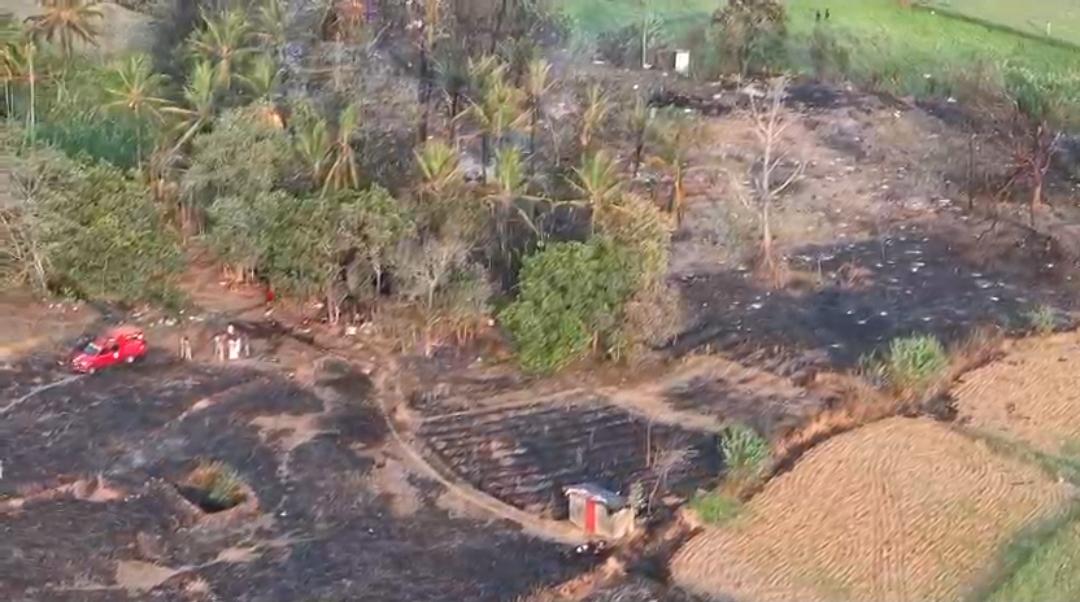
An aerial shot of the site where the blast occurred on 21 April.

Synopsis: The tragic events in Mundathikode highlight the urgent need to strike a balance between preserving the cultural and religious significance of fireworks and ensuring public safety. While fireworks will likely remain an integral part of Kerala’s celebrations, there is no justification for continuing a practice that jeopardises human lives. The celebrations that bring communities together should not be the very reason for sorrow and loss.
The tragedy that struck the fireworks manufacturing unit at Mundathikode in Kerala’s Thrissur district, which claimed at least 14 lives and left many others missing, unidentifiable, and severely injured, is a stark reminder of the dangerous undercurrents of a centuries-old tradition.
Around 40 people were believed to be assembling firecrackers in a cluster of sheds for the upcoming ‘pooram’ festival. On that fateful day, the blast shattered not just the lives of the victims but also the long-standing debate about the safety, regulation, and morality of fireworks in Kerala. In this state, pyrotechnics are intertwined with religious and cultural celebrations.
The government has declared the incident a “State-specific disaster,” recognising the widespread social and economic impact of the calamity.
However, the 21 April tragedy must serve as an urgent call to reassess safety standards governing the manufacture and use of fireworks, particularly in light of the repeated incidents that have long punctuated the state’s celebratory culture. It also marks the second such incident in a week, following a deadly explosion at a firecracker factory in neighbouring Tamil Nadu that claimed at least 25 lives on 19 April.
Such accidents remain a grim and recurring feature of India’s fireworks industry, occurring with troubling frequency—most notably in Sivakasi, which accounts for a significant share of the country’s production.
Also Read: 25 killed after powerful blast rips through Virudhunagar fireworks factory
Kerala has witnessed its fair share of fireworks-related disasters, but the scale and frequency
of these tragedies seem to be growing rather than receding. The disaster at Mundathikode,
where explosives were being stored in proximity to one another, is not an isolated case.
Perhaps the most notable and tragic instance was the Puttingal temple fire on 10 April 2016, where over 100 lives were lost, and hundreds more were injured. The Puttingal tragedy, which took place during a fireworks display at a temple in Paravur, Kollam, sparked outrage and led to heightened scrutiny of the fireworks industry and its regulatory framework.
The explosive nature of fireworks and the immense quantity of combustible materials used in their manufacturing and display are inherent hazards. In Kerala, where fireworks are commonly associated with religious and cultural celebrations, particularly during temple festivals, these risks are amplified by outdated and poorly enforced safety norms.
The recent blast in Mundathikode serves as a painful reminder that, despite previous tragedies, the state has failed to curb the deep-rooted culture of negligence surrounding the fireworks industry.
This failure to enforce meaningful change stems not only from the lax implementation of existing regulations but also from a cultural reluctance to challenge the status quo. For many, the use of fireworks represents a sacred and inextricable part of their religious and cultural identity.
However, this powerful emotional attachment should not come at the cost of human lives. The tragic irony is that these fireworks, designed to bring joy and celebrate sacred occasions, are often the very source of destruction and suffering.
Also Read: Thrissur Pooram to be held without fireworks
The popularity of fireworks in Kerala’s religious festivals is not a modern phenomenon. In fact, the use of fireworks can be traced back to the 18th century. Over the years, the scale of these displays has expanded significantly, with many festivals now featuring elaborate pyrotechnic shows that can last for hours and involve the detonation of large quantities of explosives. This has led to a parallel growth in the number of fireworks manufacturing units and the people employed in this industry.
But as the industry expanded, so did the risks. The infrastructure and safety standards, however, did not evolve at the same pace. The fireworks industry remains largely unregulated in terms of safety. The fireworks are often produced in cramped, makeshift facilities with minimal oversight from authorities. Workers are frequently exposed to hazardous conditions, and the manufacturing process itself is rife with safety violations. Local authorities are often complicit, either out of ignorance or because they fear alienating the powerful temple authorities and the local communities that benefit from the fireworks displays.
Narayana Guru, a prominent social reformer and spiritual leader in Kerala, was ahead of his
time when he criticised the excessive use of elephants and fireworks in religious festivals. His
disapproval of these practices was not rooted in an anti-tradition stance but rather in a profound concern for the safety, welfare, and well-being of people.
Guru’s reformist ideals, which emphasised simplicity, humility, and respect for life, were in direct contrast to the extravagant and often hazardous displays of fireworks that have become so deeply embedded in Kerala’s cultural fabric. Though Guru’s teachings were directed at various aspects of social reform, his opposition to the excessive use of fireworks and elephants serves as a prescient critique of modern practices.
Also Read: Grief and questions linger in Mundathikode
The devastation at Mundathikode should act as a turning point for Kerala’s fireworks industry. It is clear that safety standards are outdated and enforcement mechanisms are woefully inadequate. The fireworks industry must be subjected to stringent regulations, including standardised manufacturing processes, proper safety protocols, and regular inspections.
In addition, there must be a clear demarcation between traditional cultural celebrations and the commercial fireworks industry. Religious festivals may continue to be a source of pride and joy for the people of Kerala, but they must never again be allowed to come at the cost of lives.
The state government has already made attempts to regulate the industry, but these efforts have been piecemeal at best. The most significant issue remains the lack of a comprehensive safety infrastructure and training programmes for those involved in fireworks production and handling.
One of the key changes that must be implemented is the enforcement of occupational health and safety standards for the workers in the fireworks manufacturing units. These workers, often from impoverished backgrounds, are frequently exposed to dangerous chemicals and processes without adequate safety gear or precautions. The industry must ensure that these workers receive proper training in handling explosives and that their workplaces are regularly inspected for compliance with safety regulations.
The government must also initiate a thorough audit of all fireworks manufacturing units in the state to assess compliance with safety standards. Units that fail to meet basic safety requirements must be shut down, and the owners should be held accountable. Importantly, the state must create a transparent and effective mechanism for reporting and addressing safety violations, with serious consequences for those who breach the regulations.
A critical aspect of this reform process is the need for public education on the dangers of
fireworks. While Kerala’s cultural attachment to fireworks cannot be easily undone, there is a
need to foster a new awareness of the risks involved. Festivals should evolve in a way that
celebrates the spirit of the occasion without placing people in harm’s way. More community-driven events that prioritise safety and sustainable practices should be promoted.
Public campaigns focusing on the safe use of fireworks, the dangers of illegal fireworks, and the importance of adhering to safety guidelines is necessary to change attitudes.
Also Read: Tracing the history of parading elephants in Kerala’s festivals
The tragic events in Mundathikode highlight the urgent need to strike a balance between preserving the cultural and religious significance of fireworks and ensuring public safety. While fireworks will likely remain an integral part of Kerala’s celebrations, there is no justification for continuing a practice that jeopardises human lives. The celebrations that bring communities together should not be the very reason for sorrow and loss.
The responsibility for change lies not just with the government but also with the temple authorities, the community leaders, and the people of Kerala. The social fabric of Kerala has evolved considerably over the last few decades, and it is time for the people to embrace a more responsible, modern approach to celebrating festivals. This is a call to return to the ideals of reformers like Narayana Guru, who valued the well-being of people over the pursuit of excessive, harmful displays of wealth and power.
The reform of the fireworks industry is a long-overdue necessity. By prioritising human life and safety, we can pave the way for a future where cultural celebrations remain vibrant and meaningful without endangering the lives of those who partake in them. It is a difficult but necessary journey that can only be accomplished through the collective will of the state, people, and its leaders.
The tragedy of Mundathikode should not be in vain; it should catalyse the changes that are long overdue. Let this be the moment when Kerala, and indeed all of India, moves towards a safer and more responsible future, where the joy of celebration never again comes at the cost of human life.
(Views are personal. Edited by Majnu Babu).



