

Published Apr 11, 2026 | 1:44 PM ⚊ Updated Apr 11, 2026 | 1:49 PM

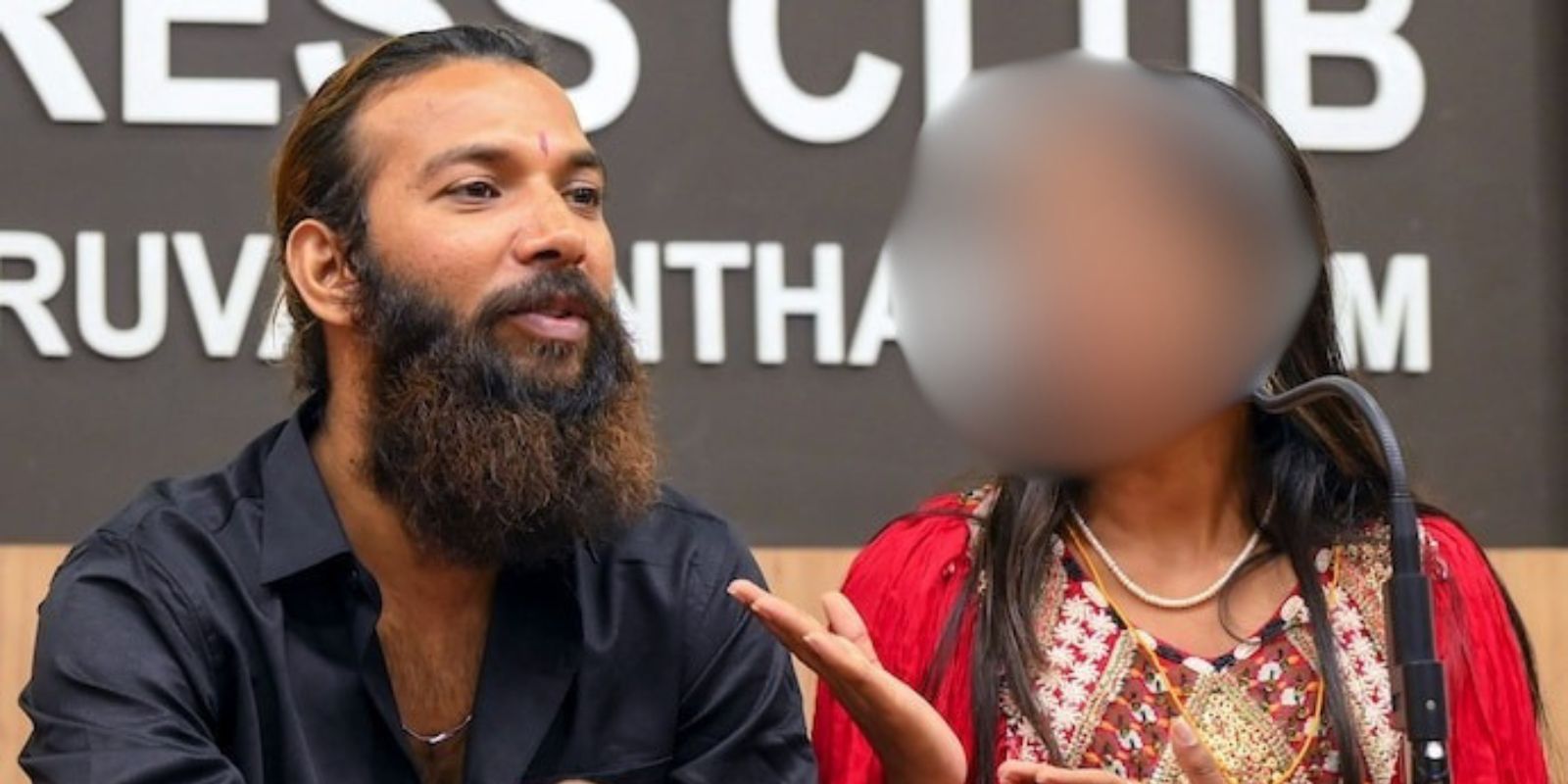
The fact that the event was used to send a broader social and ideological message has further intensified the scrutiny.
Synopsis: A temple wedding in Kerala, once hailed as a symbol of social harmony, has turned into a legal and political storm. Fresh NCST findings suggest the bride may have been underage, raising concerns of forged documents and failed institutional checks. With CPI(M) leaders present at the ceremony, the controversy now questions accountability across police, temple authorities, and political leadership.
A temple wedding in Kerala that was once showcased as a symbol of social harmony has spiralled into a contentious legal and political issue, with fresh findings raising serious questions about the age of the bride, the authenticity of documents produced, and the role played by multiple authorities in enabling the marriage.
At the centre of the controversy is a ceremony held on 11 March at the Arumanoor Sri Nainaar Deva Temple in Poovar, near Thiruvananthapuram.
What initially appeared to be a consensual union between two adults, solemnised with the presence of prominent political leaders, is now under scrutiny after an inquiry suggested that the bride may have been a minor at the time.
The young woman, who had recently gained widespread attention after a video of her at the Kumbh Mela went viral, had travelled to Kerala amid reported opposition from her family over her relationship.
Accompanied by her partner, she approached the Thampanoor police station seeking protection, stating that her family was against the relationship and had allegedly issued threats.
Police officials, after examining documents presented by the couple, concluded that she was an adult.
The records included an Aadhaar card and a birth certificate that reportedly listed her date of birth as 1 January, 2008. This placed her above the legal age for marriage, allowing the police to treat the relationship as lawful. No case was registered at that point, as there were no allegations of coercion or abuse.
With police clearance in hand, the couple proceeded to get married the same day at the temple, in a ceremony that was attended by senior leaders of the Communist Party of India (Marxist), including M.V. Govindan, V. Sivankutty and A.A. Rahim.
The event was publicly framed as an example of unity beyond religious divisions, drawing on the teachings of Sree Narayana Guru.
The ceremony took place in front of the Guru’s idol, a setting that often lends symbolic legitimacy and visibility to marriages conducted at the temple.
It also became trending the social media circles with the tag ‘the real Kerala story.’
Following the wedding, the couple obtained a marriage certificate through Kerala’s digital governance platform, K-SMART (Kerala Solution for Managing Administrative Reformation and Transformation). Officials from the Local Self-Government Department (LSGD) later stated that all documents submitted during the registration process were verified through the portal.
The records available on the system reportedly carried the same date of birth — 1 January, 2008 — reinforcing the conclusion that the bride was legally eligible to marry. Officials noted that the verification process, which includes cross-checking Aadhaar details and uploaded certificates, did not flag any inconsistencies.
The certificate was issued swiftly, reportedly within 30 minutes, reflecting the efficiency of the system but also raising questions about the depth of scrutiny involved in such cases.
Even as the marriage proceeded, the bride’s family continued to contest the relationship. Her father lodged a complaint in Madhya Pradesh, with Maheshwar Police Station, alleging that she had been abducted.
This led to the registration of a case under relevant provisions, though initial reports indicated that it was limited to abduction charges and did not include offences under the Protection of Children from Sexual Offences (POCSO) Act.
The couple approached the Kerala High Court seeking protection from arrest. On 23 March, the court granted them temporary relief, allowing them to remain together while the matter was being examined.
At that stage, the case appeared to hinge primarily on familial opposition and inter-state jurisdictional complexities rather than any dispute over age.
The situation took a decisive turn when the National Commission for Scheduled Tribes (NCST) initiated an inquiry based on a complaint filed by Nagpur-based activist and advocate Pratham Dubey.
A two-member panel, including director P. Kalyan Reddy and legal advisor Prakash Kumar, conducted a detailed investigation, visiting both Kerala and Maheshwar in Madhya Pradesh, where the bride’s family resides.
According to findings cited by the complainant, the panel examined hospital records from Maheshwar and found that the young woman was born on 30 December, 2009. This would make her just over 16 years old at the time of the wedding — well below the legal age for marriage.
The panel reportedly verified admission and delivery records from a government hospital, noting that her mother was admitted at 5 pm and delivered the child at 5.50 pm on the same day. These records, the panel concluded, were credible and contradicted the documents used during the marriage process in Kerala.
The NCST’s findings suggested that the marriage had been registered using forged or manipulated documents. This raised serious concerns about how multiple layers of verification — including police scrutiny, temple checks and digital validation through K-SMART — failed to detect discrepancies.
The complainant further alleged that cases had been registered under the POCSO Act, provisions of the SC/ST Prevention of Atrocities Act, and sections dealing with criminal conspiracy.
However, police officials in Madhya Pradesh later clarified that, as of now, only an abduction case had been formally registered, and the matter remained under investigation.
The discrepancy between the claims of legal action and official police records added another layer of confusion to an already complex case.
As questions began to surface in the days that followed, the temple administration maintained that all procedures were followed correctly. The temple secretary, Ajit Kumar, stated that the authorities had examined the documents presented by the couple before permitting the wedding rituals.
According to him, both Aadhaar cards and birth certificates were scrutinised, and nothing appeared suspicious at the time. He reiterated that the temple had no grounds to doubt the authenticity of the records and would cooperate fully with any ongoing investigation.
This position aligns with the broader claim made by local officials that the system in place relies heavily on the documents submitted by individuals, and unless there are clear discrepancies, there is little scope for independent verification at the point of the ceremony.
With the possibility of the bride being a minor, attention has shifted to the roles played by various institutions that facilitated the marriage. The Kerala police, who initially verified the documents and allowed the couple to proceed, now face questions about the robustness of their checks.
Similarly, the temple authorities’ reliance on submitted documents, without independent verification, has come under scrutiny. While they maintain that they acted in good faith, critics argue that the case highlights the limitations of a system that depends entirely on paperwork.
The presence and endorsement of senior CPI(M) leaders at the wedding has now become a major point of political contention. Leaders such as M. V. Govindan, V. Sivankutty and A. A. Rahim had attended the ceremony and publicly supported the couple, presenting the marriage as a reflection of progressive values and communal harmony.
With the NCST indicating that the bride may have been underage, critics argue that the political backing lent legitimacy to a union that is now under legal cloud. The fact that the event was used to send a broader social and ideological message has further intensified the scrutiny.
Opposition voices have questioned whether due diligence was exercised before senior leaders chose to associate themselves with the ceremony.
The controversy has taken on a political dimension, with allegations that the marriage was projected as a counter-narrative to claims of “love jihad.”
The complainant’s submission to the NCST reportedly included references to this aspect, suggesting that the event was used to make a broader ideological statement.
Earlier, the Kerala unit of the VHP had also raised concerns about the bride’s age, citing evidence that suggested she was born in 2009. These claims were initially dismissed in light of the documents verified in Kerala but have gained renewed attention following the NCST’s findings.
At the same time, attempts to link the case to specific organisations have further complicated the discourse, with authorities yet to confirm any such connections.
As investigations continue, the focus is likely to remain on establishing the authenticity of the documents and determining accountability.
If the allegations of forgery are proven, it could have significant legal consequences not only for those directly involved but also for officials who facilitated the process.


