

Published May 28, 2026 | 7:00 AM ⚊ Updated May 28, 2026 | 7:00 AM

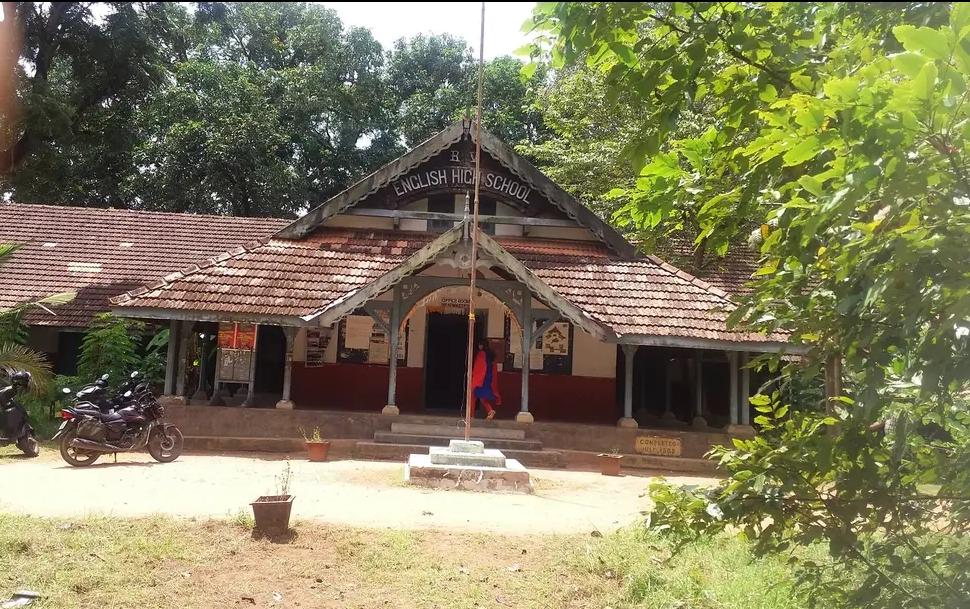
Schools across Kerala are set to reopen on 1 June, and safety checks haven't been completed.

Synopsis: Even as schools in Kerala are set to reopen after the summer vacation on 1 June, a dispute over who should certify campus safety has exposed gaps in the state’s inspection system, raising concerns over whether mandatory checks on buildings, electrical installations and other hazards can be completed in time. The controversy, now before the KAT, has also revived uncomfortable questions about accountability in a state shaped by past school tragedies linked to structural and safety failures.
With schools in Kerala set to reopen in less than a week, the state government is grappling with an issue that goes far beyond paperwork: who will certify whether the schools are safe for children?
The uncertainty stems from a circular issued after a 13 May meeting, which Chief Secretary A Jayathilak had chaired. District collectors and various department secretaries attended the meeting.
The meeting directed assistant engineers and the health wing of Local Self-Government (LSG) institutions to inspect school buildings and premises, and issue fitness certificates.
The move triggered resistance from a section of assistant engineers, who approached the Kerala Administrative Tribunal (KAT).
On 22 May, the Tribunal put the circular on hold, and sought an explanation from the government by Friday, 29 May — three days before the schools are set to bustle with activities.
The dispute has cast a shadow over the annual pre-opening safety checks. The General Education Department has been maintaining that a meeting held on 26 May had decided to exempt LSG assistant engineers from inspecting school wiring and other electrical installations.
However, the absence of a formal government order has left officials confused. They don’t know who is responsible for the certification process.
Even as the confusion continues, painful reminders of safety lapses have returned to haunt the state.
On the opening day of the 2016 academic year, a 13-year-old student was killed when a pillar on the verandah of MGTHS, Kollam, collapsed during the Praveshanolsavam celebrations (the grand event marking the reopening).
Three years later, 10-year-old Shehala Sherin died of a snakebite. She was in her classroom at the Government Vocational Higher Secondary School in Sulthan Bathery, Wayanad, when the snake bit her.
Last July, 13-year-old Midhun, a Class VIII student of Thevalakkara Boys Higher Secondary School in Kollam, was electrocuted after climbing onto the roof of the school’s bicycle shed to retrieve his slipper.
He reportedly came into contact with a live power line that was sagging unnoticed or ignored.
As the countdown for school reopening entered its final days, the unresolved tussle over fitness certification has raised uncomfortable questions about accountability and safety oversight.
It has also raised doubts over whether every campus across the state would be thoroughly checked before lakhs of children arrive.
Also Read: School safety under fire after Kollam tragedy
The School Fitness Certificate issued by the LSGD engineer would be the final stage of a comprehensive safety verification process involving multiple government departments, according to the School Safety and Security Guidelines.
The guidelines were drawn up in September 2025 following a High Court directive.
The guidelines were set in the aftermath of the death of a student, Shahla Sherin, of Government Sarvajana Vocational Higher Secondary School, Wayanad, in 2019, after she was bitten by a snake inside a classroom.
The High Court examined the issue after a writ petition was filed by Kulathoor Jaisingh. A suo motu proceeding was initiated, leading to the formulation of a detailed safety framework for schools across the state.
The guidelines mandate every school to conduct a comprehensive safety audit covering its entire infrastructure. The audit must assess the structural safety of buildings, classrooms, sanitation facilities, electrical systems and perimeter fencing.
Schools are required to identify and rectify physical hazards, including open pits, damaged floors, exposed electrical wiring and unsecured doors or windows.
Attention has also been directed to the surroundings of educational institutions. School compounds, playgrounds and adjoining areas must be cleared of overgrown vegetation, stagnant water and other conditions that could pose health risks or attract wildlife, including snakes.
LSG engineers are required to verify not only the structural stability of school buildings but also the safety of the land and premises where the institution functions, before issuing the annual School Fitness Certificate.
The inspection must cover trees that might fall on buildings or playgrounds, precarious compound walls, earthen mounds, abandoned structures, electric posts, hoardings, arches, towers, uncovered wells, pits and traffic-related risks near school entrances.
The guidelines also provide for the constitution of a School Safety Monitoring Committee in every institution.
The committee must comprise the school manager, headmaster or headmistress, PTA representatives, teacher and non-teaching staff representatives, the ward member and officials representing the Forest and Wildlife Department, Electrical Inspectorate, Kerala State Electricity Board and Health Department.
Applications for school fitness certification must carry the approval of the monitoring committee. Members are required to certify the prescribed checklist and verify that safety measures have been examined before forwarding the application.
The document stressed that all government-aided and unaided schools, including pre-primary institutions, must obtain fitness certificates through LSG engineers.
It placed responsibility on the head of the LSG institution concerned to ensure that no school operates without a valid fitness certificate.
The guidelines made it clear that the responsibility for school safety does not rest with the engineering wing of the Local Self-Government Department alone. Department-wise responsibilities and checklists have been prescribed to ensure coordinated verification before certification.
Under the framework, the Engineering Wing of the LSG Department is responsible for assessing the structural stability of school buildings, including foundations, walls, roofs, beams, columns and floors.
The Electrical Inspectorate and Kerala State Electricity Board have been tasked with inspecting electrical wiring and fittings, ensuring replacement of obsolete or damaged systems, verifying proper earthing and certifying that transformers, electric posts and overhead power lines do not pose a threat to students.
Separate responsibilities have also been assigned to the Fire and Rescue Services Department, Health Department, Forest and Wildlife Department and Motor Vehicles Department as part of the safety assessment process.
The guidelines specifically state that officials of each department must personally inspect institutions, verify compliance within their area of responsibility and record their findings.
The LSG assistant engineer can issue the final School Fitness Certificate only after ensuring that all departmental inspections have been completed and duly authenticated.
The framework effectively positioned the LSG engineer as the final certifying authority, while making the certificate contingent upon documented safety clearances from all stakeholder departments involved in protecting schoolchildren.
Also Read: Kerala to unleash ambitious ‘Toofan’ to flatten drug menace
Despite having a set of guidelines, the school fitness certification process underwent a change, triggering resistance from a section of the LSG engineers. Four assistant engineers approached the KAT, challenging the new inspection mechanism.
The dispute centred on a government circular issued in November 2025, which had laid down a detailed procedure for issuing fitness certificates to schools.
The circular stipulated that the certificate was to be issued by the LSG assistant engineer only after obtaining no-objection certificates from five departments: the Electrical Inspectorate, Fire and Rescue Services, Health Department, Forest and Wildlife Department, and Motor Vehicles Department.
The arrangement underwent a significant change following a meeting chaired by the Chief Secretary on 13 May.
Acting on the decisions taken at the meeting, General Education Department Principal Secretary Dr Sharmila Mary Joseph issued a fresh circular, titled “General Education Department-Guidelines on Implementation of Safety Instruction in Schools-fitness Certificate to Schools from the Local Self Government Department-revised Instruction’, on the same day.
The new order stated that assistant engineers and the Health Wing of LSG institutions would inspect school buildings and premises and verify the items included in a revised checklist.
Based on compliance with the checklist, the LSG institution would issue the fitness certificate for school buildings.
Questioning the revised system, four assistant engineers attached to Peruvallur Grama Panchayat, Pampakkuda Grama Panchayat, Valakom Grama Panchayat and Pattanchery Grama Panchayat moved the Tribunal.
In their plea, the engineers contended that the government should continue with the inspection framework prescribed in the November 2025 circular. They sought a direction requiring the state government to follow the earlier system and exclude LSG assistant engineers from inspecting and certifying safety aspects that do not fall within the jurisdiction or technical expertise of their department.
The petitioners argued that responsibilities relating to specialised areas such as fire safety, electrical safety, vehicle-related safety requirements and other sector-specific matters should remain with the respective competent departments rather than being shifted to LSG engineers through a consolidated checklist-based inspection process.
Also Read: Kerala finally declares snakebite a notifiable disease
The dispute took a fresh turn on 26 May as the state government decided to exempt LSG assistant engineers from inspecting school wiring and other electrical installations.
The move came even as the matter was under the consideration of the KAT.
During a hearing on 22 May, judicial member MR Sreeletha examined the LSG assistant engineers’ challenge against a government circular requiring them to issue No Objection Certificates (NOCs) for electrical works in schools.
Taking note of the approaching reopening of schools, the Tribunal directed the government pleader to get urgent instructions on the implementation of the 13 May circular. The government was also asked to explain the reasons for departing from the existing guidelines.
The Tribunal also ordered that, until further orders, the applicants should not be compelled to issue NOCs, and posted the case for further hearing on 29 May.
Amid the legal proceedings, the government convened a review meeting on school fitness certification on 26 May.
The meeting, attended by General Education Minister N. Samsudheen, Principal Secretary Sharmila Mary Joseph and Director of General Education Asif K. Yusuf, decided that electrical installations in schools could be certified by licensed wiremen instead of LSG assistant engineers.
While the decision has been taken at the administrative level, a formal government order has not been issued.
With schools scheduled to reopen in five days and two public holidays falling within the remaining window, questions remain over how comprehensively the mandatory safety checks can be completed.
Until the government issues clear orders on the certification process and departmental responsibilities, uncertainty is likely to persist over whether every school will undergo the scrutiny envisaged under the state’s safety guidelines before students return to classrooms.



