

Published May 25, 2026 | 7:00 AM ⚊ Updated May 25, 2026 | 7:00 AM

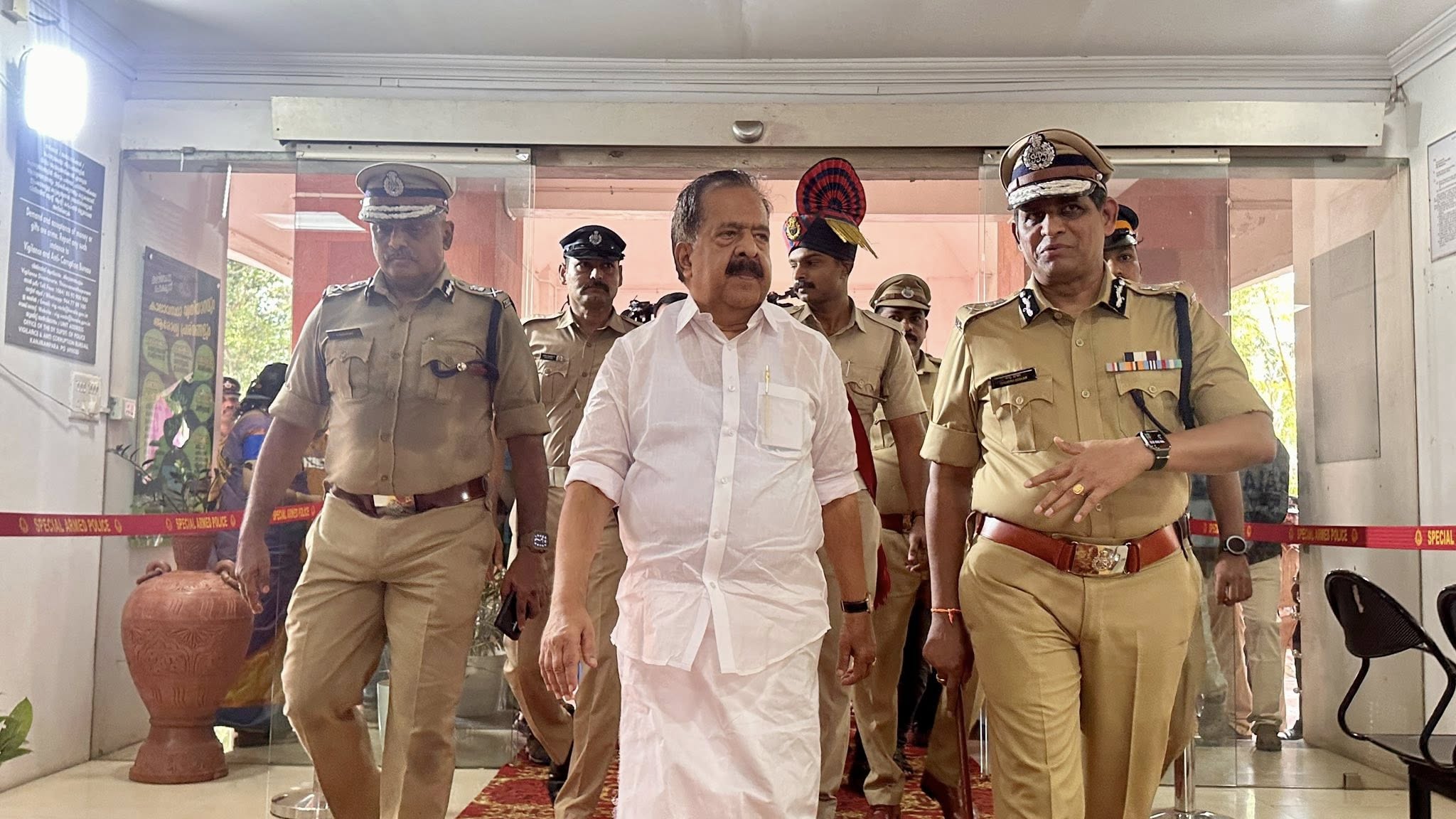
Home Minister Ramesh Chennithala at the Police Headquarters.

Synopsis: The Kerala government has announced ‘Operation Toofan: The Narco Hunt,’ a statewide anti-drug crackdown beginning on 1 June, with a strong focus on dismantling interstate narcotics networks, targeting synthetic drug supply chains, and preventing the spread of drugs among students. Home Minister Ramesh Chennithala also unveiled a broader policing overhaul aimed at improving behaviour towards the public in police stations, strengthening cybercrime investigations, and modernising law enforcement systems.
In his earlier avatar as Kerala’s Home Minister between January 2014 and May 2016, Ramesh Chennithala cracked the whip on illegal moneylenders in the state in a mission codenamed Operation Kubera.
Ten years later, Chennithala is back at the helm of the Home Ministry, and announced his intention to unleash a toofan — or storm — to uproot drug syndicates that have mostly been targeting the state’s youngsters.
Come 1 June, and the toofan will make a landfall, Chennithala announced at his first major intervention after assuming charge as the state’s Home Minister.
Senior police officers were in rapt attention when he made the announcement at the Police Headquarters in the state capital, Thiruvananthapuram, on Saturday, 23 May.
Naming the new mission, Operation Toofan: The Narco Hunt, was deliberate, sources said. It conveys force, speed and disruption.
Specifically designed to dismantle the cross-border networks and local syndicates that target school and college students, the Home Department said the state will employ an unyielding tactical posture to track down distribution sources, monitor synthetic drug inflows, and sanitise vulnerable public spaces.
Also Read: ‘Cooks’ make merry as drugs spur youth to crime
The police will launch a coordinated, statewide offensive against narcotics networks, synthetic drug syndicates, hybrid ganja suppliers and the growing ecosystem of peddlers on 1 June, the date on which schools across Kerala are scheduled to reopen after the summer vacation.
Home Minister Ramesh Chennithala with State Police Chief Ravada Chandrasekhar (Left) and police advisor A Hemachandran.
The operation is expected to combine surveillance, interstate coordination, intelligence gathering and visible policing in a manner that the government felt has been missing in recent years.
The timing is politically significant.
For 10 years, when the Congress-led United Democratic Front (UDF) sat in the Opposition, it had repeatedly accused the previous Left government of failing to contain the spread of narcotics.
UDF leaders had argued both inside and outside the Assembly that drugs were steadily infiltrating schools, colleges and even residential neighbourhoods while enforcement agencies remained incapable of identifying the “origin” or operational epicentre of the network.
The UDF has frequently alleged that law enforcement had concentrated on arresting small users while major suppliers and interstate handlers escaped scrutiny — and continued the dirty business unhindered.
That political background gives Operation Toofan unusual significance. The new government is aware that its credibility will now be measured against the promises it had made while in Opposition.
Also Read: Malayalam film industry’s dirty open secret
Chennithala announced that every layer of the narcotics chain — users, carriers, peddlers, distributors and suppliers — would come under strict surveillance.
A special operational framework has already been prepared for the campaign, the minister said, and added that the focus would not stop with arrests. Police teams have been instructed to trace supply routes besides identifying the source networks feeding Kerala’s drug market.
Kerala already has an anti-drug campaign, the “Operation D Hunt.”
Yet, Home Department officials felt that the scale of the narcotics problem required a more expansive, intelligence-driven and visible campaign.
The government expressed hope that the new operation will project seriousness in a way that earlier efforts lacked.
Also Read: Kerala ropes in private sector to fight drugs
Police officers involved in the planning said Operation Toofan was being designed not as a routine anti-drug inspection drive but as a sustained offensive aimed at dismantling organised supply structures operating across the state’s borders.
Kerala police chief, DGP Ravada Chandrasekhar, will coordinate directly with police chiefs in neighbouring states to crack down on interstate narcotics channels, particularly those linked to synthetic and chemical drugs.
The choice of the word toofan, a senior police official said, reflected the government’s attempt to project aggression and urgency.
Officials described the naming exercise as psychological as much as operational.
In the subcontinent’s vocabulary, toofan evokes the image of a furious storm or tempest — a force that moves suddenly, spreads rapidly and overwhelms everything in its path.
The symbolism is intentional, officials said.
Also Read: Organised drug networks make Kerala rebuild school safety system
The operation is meant to communicate that the state is shifting from reactive policing to an aggressive offensive posture.
The campaign’s 1 June launch is expected to coincide with intensified checks targeting peddlers who attempt to exploit the reopening of schools and colleges. Police sources said the objective is to hit the networks before they regain momentum after the two-month-long vacation.
By describing the drive as a “storm,” the administration is also trying to reassure an increasingly concerned members of the public.
The Congress-led front, while in Opposition, repeatedly claimed that the state had failed to identify the real nerve centres of narcotics trafficking. The argument was not merely about seizures or arrest statistics: it focused on the absence of sustained action against organised cross-border suppliers and networks.
By announcing interstate coordination at the DGP level, the new government appears keenly aware of that earlier criticism.
Officials said there will be special monitoring to stop the inflow of chemical narcotics, synthetic substances and hybrid ganja into Kerala.
Also Read: Kerala’s battle against drug-fueled violence
Surveillance is expected to extend beyond conventional trafficking routes.
The Home Department has instructed police units to closely monitor five-star hotels, DJ parties, rave gatherings, private luxury events and parties conducted in backwaters and coastal areas, where narcotics consumption has reportedly increased in recent years.
The government also plans to crack down on tobacco sales near schools and educational institutions. Police, excise officials and school authorities are expected to coordinate during the reopening period to identify vulnerable zones around campuses.
Over the past few years, concern over narcotics has become one of Kerala’s most emotionally charged public issues.
Stories of drug-linked violence, campus distribution networks, addiction among teenagers and the circulation of synthetic substances generated intense debate across the state.
Political parties, religious organisations, parent associations and youth groups have repeatedly raised alarm over the scale of the problem.
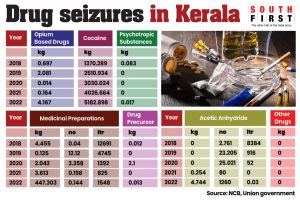
Also Read: Kerala’s escalating drug seizures signal a growing threat
Alongside enforcement, a structural overhaul is being introduced across all 484 police stations in Kerala to transform them into highly accountable public service centres.
Chennithala said the emphasis should be on treating visitors with dignity rather than suspicion.
Officers have been instructed that anyone entering a station must be received respectfully, greeted with a “Good Morning” and “Namaskaram.” They should lend a patient ear too.
The language Chennithala used reflected growing public criticism about hostile behaviour in police stations.
Complaints about rude conduct, delay in hearing grievances and insensitive treatment have repeatedly surfaced in recent years, particularly in cases involving women, migrant workers and ordinary citizens approaching stations for civil assistance rather than criminal matters.
Senior officers have now been directed to ensure that complaints are handled calmly and without intimidation. The government also wants stations to be tidy and modernised.
The directive aligns with the state police’s motto, Mridhu Bhave Dhrida Kruthye — Sanskrit for “Polite, Yet Firm!”
Chennithala instructed the Director General of Police to initiate steps for the disposal and auction of abandoned vehicles lying unused in police station compounds for years.
The minister also added that to rectify policing gaps identified after station responsibilities were shifted from Sub-Inspectors (SIs) to Circle Inspectors (CIs), a five-member committee led by the ADGP (Headquarters) has been appointed to ensure the optimal utilisation of human resources.
The department is also restructuring its operational focus toward rigorous cybercrime investigations—specifically targeting loan app frauds, social media harassment, and cryptocurrency scams—while heavily investing in road safety technologies and modernising the official police training syllabus.
The Home Minister further added that police units handling cyber investigations are expected to receive additional manpower and technological support after consultations with the Chief Minister.
Chennithala also underscored that the government has drawn a firm line regarding law enforcement integrity. He clarified that political interference or external intimidation directed at the police force will not be tolerated.
(Edited by Majnu Babu).



