

Published Jul 05, 2026 | 2:50 PM ⚊ Updated Jul 05, 2026 | 2:50 PM

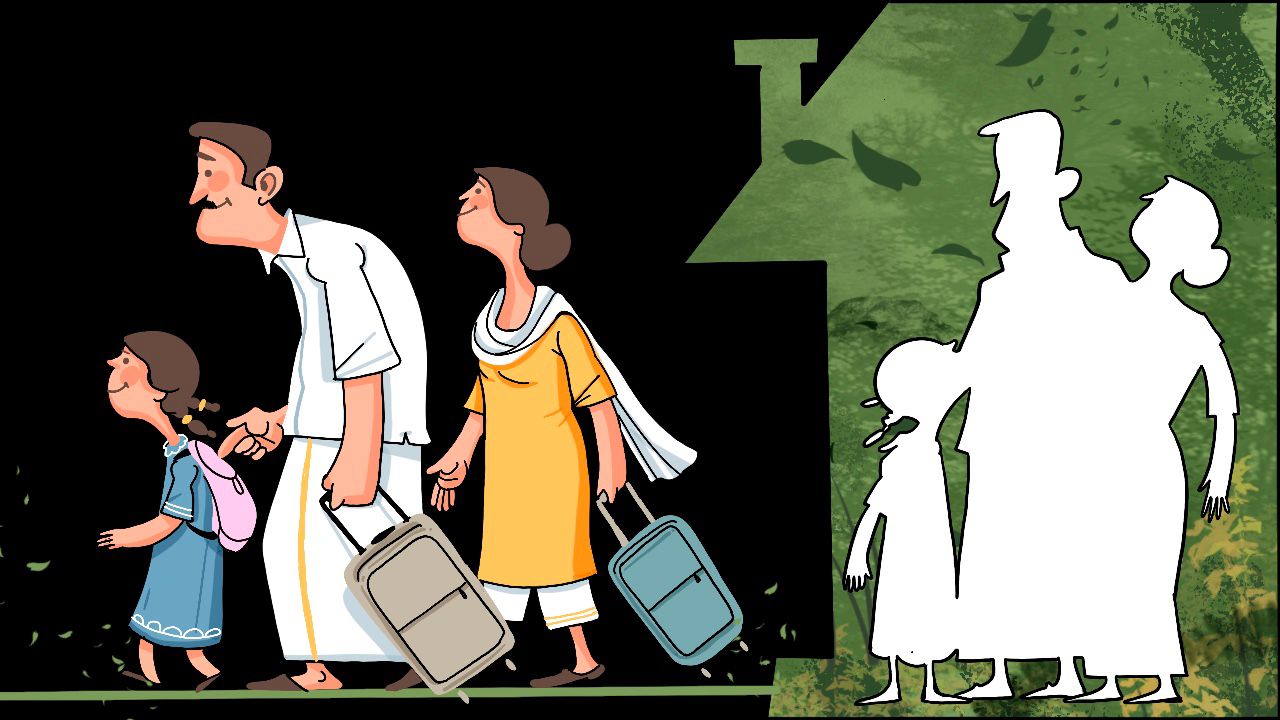
The proposed legislation reflected a simple principle: financial recovery should not leave a family without a roof over their head.

Synopsis: Seven years after a Kerala Assembly committee proposed sweeping safeguards against harsh recoveries under the SARFAESI Act, most of its key recommendations remain unimplemented. The latest Action Taken Report revealed little progress beyond representations to the Centre.
Every time a family in Kerala loses their home to recovery proceedings under the Securitisation and Reconstruction of Financial Assets and Enforcement of Security Interest (SARFAESI) Act, the debate over the law returns with renewed urgency.
In recent years, a series of tragic incidents of borrowers getting pushed over the brink has exposed the human cost of mechanical enforcement, particularly in cases involving small loans and economically vulnerable families.
Less remembered is that the Kerala Legislative Assembly had, more than six years ago, undertaken a detailed study of the issue.
An 11-member ad hoc committee, constituted in December 2018 under the chairmanship of S Sarma, had then travelled across the state. The committee heard victims, farmers’ organisations, legal experts and government officials, and submitted its report to the Assembly in November 2019.
The committee proposed a series of measures aimed at protecting distressed borrowers while retaining the banking system’s ability to recover dues.
The report was presented as a possible template for legislative intervention on an issue that had generated widespread public concern.
But what became of its recommendations? Were any of them implemented, or has the report remained largely confined to the Assembly records even as fresh tragedies continue to unfold?
Also Read: ₹2.85 lakh crore debt is crushing farmers
Nearly seven years after the committee recommended sweeping changes to protect borrowers from stringent recovery proceedings under the SARFAESI Act, most of its proposals have remained either unimplemented or pending.
An Action Taken Report (ATR) tabled in the Assembly on 1 July showed that the state government had largely limited its response to forwarding representations to the Centre or citing regulatory constraints, and the key reforms sought by the committee have not been carried forward.
The committee recommended that cooperative banks be exempted from the purview of the SARFAESI Act.
Responding, the Cooperation Department stated that such an exemption was not feasible in the case of the Kerala State Cooperative Bank (Kerala Bank) since it functions under the regulatory framework of the Reserve Bank of India (RBI) and the National Bank for Agriculture and Rural Development (NABARD), both of which require banks to implement the Act as part of measures to reduce non-performing assets (NPAs).
However, the department said a representation could be made to the Centre seeking an amendment to exempt borrowers who had mortgaged houses and land not exceeding five cents.
The report noted that the response cannot be treated as a final report, adding that although the department stated that a representation had been submitted to the central government, no details of any follow-up action have been made available.
The committee also urged the state government to request the Centre to amend the law so that proceedings under the SARFAESI Act could be initiated only after a borrower had remained in default for one year, instead of the present norms, and only in respect of loans exceeding ₹10 lakh instead of the existing threshold of ₹1 lakh.
The Cooperation Department shot down the proposal. It stated that banks are bound by RBI and NABARD norms, under which loans, classified as non-performing assets (NPAs) after more than three months of default, must be recovered through available legal mechanisms.
It pointed out that a substantial share of bank lending comprised loans below ₹10 lakh, and increasing the threshold would leave a large volume of bad loans outside the scope of recovery under the Act, adversely affecting banks.
The department maintained that proceedings under the SARFAESI Act were initiated only as a last resort after other legal procedures had failed.
The committee further recommended that all loans by farmers should be treated as agricultural loans and kept outside the purview of the SARFAESI Act. It also sought protection for borrowers who defaulted on education loans after failing to secure employment within the expected period by either exempting such loans from the Act or extending the repayment tenure.
The response stated that there was merit in excluding loans taken by farmers for agricultural purposes from the Act, but extending the exemption to all loans availed by farmers would seriously affect loan recovery.
It also stated that educational loans already enjoyed repayment concessions under existing legal provisions and therefore could not be exempted from the SARFAESI Act.
Recognising Kerala’s unique pattern of cultivation, the committee had recommended that the state request the central government to treat all cultivated land, including plantations, as agricultural land for bank lending.
The Planning and Economic Affairs Department informed the Assembly that the recommendation had been conveyed to the Centre through a letter dated 13 March 2020, seeking necessary amendments.
The committee also proposed that borrowers who had already repaid two-thirds of their loan amount should be exempted from proceedings under the SARFAESI Act for the remaining balance and that the Banking Ombudsman should extend special consideration to such complaints.
The Cooperation Department opposed the proposal, stating that exempting loans that had already become NPAs merely because two-thirds of the amount had been repaid would undermine efforts to reduce bad loans.
It suggested that such cases could instead be addressed through One-Time Settlement (OTS) schemes. The Planning and Economic Affairs Department stated that this recommendation, too, had been forwarded to the central government through its communication dated 13 March 2020.
The committee also expressed concern over reports of recovery agents and private financiers allegedly harassing borrowers under the guise of the SARFAESI Act and recommended comprehensive legislation covering not only banks but all lending institutions to curb illegal recovery practices.
The Cooperation Department said it supported any measures aimed at preventing illegal activities. However, the ATR recorded that the Planning and Economic Affairs Department had not submitted any report on follow-up action in this regard.
Another recommendation related to the alleged practice of banks and financial institutions displaying photographs and addresses of loan defaulters and their family members in public places as part of recovery proceedings. The committee termed the practice a violation of privacy and recommended criminal action against institutions indulging in it.
The Home Department informed the Assembly that no such incidents had been noticed and that no complaints had been received. It said the state police chief had instructed district police chiefs, sub-divisional police officers and station house officers to examine the legal aspects of any such complaints and initiate appropriate action wherever necessary.
The department also noted that similar directions had earlier been issued to police officers in June 2021 to take legal action if such instances were reported.
The ATR indicated that while several recommendations were formally communicated to the central government, substantive changes sought by the committee—including exemptions for cooperative banks, higher thresholds for invoking the SARFAESI Act, extended protection for small borrowers and education loan defaulters, and safeguards for borrowers who have substantially repaid their loans—remained unimplemented.
The report also flagged the absence of follow-up reports in respect of some recommendations, despite earlier assurances that the matters had been taken up with the Centre.
Also Read: How can home owners reduce housing loan EMIs?
Growing public anger over the implementation of the SARFAESI Act in Kerala during 2016-18 prompted the state legislature to step in.
The SARFAESI Act, enacted by the Union Government in 2002, empowers banks and financial institutions to recover secured debts exceeding ₹1 lakh without prior court or tribunal intervention. The Act applies uniformly to all borrowers and guarantors, without distinguishing them based on their financial condition or the magnitude of their debt.
In December 2018, amid mounting protests by scheduled castes, farmers, students, small traders and economically weaker sections who claimed they were being pushed to the edge by aggressive loan recovery measures, the Kerala Legislative Assembly constituted the ad hoc committee to study the law’s impact in the state.
The committee, formed during the 13th sitting of the 14th Kerala Legislative Assembly on 13 December 2018, was tasked with examining the social and economic consequences of actions taken under the SARFAESI Act and recommending measures to protect affected borrowers.
While the SARFAESI Act had been in force since 2002, the committee noted that banks had begun invoking its provisions far more aggressively only during 2016-18. It observed that within this brief period, thousands of borrowers across Kerala had come under the shadow of foreclosure, triggering widespread public concern over the law’s implementation and its human cost.
Also Read: Is reverse mortgage a lifeline for senior citizens?
For nearly a decade, Kerala has consistently argued that debt recovery cannot come at the cost of pushing vulnerable families into homelessness.
While the Centre continued defending the legal framework of the SARFAESI Act, successive governments in the state have sought safeguards for small borrowers, farmers and economically weaker households facing the threat of losing their homes over loan defaults.
The state’s opposition to the manner in which the law operates dates back to 2017.
Taking note of growing complaints from farmers and low-income families facing attachment and eviction proceedings, the Kerala Assembly unanimously adopted a resolution on 21 August 2017, during the seventh session of the 14th Assembly.
The resolution pointed out that while Section 31(i) of the SARFAESI Act excluded agricultural land offered as security from the Act’s purview, no similar protection existed for small residential properties.
It urged the Union Government to amend the law so that land and houses measuring up to five cents, when offered as security, would also be kept outside the scope of SARFAESI proceedings.
The Assembly warned that without such an amendment, lakhs of poor families could be pushed into severe distress.
The issue did not end with the Assembly resolution.
The state subsequently constituted the ad hoc committee to study the impact of the legislation, particularly on vulnerable sections of society, and to examine possible legal and policy interventions.
Then came the Kerala Single Dwelling Place Protection Bill, 2025, which sought to prevent families from losing their only residential house due to relatively small loan defaults.
At its heart, the proposed legislation reflected a simple principle: financial recovery should not leave a family without a roof over their head.
The Bill was rooted in the broader constitutional argument that recovery mechanisms, however essential to the banking system, must remain consistent with the right to life and dignity guaranteed under Article 21 of the Constitution.
Yet, the legislation also raised significant constitutional questions.
The SARFAESI Act is a Central law enacted under Entry 45 of the Union List, which deals with banking.
Any state legislation that substantially affects the operation of the Central law could be challenged under Article 254 of the Constitution on the ground of repugnancy, unless it receives Presidential assent. Although the Kerala Bill stated that it was intended to supplement, and not override, existing laws, its practical effect of restricting or delaying enforcement against secured residential properties could invite judicial scrutiny over legislative competence.
Despite these legal uncertainties, organisations campaigning against the SARFAESI Act see the present political situation as an opportunity.
Leaders of the anti-SARFAESI movement point out that VD Satheesan, who had served as a member of the ad hoc committee that examined the social consequences of the legislation, is now the chief minister. They felt that the committee’s recommendations and the concerns raised over the years could finally receive policy attention at the highest level.
Movement leaders said they have already submitted a detailed memorandum to the chief minister outlining the present situation, including what they described as the growing influence of loan recovery mafias and the difficulties faced by borrowers. They were expecting detailed discussions with the government in the coming days, hoping that Kerala’s long-standing demand for stronger protection of vulnerable borrowers would finally move beyond resolutions and proposed legislation into enforceable safeguards.
(Edited by Majnu Babu).



