

Published May 02, 2026 | 11:49 AM ⚊ Updated May 02, 2026 | 11:49 AM

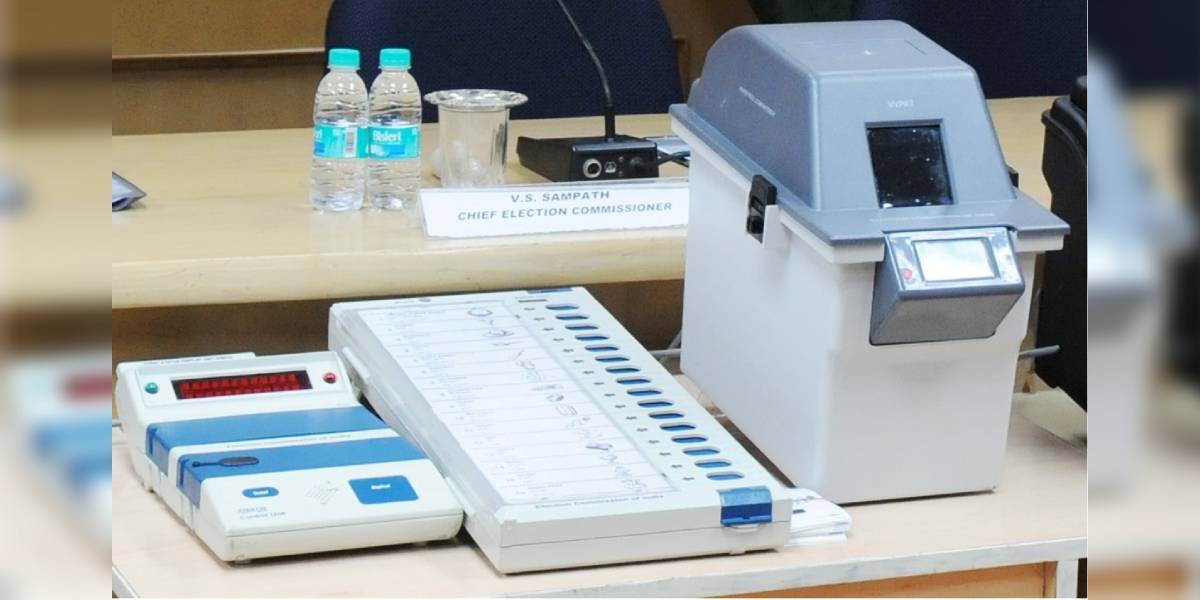
EVMs. (Supplied)

Synopsis: The counting will begin with postal ballots, followed by votes recorded in Electronic Voting Machines (EVMs). Each counting centre will have up to 14 tables for EVM counting, with a maximum of 14 EVMs counted per round. Separate tables will be designated for postal ballots at a ratio of one table per 500 ballots, each supervised by an ARO.
With the counting of votes for the 2026 Assembly elections scheduled for 4 May, Kerala has completed all preliminary arrangements to ensure a smooth, transparent, and efficient process.
Chief Electoral Officer- Kerala (CEO) Ratan U Kelkar confirmed that counting will commence sharply at 8 am across the state. A total of 140 counting centres spread across 43 locations have been set up, backed by a massive workforce of 15,465 officials.
Also Read: Kerala Assembly post poll survey: People’s Pulse predicts a UDF surge; LDF faces heat
The counting will begin with postal ballots, followed by votes recorded in Electronic Voting Machines (EVMs). Each counting centre will have up to 14 tables for EVM counting, with a maximum of 14 EVMs counted per round. Separate tables will be designated for postal ballots at a ratio of one table per 500 ballots, each supervised by an ARO.
Strong rooms housing EVMs and other polling equipment will be opened in the presence of candidates or their authorised representatives, along with Election Commission observers and officials.
The entire process will be duly recorded to ensure transparency.
After each round, Form 17C (Account of Votes Recorded) will be placed alongside the control unit for verification.
Any discrepancies between EVM vote counts and booth-level data will trigger a mandatory VVPAT verification.
To maintain accuracy, VVPAT slips—which display the serial number, candidate name, and symbol—will be checked in case of inconsistencies.
Additionally, five booths per constituency will undergo mandatory VVPAT verification, and two EVM observers will be randomly assigned per round.
The data recorded in EVMs will be cross-verified with Part I of Form 17C, ensuring consistency between machine data and official polling records.
Detailed guidelines have been issued to candidates and their agents to maintain order and integrity during counting:
Do’s:
Don’ts:
Officials also added that, “An Index Card, a comprehensive election report, will be prepared based on data submitted by Returning Officers through ECInet.”
This will be verified by the CEO within 48 hours and forwarded to the Election Commission of India.
Also Read: Unknown forces, PR fuel the ‘constant’ as ‘united’ Congress hopes to win Kerala



