

Published Jul 02, 2026 | 11:52 AM ⚊ Updated Jul 02, 2026 | 11:52 AM

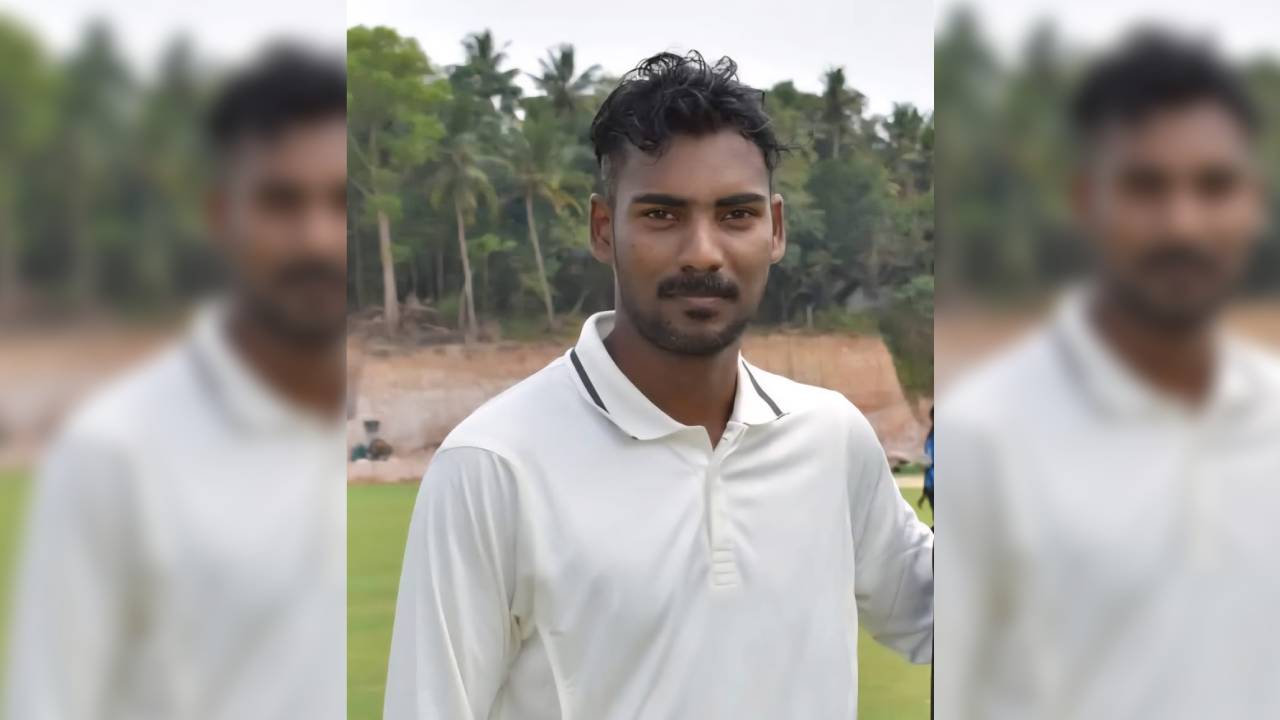
The trial exposed how M Manu systematically weaponised his authority to exploit aspiring athletes from 2012 to 2024.

Synopsis: Every survivor believed she was alone until an unexpected meeting at a cricket tournament changed everything. What followed was a chain of disclosures that uncovered an alleged pattern of grooming and sexual abuse, culminating in one of Kerala’s most significant POCSO convictions involving a sports coach.
For years, every girl believed she was carrying the burden alone. A cricket coach in Kerala allegedly picked his victims carefully, young trainees with ambitions, trust and everything to lose. He is accused of exploiting their dream of playing the sport, warning them that speaking out against the sexual abuse would end their cricketing future. The silence held for years because each survivor thought she was the only one.
That silence broke on the sidelines of a cricket tournament in Thiruvananthapuram in 2024.
When one former trainee unexpectedly came face to face with her old coach, the shock was immediate. Her reaction drew attention, and soon the story she had kept to herself reached the police. More importantly, it reached others who had lived through similar experiences. One by one, former trainees began coming forward. Their accounts, told independently, revealed a pattern that investigators said stretched back years.
Six cases were registered against Manu M, a resident of Vallakadavu Srivaraham in Thiruvananthapuram. He has been convicted in four of the cases, while trials are pending in the remaining two.
The conviction of Manu is therefore more than the conclusion of four criminal trials. It is the story of survivors finding one another, discovering that their experiences were not isolated, and turning years of private trauma into collective testimony. Together, they dismantled the silence that had protected a man who believed fear would keep his victims apart.
In a world where raw athletic talent is aplenty and career-making opportunities are devastatingly few, a cricket coach holds an almost larger-than-life image for a child.
He is the keeper of the gate, the one who can turn long hours at the nets into a state jersey, and maybe into a national jersey.
It was precisely this immense disparity in power that former Trivandrum District Cricket Association (TDCA) coach Manu weaponised for years, systematically casting a net of grooming, blackmail and sexual abuse over young girls who trusted him with their futures.
The full scale of how Manu used his position under the Kerala Cricket Association (KCA) to hunt has laid bare a horrifying, recurring pattern across multiple cases.
For these children, caught in the fragile space between childhood and their teenage years, the cricket ground did not become a launchpad for their dreams but a site of entrapment.
The evidence across the cases reveals a chillingly repetitive playbook.
Manu did not just look for vulnerable children; he actively manufactured conditions to isolate them.
In the first case, involving a seventh-grade student who joined the centre with dreams of representing her state, Manu struck within her very first few days of training. He led her to the facility’s gymnasium on the pretext of “specialised fitness work.” The prosecution proved that this choice of location, along with nearby restrooms, was entirely calculated.
Manu knew the layout of the KCA headquarters perfectly and targeted the exact corners that sat outside the reach of CCTV surveillance cameras.
Once isolated, the physical abuse was reinforced by psychological coercion.
He demanded nude photographs from the child, fabricating a grotesque lie that the Board of Control for Cricket in India (BCCI) mandated these images as official fitness and selection evaluation metrics. When she bravely refused, the coach retaliated by intentionally withholding proper training, effectively grounding her development. Terrified that speaking out would permanently destroy her cricket career before it even began, the girl quietly abandoned the academy in 2021 to seek training elsewhere.
This exact formula of professional hostage-taking was repeated in the second case.
Between June 2018 and December 2019, another young trainee was subjected to inappropriate touching, lewd comments with sexual undertones, and persistent demands for photographs. Like the others, she finally walked away from the KCA nets at the end of 2019, fully convinced that Manu would never allow her proper practice. She carried the heavy double burden of fearing her career was ruined and dreading how her family would react if they ever found out.
As the cases progressed, the details showed a predator operating with complete impunity, expanding his reach beyond the official KCA facilities.
In the third incident, the survivor was just 11 years old when Manu first touched her inappropriately at the KCA centre in December 2018.
The exploitation bled into the pandemic years. In 2019, during the Covid-19 disruptions, he targeted her on the cricket turf of the S 10 Cricket Academy.
In 2021, after the lockdowns eased, he shifted his abuse to another cricket turf and trapped her inside an autorickshaw, ultimately subjecting the young girl to penetrative sexual assault multiple times.
Perhaps the most devastating psychological toll is captured in the fourth case, spanning from June 2018 to December 2021.
Here, Manu cornered a minor in the KCA washroom area, using highly charged sexual language before taking a naked picture of her on his mobile phone. Later, in the fourth-floor gymnasium, he touched her inappropriately and assaulted her.
But the physical violence was only half the trauma.
Manu systematically broke her spirit through relentless mental harassment and cruel body-shaming, constantly mocking her physique and crudely asking the child if she had already had sex with other men.
Driven into a severe depression by this relentless torment, the girl attempted to end her life by swallowing pills from her mother’s cabinet, believing them to be sleeping aids. Though they turned out to be calcium tablets, the depth of her despair was real. She spent the next two years lost to intensive psychiatric treatment, fighting her way through crippling depression before finally leaving the city entirely to seek refuge in Idukki.
As Special Judge Anju Meera Birla of the Fast Track Special Court (POCSO), Thiruvananthapuram, who handled the cases observed in one of the judgments, when the accused occupies the position of a teacher or coach, the power imbalance makes disclosure especially difficult.
Young athletes, already carrying the burden of competition at an early age, often bottle up such trauma, forcing themselves to live with it until something finally breaks that silence.
That breaking point came during the Pink Tournament in Thiruvananthapuram. On 28 May 2024, the silence began collapsing.
One survivor, who had shifted to Bengaluru after the alleged abuse, had returned to participate in the tournament.
The players were staying at the Fort Manor Hotel. On that specific day, she unexpectedly came face to face with the accused inside the hotel lift.
She broke down.
Other players and team officials who were present in the lift immediately noticed her distress. When they asked what had happened, she could not bring herself to explain. Instead, she was given the Childline number. That call became the first step.
The court recorded that she later told investigators she had never reported the abuse earlier because she feared the accused would destroy her cricket career. Since the tournament was in progress and players could not leave until it concluded, she approached the police only after the 10-day event ended.
The court said such delayed disclosures are not unusual in cases of sexual abuse. The stigma attached to survivors and the position of authority held by the accused are crucial factors.
In this case, the accused was a coach with the Kerala Cricket Association. For an aspiring cricketer, the court noted, he was someone who could make or break a career. The fear that he could shut the doors of the game explained why the survivor/survivors remained silent for so long.
What followed after that first complaint revealed another painful truth.
The girls had lived parallel lives of quiet trauma, completely unaware that their teammates had allegedly faced the same abuse from the same coach.
The judgment records that one survivor told the court she spoke out only after learning through media reports that another player who had trained under the same coach had lodged a complaint. Until then, she had not disclosed the abuse even to her family.
It was only after seeing another survivor take that step that she found the courage to tell her parents and approach the police.
Another survivor echoed the same account. She told the court that while she was in Bengaluru, she came across media reports about the complaint filed by another cricketer. Only then did she inform her father about what had happened to her.
By then, she herself was on the path to becoming an established cricketer. The court observed that she, too, had much to lose by making such a disclosure.
What began with one survivor breaking down in a hotel lift became the moment that ended years of silence.
One complaint led to another, exposing what each survivor had believed was her burden alone. Piece by piece, the image of a man they feared could decide their future gave way to the accounts of the young women who had finally found the courage to speak.
As the court observed, these survivors had remained silent not because the abuse had not occurred, but because of the fear, stigma and the authority the accused wielded over their sporting careers.
“It can be seen that these poor girls have had to walk over fire, in the figurative sense, to reach where they are today,” one of the judgments noted.
The trials also witnessed what the court described as an extraordinary line of defence.
During his examination, the convict denied every incriminating circumstance brought out during the trials. He claimed that the training sessions would always take place in the presence of the children’s parents and asserted that the alleged place of occurrence was covered by CCTV cameras.
The defence then advanced another argument that drew strong criticism from the court.
Counsel for the accused contended that all the survivors are now leading their lives as they wish and argued that such a life would not have been possible had they really suffered sexual abuse at the hands of the accused.
Rejecting the contention in unequivocal terms, the court observed that accepting such an argument would mean assuming that once a person is victimised, they are expected to remain trapped in that identity for the rest of their lives.
“If the underlying aspect of such an argument were to be accepted, it would be that once a person has been victimised, they are supposed to remain as such victims and not break the shackles and move forward in their lives,” the court said in one of the judgments.
The judge noted that history has repeatedly shown that people overcome trauma and adversity, refusing to be defined by what they have endured.
The survivors in the case, the court said, had done exactly that — finding the courage to come forward, identify the accused and seek justice despite the trauma they had suffered.
In one of the judgments, the court said the complainant’s decision to name the accused and pursue the case reflected remarkable courage. During her deposition, her determination to speak about the abuse despite the emotional breakdown she experienced only reinforced, rather than weakened, the prosecution’s case.
Far from undermining the allegations, the survivors’ ability to rebuild their lives demonstrated resilience, the court observed, adding that a victim who overcomes trauma becomes a survivor who has weathered the storm and emerged stronger.
Manu has now been sentenced to a total of 127 years’ imprisonment and fined ₹2.23 lakh in four cases. However, the total time that he will have to serve in prison is 42 years. Of the six cases registered, convictions have been secured in four, while trials in the remaining two will begin after the court receives the scientific examination reports.
(Edited by Muhammed Fazil.)



