

Published May 06, 2026 | 12:12 PM ⚊ Updated May 06, 2026 | 12:21 PM

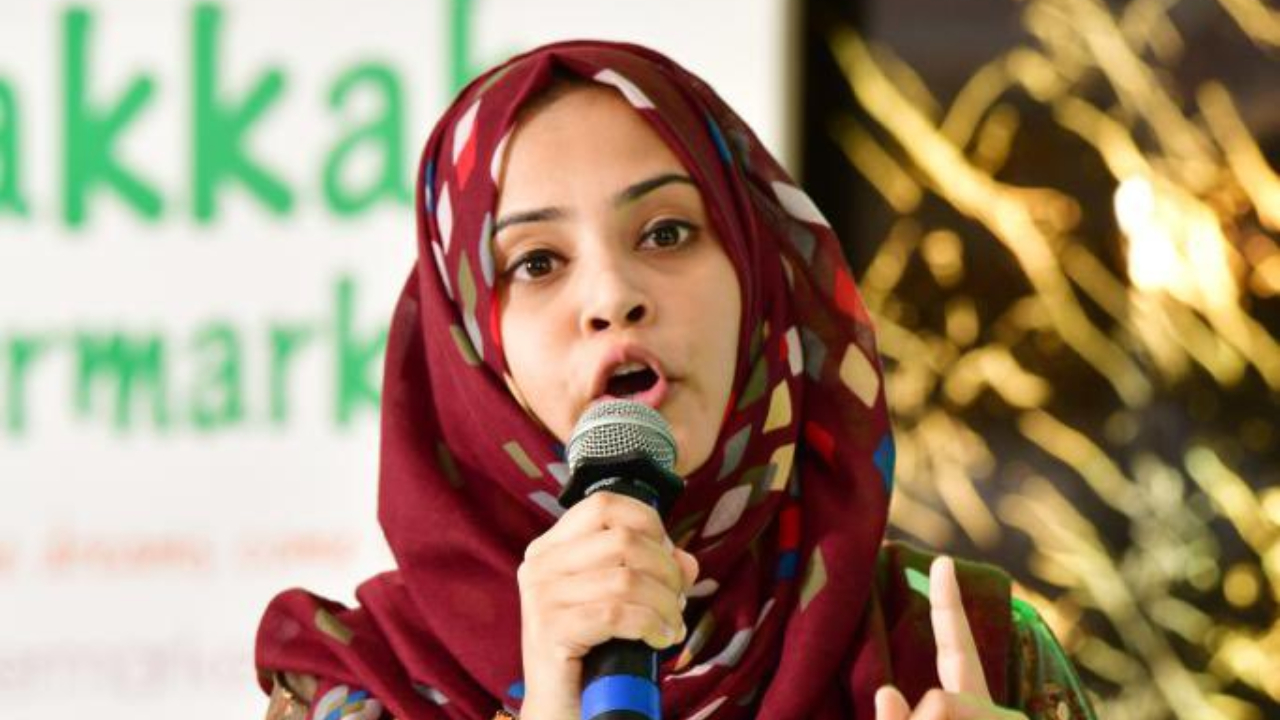
IUML's Fathima Thahiliya, Credit: x.com/thahiliya

Synopsis: Fathima Thahiliya, overcoming relentless cyberbullying and identity-based attacks, made history as the first woman MLA from IUML in Kerala. Contesting from Perambra, she defeated veteran TP Ramakrishnan through grassroots campaigning. She vows to champion women’s rights, fight cyber harassment, and balance activism with politics, seeing her victory as both responsibility and opportunity for future women leaders.
A woman who endured relentless cyberbullying during the election campaign. A woman targeted for her hijab identity. A woman whose name was repeatedly dragged into toxic political comparisons.
Yet, she rose above it all and won.
In a historic political breakthrough, Fathima Thahiliya has become the first woman to represent the Indian Union Muslim League (IUML) in the 16th Kerala Assembly. Contesting from Perambra in Kozhikode, a constituency long considered a Left stronghold, she secured victory with a margin of 5,087 votes.
In an exclusive conversation with South First, the 34-year-old leader opens up about her journey.
Q: You were often labelled as ”Fathima Togadia” by Left cyber handles. How did you manage the intense hate and online attacks?
A: Social media attacks are not new to me. I have been facing them since my initial days in public life. I used social media to share my political views, as it is one of the effective ways to reach public. From the very beginning, I was targeted for my Muslim identity, for wearing a hijab and even had my name compared to figures from the extreme right wing.
It was not just the ”Togadia” remark (reference to former VHP firebrand Pravin Togadia). I was also repeatedly called ”Thattamitta vishakala” (hijab-wearing toxic person) as well.
So, in a way, I was already prepared to handle such hate. Of course, it is deeply hurtful, but I have learned how to deal with cyber bullying. My real fight was between social media narratives and ground reality. I chose to meet voters directly and interact with them in my natural way.
The image that some tried to create about me online did not work on the ground. People judge you not by social media portrayals, but by how you connect with them personally- and that helped build trust and confidence in me.
Also Read: Kerala Assembly welcomes fresh wave of women’s voices
Q: You defeated LDF convenor TP Ramakrishnan, a towering political figure in a Left stronghold, and even secured votes from traditional Left pockets. How did you achieve this?
A: Intense ground-level campaigning played a crucial role in my victory. I was fully aware that I was contesting against an experienced and well-known politician. I did not rely on any fixed or special strategy, especially since he had a stronger campaign machinery and had represented Perambra for years.
The constituency has long been considered a Left bastion, so I knew that a conventional strategy would not work there.
Instead, I made a clear decision- regardless of who my opponent was, I had to fight with determination because I was part of the contest. I focused on identifying local issues and consistently amplified them during my interactions with people on the ground.
This approach resonated with voters, including many from LDF strongholds, as they were looking for change and found the issues I raised to be genuine and relevant. Their support reflected a desire for that change, and I am committed to delivering on it.
Q: Who would be your Chief Ministerial pick for the UDF, especially as discussions are ongoing and several leaders have openly expressed their preferences?
A: Like everyone else, I do have a name in mind. I share a good relationship with all the leaders. However, when it comes to the Chief Ministerial choice, I am not in a position to suggest names. Such decisions are taken collectively by the party, not by individuals.
Q: Everyone is celebrating you as the first woman to represent IUML in the Kerala Assembly. Does that feel like a burden?
A: Its’ not a burden, it’s a huge responsibility. I have to create a new pathway for upcoming women in my party. I didn’t have any example in front of me- a woman leader from the party in the Assembly, so I need to build that road for the next generation.
I must set an example and be a guiding light. I now see myself as part of shaping something new, and I view all of this as an opportunity. At the same time, I know the journey won’t be easy- I will have to continue striving to carve out this new path.
Q: The social media attacks against you were not limited to extremist remarks but also involved slut-shaming. How are you going to manage this in the future?
A: Much of this is driven by organised cyber groups, particularly from the Left, who use sexually coloured remarks as a tool of attack.
But this is not just about me- many women face the same hostility simply for raising issues or speaking up. There is only so much one can fight individually. The core problem is the lack of effective social media regulation. That does not mean curtailing freedom of speech, but there must be legal safeguards to protect women from sexual harassment and slut-shaming online.
Introducing a strong bill to address cyber harassment against women is one of my top priorities. With robust legislation in place, it will become much easier to counter such abuse.
Also Read: Kerala’s quiet churn leaves smaller parties either back in play or off the map
Q: You were brave enough to speak up against sexual harassment within IUML in 2021. Following the controversy, you faced disciplinary action from the party. Will you be able to flag issues within the organisation in your new role as well?
A: The IUML has always provided space to speak up against anything that makes one uncomfortable. Change is happening in every organisation and women are increasingly taking up leadership roles. For instance, Shwetha Menon is now heading AMMA, an organisation that has also seen many controversies.
Raising issues does not weaken an organisation, it strengthens it.
Today, more young women are joining the party and taking official membership. We have also introduced a 20 percent reservation for women in the Muslim Youth League and across committees. Flagging concerns is necessary for growth- only then can we make corrections. I will continue to do so in my new role as well.
Q: IUML is often targeted as a religious and communal party. How do you face this criticism?
A: This criticism largely comes from people who judge IUML based on its name alone. In reality, it is one of the most secular parties.
Unfortunately, there have been deliberate attempts from various quarters to portray IUML in a communal light.
The Wayanad housing project is a strong example—homes were allotted to people from all religions and Hindus, Christians and Muslims each followed their own customs before moving in. IUML respects all religions and traditions. On the ground, its welfare activities and outreach extend to everyone, regardless of religion and that is something no one can easily match.
Q: You were an activist who raised your voice on various issues. But politics and activism are different. Will such interventions be easy in the future?
A: As I step into the role of an MLA, I am aware that every word I speak and every action I take will be closely scrutinised.
However, I am not going to leave behind my activist mindset- it is an integral part of who I am. I cannot remain silent when I witness injustice.
At the same time, I will be more cautious and vigilant in how I respond. Ultimately, I believe the essence of activism and politics remains the same, and both can shape you into a better human being.



