

Published Jun 23, 2026 | 7:00 AM ⚊ Updated Jun 23, 2026 | 7:00 AM

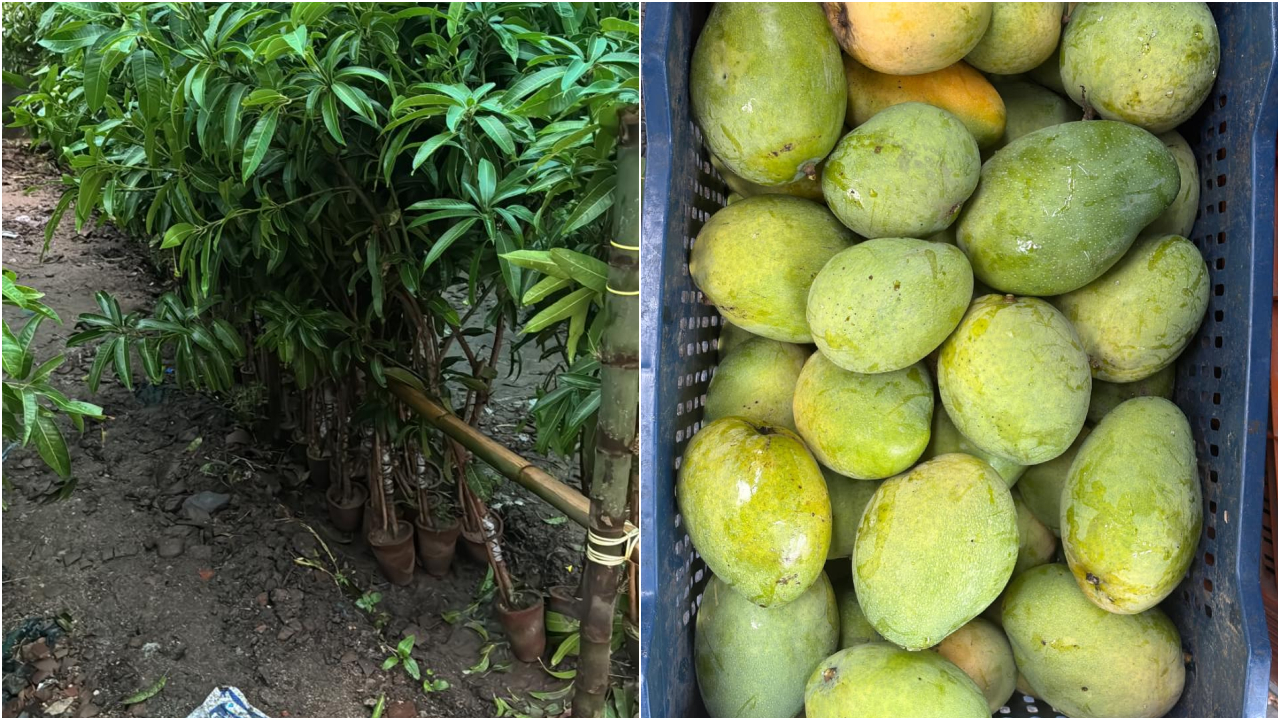
Muthalamada produces nearly 18 varieties of mangoes, including Alphonso, Sinduram and the locally popular Chakkarakutty. (Special Arrangement)

Synopsis: Mango cultivation is spreading beyond Muthalamada and its early harvesting season has also helped cushion it from many shocks. But the use of as many as 40 pesticides in earlier seasons has spawned lingering worries.
Despite global trade anxieties over the recent Iran-US conflict and uncertainty surrounding the Strait of Hormuz and the restrictions imposed by Nepal and Japan, mango growers in Kerala’s famed mango belt of Muthalamada say the immediate impact on their exports has been limited. But they are quick to warn that declining production caused by climate change and years of excessive pesticide use poses a far greater challenge to the sector.
Located in Kerala’s Palakkad district, Muthalamada is often referred to as Kerala’s “Mango City.”
The region enjoys a unique distinction: it is among the first places in Asia where the mango season begins. Harvesting starts as early as December, months before the peak mango season arrives in most other parts of India.
“The mango season here begins in December and continues through January, February and March. By the time Tamil Nadu’s season starts in March, Muthalamada is already well into harvesting,” said Arumughan Pathichira, secretary of the Muthalamada Mango Farmers Welfare Association.
The region produces nearly 18 varieties of mangoes, including Alphonso, Sinduram, Malgova, Rumani, Neelam, Kalapadi, Kesar and the locally popular Chakkarakutty.
Farmers say the early mango harvesting advantage has cushioned export concerns.
Also Read: Two sisters died in Hyderabad. Local media blamed mangoes. A second FIR complicated the story
Official Agriculture Department figures say mango orchards in Muthalamada are spread around 6,000 hectares.
However, farmers say cultivation has expanded well beyond the panchayat’s boundaries into neighbouring areas such as Kollengode, Nenmara, Vadavannur, Puthunagaram and Perumatty, taking the total mango-growing area in the belt to between 12,000 and 18,000 hectares.
Although Kerala contributes only about two per cent of India’s total mango production, Muthalamada alone accounts for nearly one to one-and-a-half per cent of the national output.
The region’s early harvest gives farmers a significant market advantage.
At the start of the season in December, premium Alphonso mangoes can fetch as much as ₹1,500 per kilogram. Prices gradually decline as supplies increase, dropping to around ₹150 per kilogram towards the end of the season.
Harvesting in Muthalamada generally concludes by June.
After local production ends, traders often source mangoes from neighbouring Tamil Nadu to meet demand in markets across India.
Despite its reputation, the region’s export potential has weakened in recent years due to falling production. According to Pathichira, climate change and the indiscriminate use of pesticides have taken a heavy toll on mango orchards.
“There were seasons when nearly 40 different pesticides were used. Such excessive and unscientific application disrupted the natural biological control system in orchards,” he said.
The consequences became increasingly visible over the past five years, with pest infestations—particularly a locally known pest called ‘Elathi’—spreading rapidly and causing extensive crop damage. Farmers say greater awareness has now led to more regulated pesticide use, but the impact of earlier practices continues to be felt.
The Gulf region remains an important market for Muthalamada mangoes. However, geopolitical tensions involving Iran and concerns over shipping through the Strait of Hormuz have affected exports.
Even so, growers say strong domestic demand has helped offset the decline.
“Our season arrives when mangoes are scarce elsewhere. That gives us a ready domestic market. Exports continue, but volumes are comparatively low. Current export restrictions or disruptions are unlikely to affect us significantly because domestic demand remains strong and overall production has fallen,” Pathichira said.
He stressed that improving production should now be the priority. Farmers are calling on both the Union and Kerala governments to promote scientific pest-management practices and ensure the responsible use of pesticides to restore the region’s export potential.
For Muthalamada’s growers, the larger concern is not market access but safeguarding the future of a mango belt that has long enjoyed a headstart over the rest of the country.
Also Read | ‘Our mangoes sell at only ₹4 to ₹5 per kg’: These TN farmers have no sweet tales to share
(Edited by R Rajesh Kumar.)



