

Published Jun 25, 2026 | 9:00 AM ⚊ Updated Jun 25, 2026 | 4:10 PM

The bigger challenge lies in how the UDF government plans to finance its remaining welfare commitments.

Synopsis: The proposal of the UDF government in Kerala to reduce taxes on low-alcohol beverages has become one of the first major issues to shake both the Assembly and the UDF. The Opposition has alleged that the move benefits a private liquor company, while the government insists it is merely completing a framework introduced by the previous LDF government. Further, even UDF constituents are opposing the move.
Liquor has always been a highly sensitive issue in Kerala’s political landscape, with the power to influence electoral fortunes and even determine which front comes to power. The UDF’s controversial liquor policy, including the closure of bars and its push towards prohibition, played a significant role in its defeat in the 2016 Assembly elections.
A decade later, when the UDF returned to power, liquor policy and taxation once again emerged as major political flashpoints.
The debate over the government’s proposal to reduce taxes on low-alcohol beverages has become one of the first major issues to shake both the Assembly and the UDF. The Opposition has alleged that the move benefits a private liquor company, while the government insists it is merely completing a framework introduced by the previous LDF government.
Also Read: ‘Bacardi tax’ uproar sees LDF walking out of Kerala Assembly
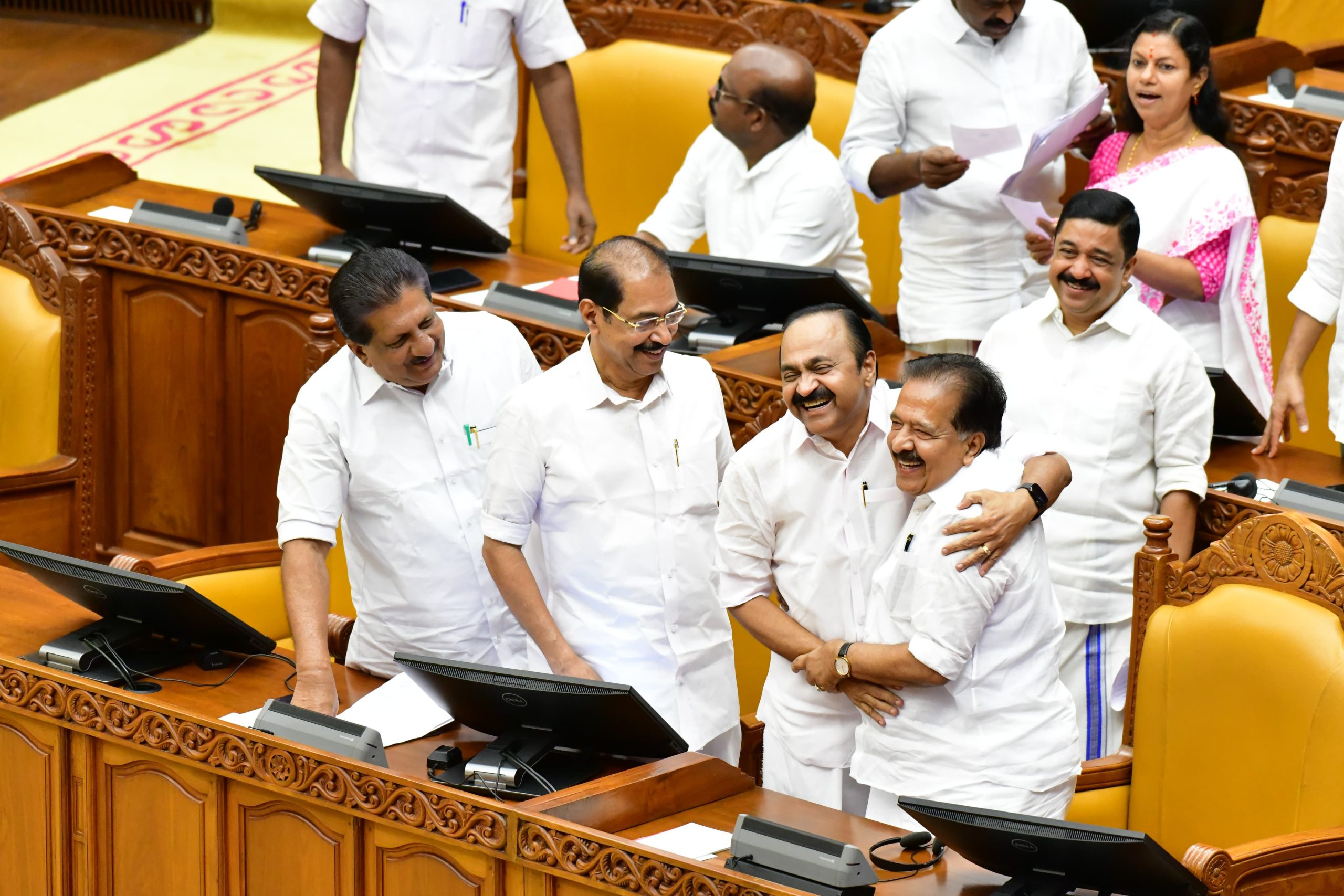
Chief Minister VD Satheesan before presenting the Budget.
The controversy centres on a provision in the revised 2026–27 Budget, presented by Chief Minister VD Satheesan, who also holds the finance portfolio.
Alcohol content is measured in volume by volume (v/v), meaning a drink with 10 percent alcohol v/v contains 10 millilitres of pure alcohol in every 100 millilitres of the beverage. Currently, all Indian-made foreign liquor (IMFL) sold in Kerala is subject to a uniform sales tax of 251 percent.
The Budget proposes lower tax rates for beverages containing up to 20 percent alcohol by volume (v/v).
Under the proposal-
The government argued that this is not a major change in liquor policy.
According to Excise Minister M Liju, the category of “low-alcohol beverages” was created by the previous LDF government through amendments to the Foreign Liquor Rules under the 2022–23 Abkari Policy. The category covers liquor containing between 0.5 percent and 20 percent alcohol v/v, excluding beer and wine.
The LDF government had formally recognised the category but had not introduced a separate tax structure. The UDF said the current proposal only fills that gap.
Chief Minister Satheesan has also clarified that the new rates will come into effect only if they receive approval from the UDF leadership.
“Abkari policy is a political decision. It has to be taken collectively by the UDF,” he told the Assembly, adding that a draft liquor policy would be discussed by all coalition partners before any final decision is made.
The political controversy escalated after Leader of Opposition in Kerala Assembly Pinarayi Vijayan alleged that the tax reduction was designed to benefit liquor giant Bacardi India Private Limited.
The LDF claimed that a Karnataka-based liquor company had earlier approached the previous government seeking lower taxes for low-alcohol products and argues that the UDF’s proposal would allow such companies to make substantial profits. He termed it as “Bacardi tax”.
Former excise minister MB Rajesh also raised allegations of corruption in connection with the decision.
The issue triggered noisy scenes in the Kerala Assembly.
Former finance minister KN Balagopal moved an adjournment motion seeking discussion on the matter, arguing that the proposal was part of an effort to increase liquor availability in the state. However, Speaker Thiruvanchoor Radhakrishnan rejected the motion, stating that the issue could be discussed during the ongoing Budget debate and citing an earlier ruling by former Speaker Varkala Radhakrishnan.
Following the Speaker’s decision, LDF MLAs entered the well of the House, raised slogans and later staged a walkout. Vijayan repeated his allegation that the tax reduction was intended to benefit a private liquor company.
Ministers Ramesh Chennithala and Satheesan objected to the remarks and sought their removal from Assembly records. The Speaker later said the matter would be examined. The government has firmly denied any connection between the tax proposal and any specific liquor manufacturer.
Also Read: How December advantage helped Kerala’s ‘Mango City’ beat export shocks
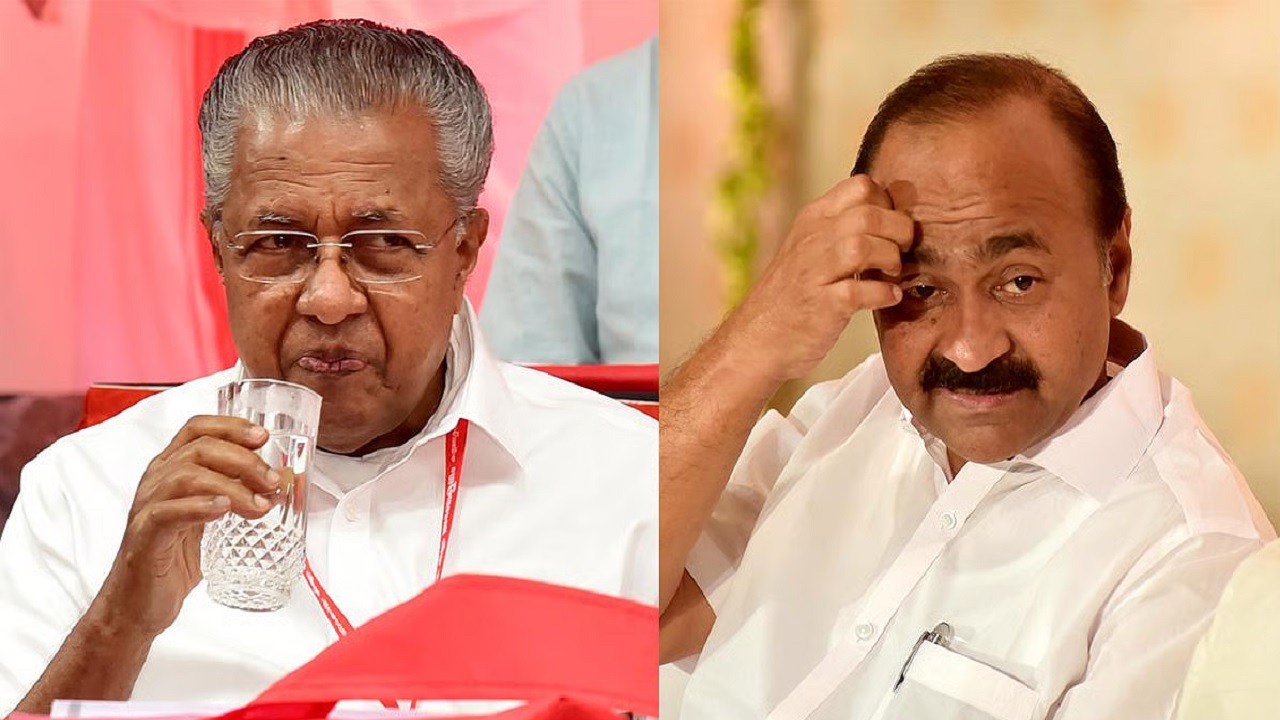
Pinarayi Vijayan and VD Satheesan.
The controversy is not limited to the Opposition. The proposal has also triggered concerns within UDF and among influential social and religious groups.
Former Kerala Pradesh Congress Committee (KPCC) president VM Sudheeran, who was one of the strongest advocates of prohibition during the Oommen Chandy government, wrote to the chief minister opposing the move.
He argued that reducing taxes on alcohol contradicts the Congress party’s commitment to tackling alcohol abuse and drug addiction.
The Indian Union Muslim League (IUML), a key UDF ally, has also expressed reservations. IUML President Panakkad Sadiq Ali Shihab Thangal stated that concerns surrounding the tax changes should be seriously discussed and addressed by the government.
Church organisations have also voiced opposition.
The Kerala Catholic Bishops’ Council (KCBC) warned that the move could encourage alcohol consumption among young people and said it would oppose the proposal if concerns were ignored. Several Church leaders also rejected the argument that cheaper, low-alcohol beverages would discourage youth from consuming stronger liquor or drugs.
Meanwhile, the government attempted to turn the criticism back on the LDF.
Satheesan argued that discussions on low-alcohol beverages began during the previous Left government and cited policy documents and official communications to support that claim.
He also rejected allegations that he was favouring liquor companies, pointing to lower tax rates fixed for imported foreign liquor brands such as Johnnie Walker and Chivas Regal during the previous LDF administration and asking whether those decisions were similarly influenced.
The chief minister further noted that the number of bars in Kerala increased significantly during the Left government’s tenure, and questioned the Opposition’s current stance against expanding access to liquor.
For now, the tax proposal remains under political scrutiny.
While the government insists it is merely clarifying the taxation framework for a category already recognised in law, critics see it as a significant policy shift that could encourage alcohol consumption and benefit private liquor companies. With liquor policy historically shaping Kerala’s political fortunes, the debate is unlikely to fade anytime soon.
(Edited by Muhammed Fazil.)



