

Published Aug 05, 2026 | 6:00 PM ⚊ Updated Sep 15, 2026 | 11:33 AM

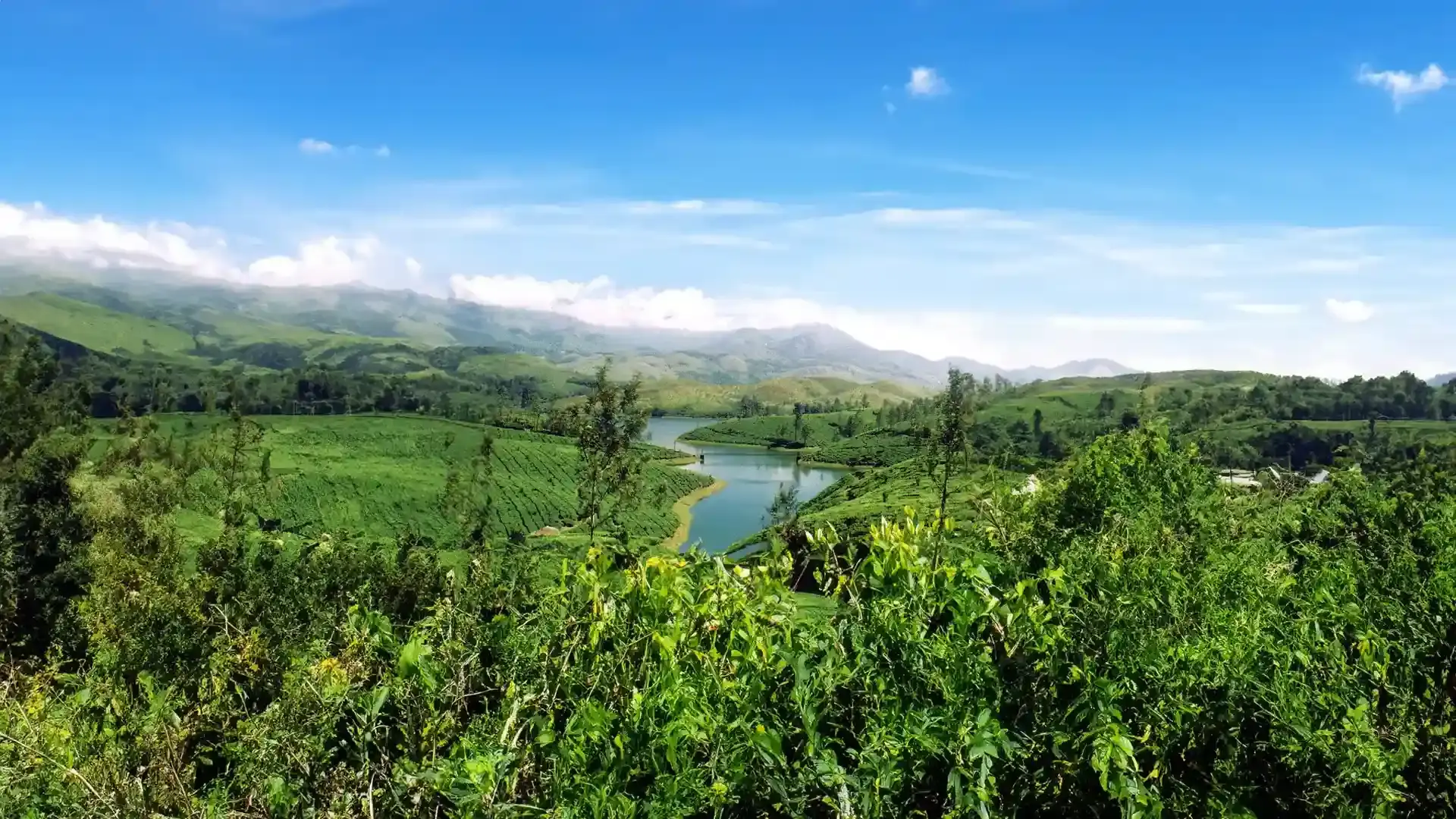
Munnar courtesy - Kerala Tourism

Synopsis: Munnar is preparing for an unprecedented influx of tourists during the Onam holidays and the once-in-12-years Neelakurinji blooming season, even as it grapples with growing challenges such as traffic congestion, tourist safety, inadequate infrastructure and environmental concerns. Parallel to this are the government’s proposed solutions, local initiatives and the challenge of balancing tourism growth with sustainable management to preserve the hill station’s appeal.
Every year, as the monsoon begins to loosen its grip on Kerala, Munnar in Idukki prepares for the rush that follows.
With the Onam festival around the corner and the once-in-12-years Neelakurinji bloom expected to paint its slopes in shades of purplish-blue by September and October, Munnar is bracing for an unprecedented surge of visitors from across the country and abroad.
However, chipping away at the charm of the ‘queen of the hills’ are several challenges, including poor crowd management and safety concerns. Traffic snarls stretching for kilometres, frequent altercations involving tourists, and complaints of misbehaviour by sections of taxi and auto drivers are among the issues that have dented the image of the popular hill station.
With the countdown to the season already underway, officials and tourism stakeholders are racing to put corrective measures in place.
There was a time when Munnar was synonymous with just endless tea gardens and mist-covered hills. While those postcard views remain unchanged, the hill station has grown into one of Kerala’s biggest tourism magnets, drawing visitors from across the country and beyond.
Yet, the rapid rise in tourist footfall is now exposing cracks in a destination struggling to keep pace with its own success.
Perched between 1,500 and 2,695 metres above sea level in the Western Ghats, Munnar has long captivated travellers with its cool climate, rolling plantations and breathtaking mountain landscapes.
The town derives its name from the meeting point of three rivers — Muthirapuzha, Nallathanni and Kundala — with ‘Moonu’ meaning three and ‘Aru’ meaning river.
During the colonial era, it served as the British summer retreat, while its sprawling tea estates helped shape its global identity.
Today, Munnar offers far more than tea plantations.

A poster of Kerala Tourism on Munnar
Popular attractions such as Eravikulam National Park, Anamudi Peak, Mattupetty, Top Station and the Tea Museum have made it one of Kerala’s most sought-after holiday destinations.
According to Kerala Tourism, the Munnar tourism region extends well beyond the town itself, encompassing the panchayats of Kanthalloor, Vattavada, Chinnakkanal, Marayoor and Pallivasal. Together, they form a landscape blessed with dense forests, rugged mountains, reservoirs, waterfalls, valleys, lakes and remote wilderness.
But the destination’s soaring popularity is beginning to take a toll.
As visitor numbers continue to climb, Munnar is grappling with mounting pressure on its roads, public spaces and local infrastructure. Recent confrontations between tourists and residents have triggered widespread discussion on social media, with some visitors even calling for a boycott of the hill station.
Residents insist their frustration is not directed at tourists but at the strain created by unchecked crowds.
Narrow mountain roads routinely witness long traffic snarls, while illegal parking and congestion have become a daily challenge, disrupting the lives of people who call Munnar home.
Those associated with the tourism sector argue that the focus should now shift from increasing tourist arrivals to managing them responsibly. Without better planning, they warn, the very qualities that made Munnar a favourite destination could gradually be undermined.
Also Read: Torrential showers continue to pummel Kerala, IMD predicts more
The numbers tell the story. Munnar’s tourism has witnessed an extraordinary rise, but the hill station’s infrastructure and visitor safety have failed to keep pace.
Domestic tourist arrivals climbed from 11.39 lakh in 2019 to 30.18 lakh in 2025, after dipping during the pandemic (2020: 3.45 lakh, 2021: 6.54 lakh).
The recovery was sharp—10.72 lakh in 2022, 16.72 lakh in 2023, and 22.05 lakh in 2024.
Foreign arrivals too have steadily increased, from 7,059 in 2022 to 34,538 in 2023, 52,897 in 2024, and 67,744 in 2025.

However, by November 2025, Wagamon had overtaken Munnar as Idukki’s top tourist destination, according to DTPC data, as repeated incidents of violence dented its image.
The issue gained national attention after a Mumbai tourist abandoned her holiday and shared an Instagram video alleging harassment by taxi drivers near the hill station.
Violent confrontations have been reported at Second Mile, Photo Point, Mattupetty, Echo Point, Top Station, Pallivasal and Old Munnar.
Visitors from Kollam, Thrikkakara, Pathanamthitta, Varkala, Trichy and Mumbai have allegedly been assaulted or had vehicles vandalised over minor disputes involving parking, traffic, Uber rides or roadside arguments.
While locals blame tourists for blocking narrow roads, filming reels and disrupting traffic, there is growing consensus on one demand—stronger policing.
Top Station, which receives over 10,000 visitors daily, remains under a Tamil Nadu police station located more than 100 km away, leaving one of Kerala’s busiest tourist corridors without immediate law enforcement when it is needed most. Tourism stakeholders also point to the absence of parking facilities, a modern bus stand and public toilets, besides unchecked exploitation by sections of operators.
Also Read: Death toll in Kerala rains rises to 15, CM convenes emergency meeting amid criticism
During his maiden visit to Munnar as the Tourism Minister in May this year, P.C. Vishnunadh had promised a series of measures aimed at improving the visitor experience in the region. He assured that the government would push for a dedicated tourism police station and that the proposal would be taken up with Chief Minister V.D. Satheesan and Home Minister Ramesh Chennithala.
As an immediate step, he then said, the government also plans to create a coordinated monitoring mechanism involving police stations along the Kerala-Tamil Nadu border and District Collectors to strengthen surveillance and respond quickly to safety concerns.
Vishnunadh also said the Tourism department would identify and utilise available land in the hill station to address the long-standing parking crisis.
The department also plans to improve basic amenities by setting up modern toilet facilities at key locations with the support of local self-government institutions. Waste management, another persistent concern in the hill station, will also receive priority attention, he said.
Road infrastructure was another issue flagged by the Minister. He said discussions would be initiated with the Tata Group to secure the land required for road development projects so that long-pending proposals could be taken forward.
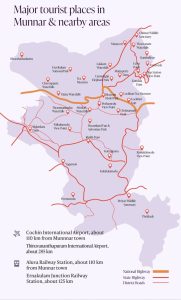
A tourism map of Munnar
courtesy – Kerala Tourism
At the same time, visitors heading to Munnar during the Onam holidays and the much-awaited Neelakurinji blooming season can expect tighter regulations, with local authorities preparing a series of measures aimed at easing congestion as well as tension in the hill station.
Among the most significant decisions is a proposal to keep large private buses out of Munnar town on weekends and public holidays, a move that the Munnar grama panchayat believes will help tackle the chronic traffic gridlocks that have become synonymous with peak tourist seasons.
Munnar grama panchayat president S. Vijayakumar said heavy buses are one of the principal reasons for prolonged traffic snarls inside the town.
“Experience has shown that the movement of large buses leads to traffic blocks lasting for hours, affecting not only commuters but the entire tourism sector. They will continue to be permitted on regular weekdays, but restrictions will come into force on weekends and holidays,” he said.
To ensure tourists are not inconvenienced, the panchayat is planning a feeder transport network using jeeps from designated points outside the town. Travellers arriving in buses will be able to continue their journey using these services.
According to Vijayakumar, the panchayat has already written to the District Collector seeking a meeting with all stakeholders to finalise and regulate the fares for the proposed jeep services, as soon as possible.
The traffic restrictions are part of a wider effort to manage the surge in visitors expected during the coming months.
Earlier, the Munnar and Devikulam grama panchayats had jointly decided to levy a surcharge on tourist vehicles entering the hill station and establish green check posts to strengthen waste management.
Authorities are simultaneously working on transport management to minimise traffic bottlenecks in and around Munnar during the flowering period. Greater reliance on public transport, including Kerala State Road Transport Corporation (KSRTC) services, is being planned to reduce the movement of private vehicles to ecologically sensitive destinations.
The numbers underline the challenge.
According to the official, Munnar receives between 2,000 and 2,500 tourist vehicles on an average day.
During weekends and holidays, that figure rises sharply to around 5,000 to 6,000 vehicles, resulting in traffic jams that often stretch for hours.
Veteran journalist and writer M. J. Babu said infrastructure alone cannot solve the problem, pointing out that responsible behaviour from visitors is equally important.
“When people visit a tourist destination, they should respect the local community and follow the guidelines in place. Unfortunately, that does not always happen. Vehicles are parked indiscriminately, loud music disturbs the surroundings, everyday life of local residents is often ignored and some visitors even attempt to pluck the endemic Neelakurinji plants,” he said.
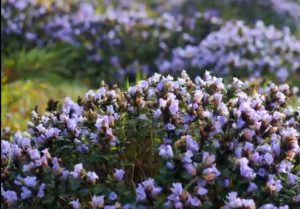
Neelakurinji
In 2023, the Union Environment Ministry brought Neelakurinji (Strobilanthes kunthiana) under Schedule III of the Wildlife (Protection) Act, 1972, granting the iconic flowering plant legal protection. Uprooting or damaging the species is punishable with up to three years in prison and a fine of ₹25,000.
Babu noted that many of the measures now being pursued have long been demanded by stakeholders associated with Munnar’s conservation and development. If implemented effectively, he believes they could go a long way in improving traffic management while protecting the fragile ecosystem that attracts lakhs of visitors every year.
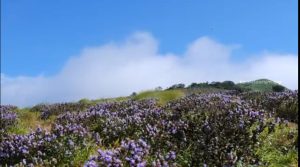
A slope of Kallippara Hills in Idukki blanketed by Neelakurinji
courtesy – Kerala Tourism
The Idukki district administration is mulling an app-based visitor management system to enhance crowd management during the flowering season.
The proposed mobile application, to be developed by the Wildlife Trust of India, is expected to enable tourists to reserve time slots for visiting major Neelakurinji viewing locations such as Chokramudy and Meeshapulimala, helping authorities regulate the number of visitors and ease congestion.
The app remains in the pipeline as part of the district’s broader crowd-management strategy.
The administration is also exploring similar arrangements for other flowering locations situated within Kanan Devan Hill Plantations.
Discussions with the plantation management are expected shortly, after which another round of consultations and field inspections will be held before finalising the operational plan.
Environmental protection remains central to the preparations, particularly at Meeshapulimala, one of the country’s most sought-after high-altitude trekking destinations south of the Himalayas.
Besides the Neelakurinji bloom, the landscape supports rhododendrons, the endangered Nilgiri tahr, the Nilgiri pipit and several other endemic species.
Anticipating a sharp rise in tourist footfall, the KFDC will undertake a carrying-capacity assessment of the Meeshapulimala region to determine sustainable visitor limits and regulate both tourist numbers and vehicular access without compromising the area’s ecological balance.
(Edited by Fayisa CA)



