

Published Jun 12, 2026 | 8:04 PM ⚊ Updated Jun 12, 2026 | 8:08 PM

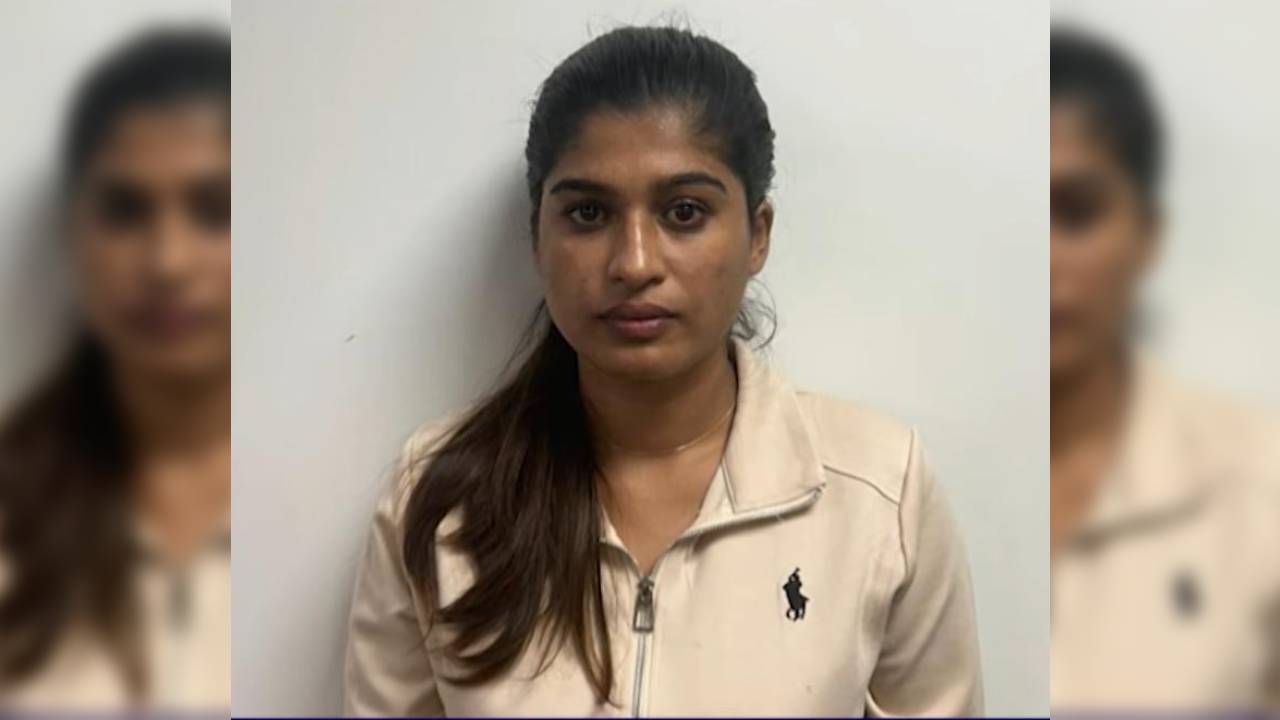
Harsha Sunny was arrested at the Mumbai airport on arrival from Bangkok allegedly with hydroponic weed worth $11.82 crore.

Synopsis: The arrest of Harsha Sunny, a Kerala model and bank employee, at Mumbai airport with nearly 12 kg of hydroponic ganja has put the spotlight on the expanding drug trafficking routes linking Thailand and India. It also sparked a wider debate on whether she was an active smuggler or an unsuspecting courier trapped by an international drug syndicate operating through Thailand routes.
The arrest of a 28-year-old woman from Wayanad at Mumbai’s Chhatrapati Shivaji Maharaj International Airport on Thursday, 11 June, has triggered intense social media debate, with conversations veering sharply from the investigation to her public identity as a model and former Mrs Kerala runner-up.
While a section of social media users used the incident to launch sweeping attacks against Kerala, the accused Harsha Sunny’s advocate Prabhakar Tripathi urged restraint, maintaining that she may have been deceived by an organised trafficking network and that the probe was still at a preliminary stage.
Acting on a plea filed by the Air Intelligence Unit (AIU) at Terminal II of the airport, the Chief Judicial Magistrate Court, Esplanade, Mumbai, remanded her to 14 days in judicial custody after officials allegedly seized 11.824 grams of hydroponic ganja from her luggage upon arrival from Bangkok, Thailand.
The contraband was estimated to be worth over ₹11.82 crore in the international market.
Also Read: ‘Cooks’ make merry as drugs spur youth to crime
The AIU officers arrested Sunny after allegedly seizing 11.824 grams of hydroponic ganja from her luggage in an early morning operation on 11 June.

Harsha Sunny has been working as a relationship manager with a private bank.
The accused was intercepted by officers of the AIU-A batch around 4 am, based on Advance Passenger Information (API) profiling after she arrived from Bangkok on Thai Airways flight TG-351.
Officials said the profiling system analysed passenger travel patterns to identify potential smugglers.
“This profiling system is operated by the Central Board of Indirect Taxes and Customs (CBIC). Under the mechanism, airlines share passenger data with customs authorities, which is then analysed using passport and travel history details. The system helps officials flag passengers who make frequent foreign trips and return within a short span of five to seven days, a pattern often associated with smuggling activities,” a customs official said.
Following suspicion that she could be carrying contraband, customs officers subjected her to detailed checks under the provisions of the Narcotic Drugs and Psychotropic Substances (NDPS) Act, 1985.
A personal search was conducted in the presence of a gazetted officer, but no contraband was recovered.
Subsequently, officials examined her luggage, which included a brown handbag and two trolley bags.
Customs officials said the first handbag and trolley bag did not contain any incriminating material. However, during the examination of the second trolley bag, officers recovered 12 vacuum-sealed packets — five black-and-transparent packets and seven transparent packets.
When the packets were opened, officers detected a strong, pungent odour.
The packets allegedly contained green-coloured dry flowering and fruiting tops of cannabis in lump form, suspected to be hydroponic weed. Field testing using the NDPS kit reportedly confirmed the substance as ganja covered under the NDPS Act.
The total net weight of the seized substance was found to be 11.824 grams.
During questioning under Section 67 of the NDPS Act, Sunny allegedly admitted that she was aware of the stringent punishment prescribed for smuggling ganja and other narcotic substances into India.
Officials stated that, as per the Central government notification specifying commercial and small quantities under the NDPS Act, ganja above one kilogram falls under commercial quantity. The seized contraband was estimated to have an illicit market value of ₹11,82,40,000.
Customs authorities booked the accused under Sections 20(b)(ii)(B), 23(b), 28, 29, 30, 35 and 54 read with Section 8(c) of the NDPS Act. She was formally arrested at 9 am on June 11.
In the remand application filed before the court, the Air Customs Superintendent stated that the investigation was at a preliminary stage and efforts were underway to identify and apprehend other associates linked to the smuggling network.
The arrest of Sunny, who is working as a relationship manager with a private bank and also active in the fashion industry, has also raised questions about whether the accused was used by an organised drug syndicate without her knowledge.

Harsha Sunny was first runner-up in Mrs Kerala Global 2025.
At the same time, investigators suspected the seizure was part of a growing network smuggling high-potency hydroponic cannabis from Thailand into India through international airports.
Sunny was first runner-up in Mrs Kerala Global 2025.
Speaking to South First, her counsel advocate Prabhakar Tripathi said the case appeared to be one where “an unsuspecting traveller was exploited by traffickers.”
He said Sunny had travelled to Bangkok for tourism and to explore opportunities in the modelling and nail-art sectors. During the trip, she reportedly befriended a man who later requested her to carry a bag to India for his family.
“She agreed to help him. The bag was handed over to her at the last minute at the airport, leaving her with no opportunity to verify its contents,” Tripathi said.
He further claimed that such incidents were increasingly common on international routes and that Sunny had no criminal background or previous involvement in narcotics cases.
“She was trapped by a person who could be part of an international drug syndicate. Airport Intelligence Unit officials have also indicated that CCTV footage from Bangkok airport will be examined as part of the investigation,” he added.
Customs officials, meanwhile, said the case fit a larger and worrying pattern of drug smuggling operations originating from Thailand.
An officer familiar with international airport investigations in Kerala said hydroponic cannabis — often called “hydro weed” — has become a major contraband commodity due to its high potency and premium value in India’s illegal market.
The official pointed to a series of recent seizures by agencies including the Directorate of Revenue Intelligence (DRI), Customs and the Narcotics Control Bureau (NCB) across airports in Mumbai, Delhi, Chennai, Surat and Kolkata.
Under DRI’s “Operation Weed Out,” officials reportedly seized over 61 kg of hydroponic cannabis from Bangkok routes in multiple operations during September 2025 alone.
Investigations in several states revealed organised syndicates operating through recruiters, coordinators, carriers and distributors, with networks extending from Thailand to Indian cities.
Authorities said carriers were often used as low-level mules, while kingpins and financiers remained behind the scenes. Smugglers typically concealed vacuum-sealed packets inside luggage and relied on passengers arriving from Bangkok and Phuket.
The case involving Sunny is now under detailed investigation, with agencies probing whether she knowingly transported the contraband or became an unwitting link in a larger international trafficking chain.
(Edited by Majnu Babu).



