

Published Nov 10, 2026 | 7:58 PM ⚊ Updated Nov 10, 2026 | 7:58 PM

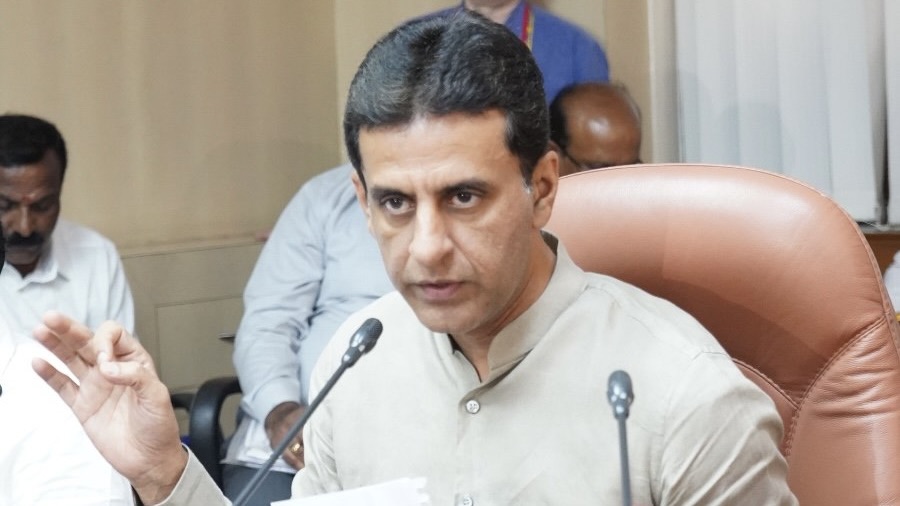
Rizwan Arshad said the Centre's ethanol-blending policy was putting an additional financial burden on ordinary vehicle owners.

Synopsis: Karnataka Food and Civil Supplies Minister Rizwan Arshad has challenged Union Minister Pralhad Joshi to explain why oil marketing companies are certifying their own petrol samples while disputing the State’s findings of up to 31.2 percent ethanol in E20 petrol. Arshad also accused Joshi of resorting to personal attacks to evade answering Karnataka’s questions. The statement came a day after Joshi dismissed Karnataka’s findings of up to 31.2 percent ethanol in E20 petrol as ‘sensationalism’.
Karnataka Food and Civil Supplies Minister Rizwan Arshad challenged Union Minister Pralhad Joshi to explain why oil marketing companies (OMCs) were certifying their own petrol samples while disputing the State government’s findings of up to 31.2 percent ethanol in E20 petrol sold in Karnataka.
In a statement addressed to Joshi on Tuesday, 10 November, Arshad demanded independent fuel testing, mandatory disclosure of actual ethanol percentages at petrol pumps and a compensation mechanism for losses borne by consumers, which he estimated at nearly ₹1.01 lakh crore a year nationwide. He also demanded that consumers be given a choice between E10, E20 and pure petrol.
The statement came a day after Joshi, Union Minister for Consumer Affairs, Food and Public Distribution, dismissed Karnataka’s findings of excessive ethanol concentrations in petrol as a “classic case of choosing sensationalising over responsible governance”.
Joshi had maintained that tests conducted by OMCs on 56 samples from Karnataka showed ethanol content between 19 percent and 20 percent, with an average of 19.30 percent. He also suggested that the State’s independent laboratory reports were not credible, maintaining that the testing process was deficient.
Arshad noted that Karnataka had initially sent 63 petrol samples to OMCs’ own in-house laboratories, but none of the reports disclosed the actual ethanol percentage. He also asked why the Union government was relying on the OMCs to certify their own compliance.
“When oil companies test their own products and certify their own compliance, where is the independent accountability? They are acting as both the accused and the judge,” he said.
My response to the Union Minister Shri Pralhad Joshi, following his press conference on Karnataka’s findings regarding excessive ethanol blending in petrol. https://t.co/U4zpRGH3jG
— Rizwan Arshad (@ArshadRizwan) November 10, 2026
Also Read: Seven people, including BJP MLA’s gunman, arrested for allegedly attempting robbery
Arshad asked Joshi to explain the Union government’s economic justification for increasing ethanol blending, citing Joshi’s claim that pure petrol cost ₹53 a litre while ethanol cost ₹55.72 a litre.
“If ethanol is more expensive than petrol, why is the Union Government pushing for higher blending levels? What is the economic justification? Who benefits from this policy, and who ultimately bears the cost? Is it not the common people?” he asked.
He also questioned which interests benefited from increased blending and whether a particular lobby was influencing the decisions.
Arshad said the Union government must explain the “hasty, unplanned, and unprepared policy transition”, particularly when infrastructure readiness and vehicle compatibility remained serious concerns.
He accused the Centre of attempting to portray the dispute as a confrontation between farmers and consumers, saying Karnataka was not opposed to ethanol blending.
“Karnataka is not against ethanol blending. Karnataka is against people being cheated,” he said.
“We recognise the benefits of ethanol blending for sugar factories. But supporting the sugar industry and protecting the common man are not mutually exclusive.”
Arshad also accused Joshi of resorting to personal attacks to evade answering Karnataka’s questions.
“Calling us fools and resorting to personal attacks will not help you dodge these questions. We are not fools, and neither are the people of India. Personal attacks cannot substitute for scientific evidence or answers to the legitimate concerns of ordinary citizens,” he said.
“Now, seeing your enthusiasm in defending the Petroleum Ministry, one wonders whether another resignation is on the cards… The question is whether the Modi Government will ensure that people receive the fuel they are promised and pay for.”
(Edited by Dese Gowda)



