

Published Jul 08, 2026 | 7:08 PM ⚊ Updated Jul 08, 2026 | 7:08 PM

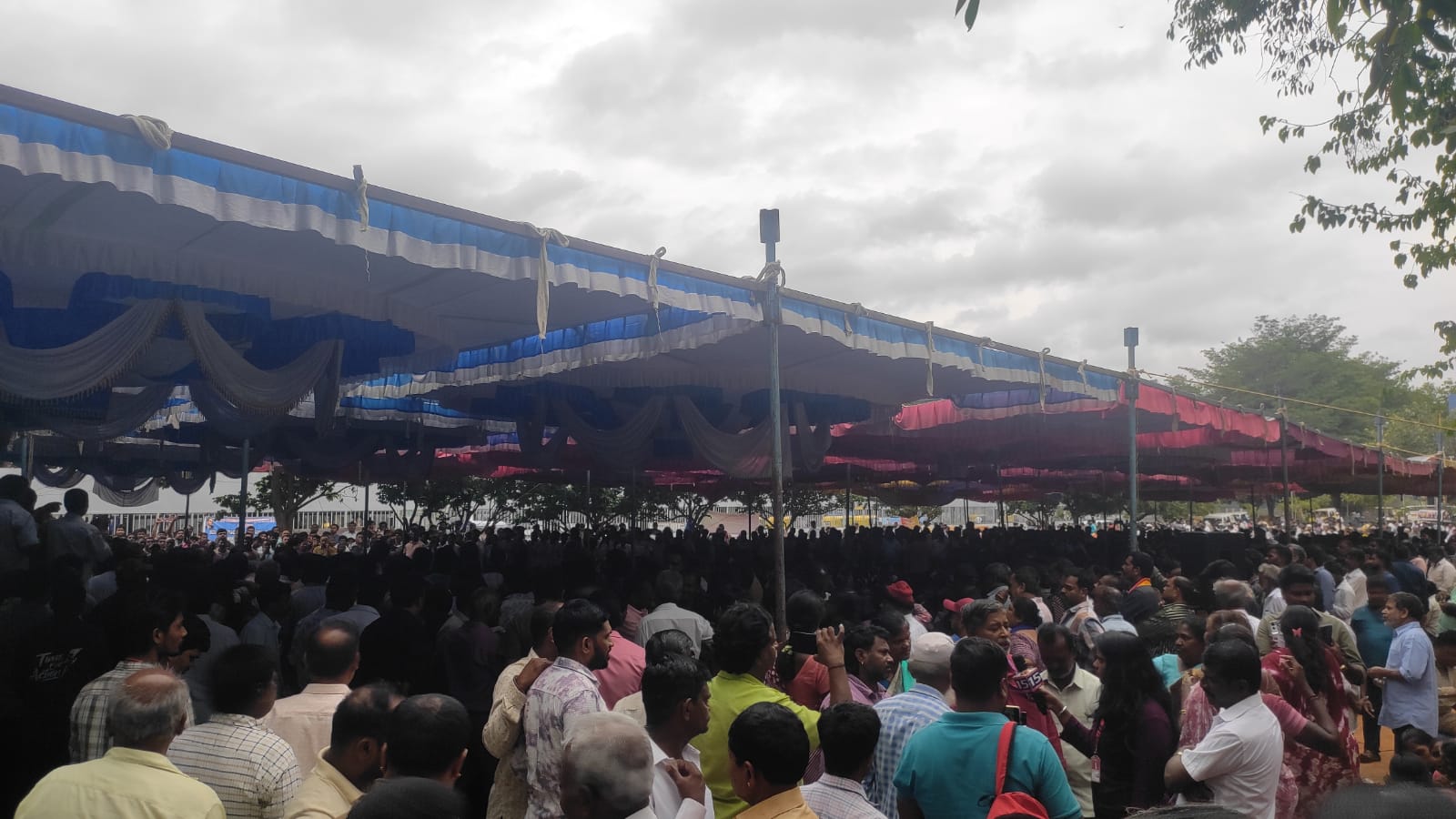
Shopkeepers from Jayanagar, KR Market, Vidyaranyapura, and more were brought together by the Joint Struggle Committee of Street Vendors.

Synopsis: Thousands of street vendors from across Bengaluru gathered at Freedom Park to protest the state’s ongoing “Safe Footpath” campaign, saying the eviction drive has destroyed livelihoods and violated their rights. Vendors demanded an end to the evictions, restoration of confiscated goods, implementation of the Street Vendors Act, and rehabilitation before any further action is taken. While the Karnataka government has promised to relocate registered vendors and protect their livelihoods, protesters say they have been left with nowhere to work and no meaningful alternatives.
Thousands of street vendors from every corner of Bengaluru descended on Freedom Park—the sole venue earmarked for protests in Karnataka’s capital, located in the heart of the city—on Tuesday, 7 July.
Injustice and disillusionment simmered in the air. The canopy was filled to the brim, with red and yellow shawls everywhere across the grounds, as the state government’s “Safe Footpath” campaign entered its eighth day.
The campaign, which began on 1 July and is championed by Bengaluru Development Minister Krishna Byre Gowda, has led to the eviction of hundreds of vendors across the city, costing many their livelihoods.
Shopkeepers from Jayanagar, KR Market, Vidyaranyapura, and more—brought together by the Joint Struggle Committee of Street Vendors, comprising six vendor associations—raised their voices in unison with a single demand: end the evictions and let them resume their livelihoods.
As one woman took the mic to list the community’s grievances—eviction notices with no warning, the loss of livelihoods, months of income wiped out overnight—the crowd responded with rousing chants of, “We want justice! We want justice!”
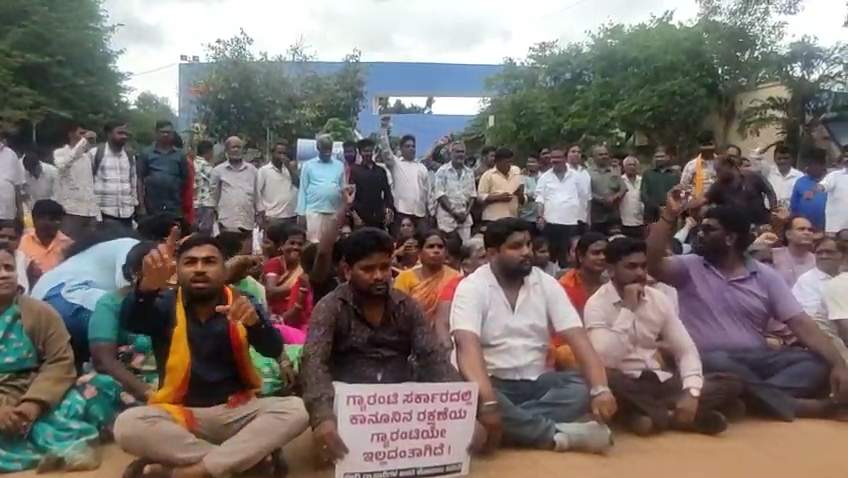
Protesters held up posters bearing their demands.
Protesters held up posters bearing their demands. One read, in Kannada: “Beedhi vyaparigalu theeravu karyacharane kodalae neelalli,” loosely translating to: “Stop the drive to evict street vendors.”
Another simply declared: “Operation to Remove Street Vendors – Not Acceptable.”
Also Read: Capgemini daycare case: Police say whistleblower ‘equally party to crime’
The JSC demanded the restoration of confiscated goods, reinstatement of vendors to their original spots or genuine alternative locations, implementation of the Street Vendors Act, a halt to further evictions until a comprehensive survey is completed, wider footpaths, and the constitution of new Town Vending Committees.
Shivraj, who has run his stall in Laggere for years, said the drive had left him with nowhere to go.
“We have come from Laggere and set up our business here, and now we have nothing. Where do we go? Tell me,” he said, his eyes welling up.
“We are street vendors, and they say pedestrians are dying because of us. What proof do they have? They don’t give us an alternative livelihood. We can’t go to residential areas either – they drive us away from there too. Give us a place, and we’ll go. Our aim was never to trouble pedestrians. We just want to earn our living.”
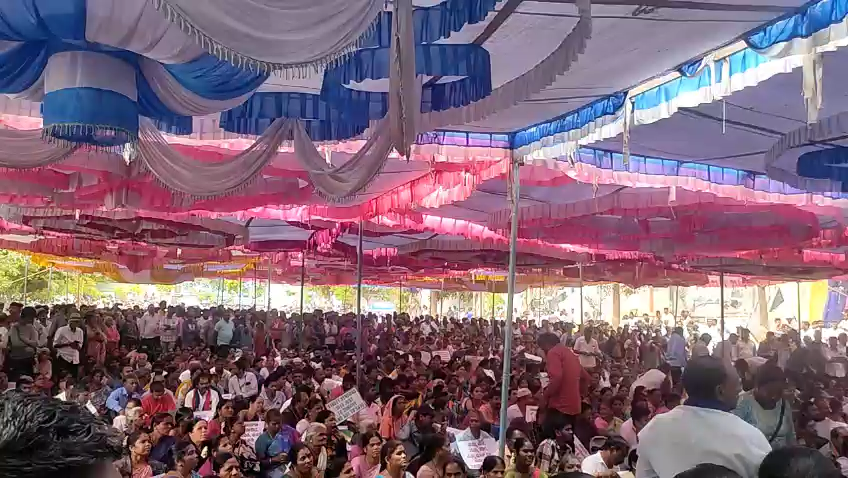
Vendors demanded a lawful and transparent process, along with compensation for the losses vendors have already suffered.
Syed Zameer, general secretary of the Karnataka Beedhi Badi Vyaparigala, alleged that authorities had also confiscated vendors’ goods during the drive.
“They said they would only clear encroachments, but what the ministers are actually doing is eviction. They have taken away our goods and haven’t let us set up shop since,” he said.
He also alleged double standards in the implementation of the drive, arguing that while street vendors had been evicted, other forms of encroachment had been left untouched.
“Nandini parlours, parking for cars, parking for two-wheelers, even kiosks without any papers are being allowed to stay. But we, the small vendors, are the ones being thrown out.”
He demanded a lawful and transparent process, along with compensation for the losses vendors have already suffered.
Also Read: Reclaiming Bengaluru’s footpaths: A model for inclusive urban transformation
Suma, a vendor from Vidyaranyapura, urged the state to provide vendors with alternative places to continue their trade before carrying out the eviction drive.
“We have never asked the government for financial support. We earn our own living,” she said.

Protesters held up posters bearing their demands.
“If they want to remove us, give us an alternative market first, and issue proper notices. Instead, officials just arrive and seize our carts. We leave space for pedestrians; we are not the problem they say we are.”
Karnataka Chief Minister DK Shivakumar announced that street vendors operating on major roads and footpaths would be relocated to nearby smaller roads where feasible.
“Registered vendors will be provided with pushcarts and designated vending spaces,” he said. “We will ensure their livelihoods are not affected.”
(Edited by Dese Gowda)



