


Published Nov 11, 2026 | 10:00 AM ⚊ Updated Nov 11, 2026 | 10:00 AM

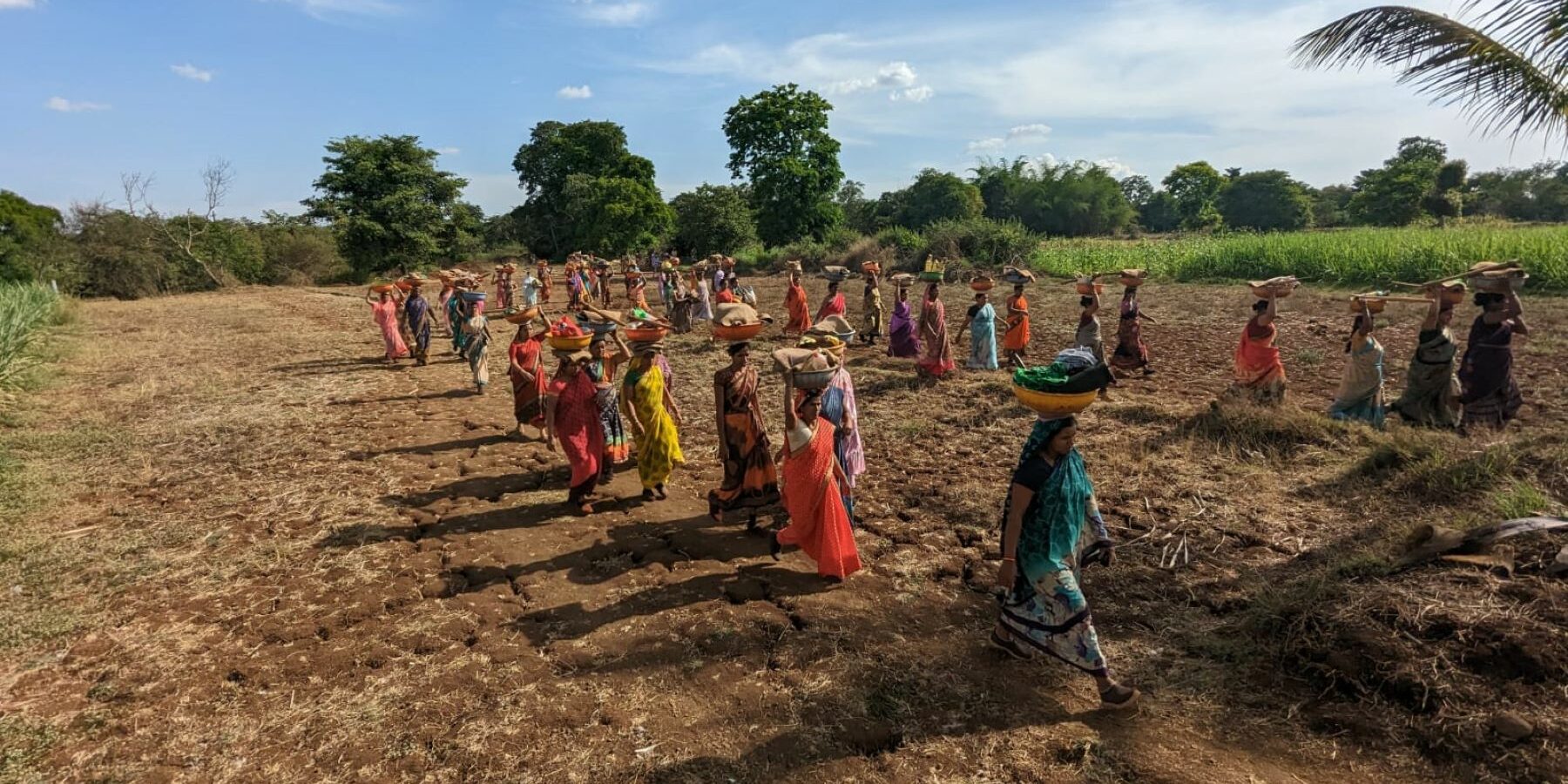
The bigger goal is to create rural-urban economic regions where villages, taluks, small and larger towns and cities are connected economic entities.

Synopsis: Karnataka has embarked on an ambitious regional urbanisation plan, with a vision of ₹5 lakh crore in investment, seven planning regions, and eight growth centres. It aims to distribute development across the state rather than confine it to urban centres. However, planners must adopt a rural approach to urbanisation, go beyond the obvious, and address grassroots issues with a broader, forward-looking perspective.
Karnataka is getting ready for urbanisation. But has it done enough to prepare its villages for that future?
The question gains relevance against the backdrop of the state’s rethinking of the urbanisation path. The Karnataka Regional Urbanisation Plan (Navodaya Karnataka)-2047 was launched on 30 October 2026 with a vision of ₹5 lakh crore in investment, seven planning regions, and eight growth centres.
One of its main aspirations is to curb urban growth in Bengaluru and spread economic development over the state.
The quality of urbanisation can be gauged by more than just the size of municipal limits, the number of buildings and the appearance of an industrial corridor. It must also be measured by the consequences for the regions and communities surrounding the growth centres.
Karnataka needs a rural approach to urbanisation. Otherwise, the state risks treating the symptoms of uneven development without tackling its root causes. The issue is not migration, but lack of choice.
The Karnataka government says the state’s urban population is about 46% and is likely to rise to 70% by 2047. This means a radical shift in the state’s population and economic structure. The challenge is not just housing more urban dwellers; it’s understanding why people are moving and whether viable economic alternatives exist closer to home.
For many rural youth, migration is not a choice, but a necessity. It can bring social mobility, better household incomes, and more opportunities. It becomes an issue when migration is the only viable path to economic progress.
Another paradox needs to be explored – economics. The NITI Aayog’s state report on ‘Karnataka’ said that agriculture, forestry and fishing employed 45.8% of the working population during 2022-23. However, the agriculture sector is projected to account for just 11% of Karnataka’s economy in 2025-26. These figures cover different periods, but they show the need to address the mismatch between employment concentration and value addition in the rural economy.
Also Read: Karnataka plans road grid beyond GBA amid Bengaluru’s urban expansion
Karnataka must develop regional growth centres. The potential economic spread of the cities, namely Mysuru, Mangaluru, Hubballi-Dharwad, Belagavi, Kalaburagi, Ballari and Shivamogga, is quite even. But decentralising urban growth does not necessarily imply decentralising development.
The state can create a smaller version of the urban-rural divide. The urbanisation benefits will be regionally limited if industrial investments, educational institutions, hospitals and commercial infrastructure are concentrated in the regional cities with no significant linkages to the rural areas.
This is especially pertinent in the context of regional inequality. According to the Economic Survey 2025–26, published by the Government of Karnataka in the PRS report, the state’s per capita income is ₹3,86,156. But this aggregate hides a lot of regionally important differences.
Bengaluru has the highest per capita income, but excluding Bengaluru Urban reduces it by almost 50%. The Kalaburagi area has the lowest per capita income, among other things, due to the lower presence of industries and services.
A more equitable regional planning approach needs to align investment in urban areas with economic opportunities in surrounding rural areas.
Karnataka’s agriculture and horticulture sector is highly diverse, with varieties ranging from coffee and spices in the Malnad region to millets, pulses, oilseeds, and horticultural crops in the north and south. However, storage, processing, transportation and access to markets and market prices are often constraints for farmers.
These agro-processing structures, cold-chain, food testing laboratories, warehousing systems, and logistics centres could create non-farm jobs in small towns and strengthen farmers’ bargaining position if strategically located. Other opportunities include rural tourism, renewable energy, handicrafts, and digital businesses.
The bigger goal is to create rural-urban economic regions where villages, taluks, small and larger towns and cities are connected economic entities.
Also Read: Karnataka launches centre for entrepreneurship in Kalaburagi under LEAP
Five priorities need to be addressed in tandem:
First, link regional growth centres to the production systems in rural areas. Industrial corridors and logistics should not simply move freight from one city to another. They should link farmers, farmer organisations, cooperatives, and rural enterprises to processing centres, organised markets, and consumers. The proposed agro-processing opportunities, as in Kalaburagi, for example, should be developed to serve farmers and entrepreneurs in the surrounding districts, not just as stand-alone industrial investments.
Second, transform small towns into engines of economic opportunity. Not all villages can be made into industrial centres, and they shouldn’t be. However, with better educational institutions, healthcare facilities, skill centres, financial services, digital infrastructure, and business networks in smaller towns and local communities, taluk headquarters can become service and enterprise centres. This would relieve the burden on big cities and provide key opportunities for rural people.
Third, turn welfare into productive investment in rural development. Welfare programmes are essential but are no replacement for sustainable livelihoods. It is essential that rural entrepreneurship, food processing, farmer-producer organisations, women entrepreneurs and local value chains have increased access to institutional credit, technology, market intelligence and business support. Women’s self-help groups need to be empowered to move beyond subsistence-level activities and towards viable enterprises with increased access to markets.
Fourth, enhance rural local governments for regional planning. Gram panchayats and other local institutions should be engaged in decision-making on land use, water resources, transport connectivity, local enterprise development, and infrastructure priorities. If state departments and urban planning authorities still centralise decision-making, development will not be properly decentralised. PRS estimates that the 2026–27 Karnataka Budget allocates 2.8% of total expenditure to the rural development sector, below the average allocation of 4.9% across states in the previous year’s budget estimates. This should be taken into account in a state that is making a long-term commitment to change. Rural institutions must be accountable and have the financial and administrative capacity.
Finally, employ inclusive outcomes as the definition of urbanisation. It is not possible to measure the success of the ₹5 lakh crore investment plan by the number of growth centres set up, roads built, or industrial investments attracted. It should also be measured by improved rural household incomes, non-farm employment, women’s economic participation, access to quality education and healthcare, and local citizens’ participation in new economic opportunities. A Regional Development Plan should have measurable objectives and regularly provide statistical data on their achievement.
The success—or failure—of Karnataka’s urban transformation is not just about the number of people moving to the cities, but the extent to which the wealth created by the cities goes beyond the urban limits.
(Views expressed are those of the writers. Edited by Majnu Babu).



