

Published Nov 27, 2026 | 8:50 PM ⚊ Updated Nov 27, 2026 | 8:50 PM

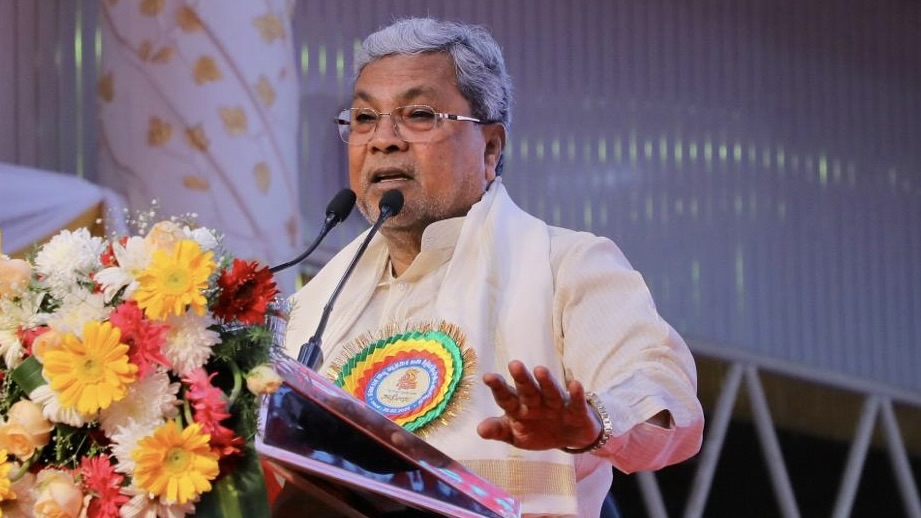
Former Karnataka Chief Minister Siddaramaiah (File photo)

Synopsis: Former Karnataka Chief Minister Siddaramaiah has demanded an all-party meeting on the proposed delimitation exercise and challenged Prime Minister Narendra Modi to explain how it would protect the political representation of States that had successfully stabilised their populations. He demanded that the Centre publish its rationale, place alternative models before the country and called on the BJP-led government to implement women’s reservation within the existing strength of legislatures.
Former Karnataka Chief Minister Siddaramaiah on Friday, 27 November demanded that the Union government convene an all-party meeting to discuss the proposed delimitation exercise and called on Prime Minister Narendra Modi to explain how the plan would protect the political representation of States that had successfully stabilised their populations.
His demand came after the Union Cabinet, chaired by Modi, cleared a fresh delimitation Bill that is expected to be introduced during the special sitting of Parliament beginning November 30.
The proposed Bill reportedly incorporates two key demands raised by southern States: a uniform 50% increase in Lok Sabha seats across all States and a 25-year extension of the freeze on each State’s proportional share of parliamentary representation, currently based on the 1971 Census.
In a post on X, Siddaramaiah said the proposed changes would do expand the numerical gap in representation between southern and northern states.
“Under this proposal, Karnataka’s representation will increase from 28 to 42 seats, while Uttar Pradesh’s will increase from 80 to 120. The numerical gap will widen from 52 to 78 seats,” he said.
“For Karnataka, political representation is not merely about the number of MPs. It is about our political identity, our constitutional rights, our ability to influence national policies and our rightful place in the Indian Union.”
Prime Minister @narendramodi must answer How does the proposed delimitation exercise strengthen the political voice of Karnataka and other States that have successfully implemented India’s population stabilisation policies?
The Union Cabinet has approved a proposal to increase Lok Sabha seats by 50%. Under this proposal, Karnataka’s representation will increase from 28 to 42 seats, while Uttar Pradesh’s will increase from 80 to 120. The numerical gap will widen from 52 to 78 seats.
For Karnataka, political representation is not merely about the number of MPs. It is about our political identity, our constitutional rights, our ability to influence national policies and our rightful place in the Indian Union.
On women’s reservation, our position is absolutely clear. The @INCIndia -led UPA Government introduced the Women’s Reservation Bill in 2008 and secured its passage in the Rajya Sabha in 2010. The Modi Government chose to link its implementation to Census and delimitation in 2023.
Why should women have to wait for an expansion of Parliament to secure their rightful representation? If the BJP is committed to implementing women’s reservation by 2029, let it bring the necessary constitutional amendment and implement it within the existing strength of the Lok Sabha and State Legislative Assemblies.
I demand that Prime Minister Narendra Modi convene an all-party meeting and publish the rationale behind the proposed 50% expansion and place alternative models of delimitation before the nation.
Karnataka seeks neither special privileges nor representation at the expense of another State. We seek political justice, federal fairness and an enduring constitutional guarantee that our achievements will never become our disadvantages.
@BJP4Karnataka MPs must stop being mere yes-men to Narendra Modi, rise above their party loyalties and have the courage to stand up for Karnataka’s legitimate interests by unequivocally opposing any delimitation framework that fails to ensure fair political representation for our State.
— Siddaramaiah (@siddaramaiah) November 27, 2026
Also Read: Will the DMK back the delimitation Bill? Stalin, Kanimozhi and the deliberations behind the scenes
Siddaramaiah also demanded that the Centre publish the rationale for the proposed 50% expansion and place alternative delimitation models before the country.
He said Karnataka sought neither special privileges nor representation at the expense of another State, but political justice, federal fairness and a constitutional guarantee that its achievements would not become disadvantages.
He also accused the BJP-led Union government of tying the implementation of women’s reservation to the Census and delimitation, despite the Congress-led United Progressive Alliance government having introduced the Women’s Reservation Bill in 2008 and secured its passage in the Rajya Sabha in 2010.
“Why should women have to wait for an expansion of Parliament to secure their rightful representation?” he said.
“If the BJP is committed to implementing women’s reservation by 2029, let it bring the necessary constitutional amendment and implement it within the existing strength of the Lok Sabha and State Legislative Assemblies.”
Siddaramaiah called on BJP MPs from Karnataka to oppose any delimitation framework that failed to guarantee fair representation to the State.
“BJP Karnataka MPs must stop being mere yes-men to Narendra Modi, rise above their party loyalties and have the courage to stand up for Karnataka’s legitimate interests by unequivocally opposing any delimitation framework that fails to ensure fair political representation for our State,” he said.
Also Read: Explained: The southern challenge facing the Centre’s delimitation Bill
The earlier Delimitation Bill, introduced by the BJP-led NDA government in April alongside the Constitution (131st Amendment) Bill, ostensibly to implement 33 per cent reservation for women in Parliament and State Assemblies, sought to redraw electoral constituency boundaries based on the 2011 Census and increase the number of Lok Sabha seats from 543 to 850.
The Constitution (131st Amendment) Bill had failed to secure a two-thirds majority in the Lok Sabha, with 298 MPs voting in favour and 230 MPs against it.
Since then, the Centre has reportedly reached out to several Opposition parties, including the DMK, to cobble together the special majority needed in the Lok Sabha for passage of the bill.
The Opposition parties, particularly in the southern States, had opposed delimitation since it would reduce their share of parliamentary representation, given the South’s greater success in implementing population control.
(Edited by Dese Gowda)



