

Published Oct 23, 2026 | 12:32 PM ⚊ Updated Oct 23, 2026 | 12:32 PM

Polls

Synopsis: As teachers vote in the Bengaluru Teachers’ Constituency election after six years, concerns over unequal salaries, delayed recruitment and election-related duties highlight the long-standing challenges facing educators across the city.
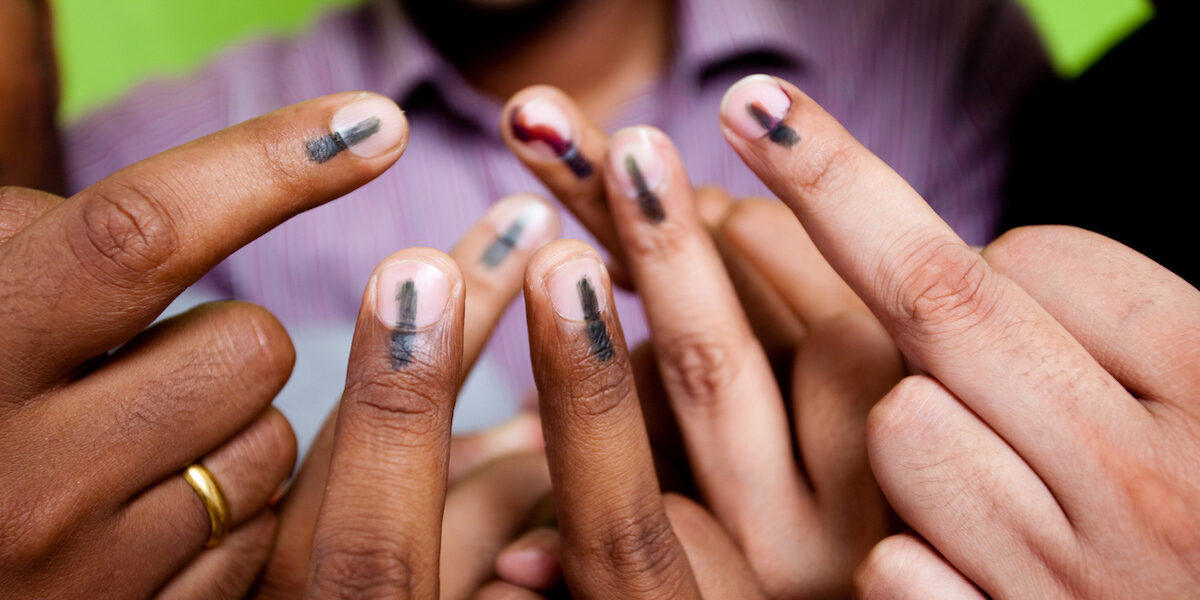
As teachers vote in the Bengaluru Teachers’ Constituency election on Friday, 23 October, the first regular poll for the seat since 2020, concerns over unequal salaries, recruitment delays and deployment for non-academic duties have brought their working conditions into focus.
The constituency has 18,496 registered voters across 28 Assembly constituencies within the Greater Bengaluru Authority limits. Polling will be held from 8 am to 4 pm, with counting scheduled for 27 October. The election is one of four MLC constituency polls in Karnataka, alongside the Karnataka North-East Teachers’, Karnataka South-East Graduates’, and Karnataka West Graduates’ constituencies.
The Bengaluru Teachers’ Constituency election is expected to be a two-cornered contest between incumbent MLC and Congress candidate Puttanna and BJP–JD(S)-backed candidate A.P. Ranganath.
Also Read: Ministers stopped at Mysuru Dasara: CM Shivakumar orders inquiry amid caste-bias allegations
Puttanna had highlighted his efforts to free teachers from non-academic duties, including electoral-roll revision, and has sought changes to recognition and renewal rules for private aided and unaided schools through a Legislative Council committee. The committee submitted an interim report in September, recommending relaxed recognition-renewal rules for schools established before 2018.
JD(S) candidate A.P. Ranganath, meanwhile, has criticised the Congress government over the Old Pension Scheme, according to the campaign positions reported in the constituency.
For teachers and professors in aided institutions who occupy unaided posts, the disparity in salaries and benefits remains a key concern. While aided posts receive government funding for salaries, unaided posts rely on the institution to pay teachers’ salaries, often resulting in a significant pay gap.
Kiran Kumar, a Mathematics professor at Vijaya College in Jayanagar who has worked there for 33 years and earns ₹1 lakh a month, said he remains in an unaided post despite being a permanent employee appointed by the college management.
“There is a significant difference in salaries between aided and unaided teachers. Teachers in aided posts with 20 years of experience earn more than me,” he said. He said his pay does not adequately reflect his experience and that he lacks health insurance and other benefits.
On whether candidates had fulfilled the promises they made during their previous terms, Kumar said, “I do not think all our demands have been fulfilled. Some issues may be beyond the candidates’ control, but teachers still need answers on salaries, benefits and employment opportunities.”
The disparity is also evident among younger lecturers. Vijay R, a Kannada lecturer at BES College of Arts and Commerce with six years of experience, earns around ₹40,000 a month. He said some unaided lecturers with National Eligibility Test (NET) or State Eligibility Test (SET) qualifications and PhDs earn around ₹30,000 a month. Salaries in aided posts, depending on the designation and pay scale, can range from ₹70,000 to ₹1 lakh, he said.
“The difference is enormous. We may be teaching students in the same institution and carrying out similar responsibilities, but our salaries and benefits are completely different,” Vijay said.
Echoing similar concerns about the candidates’ promises, Vijay added, “Verbal assurances are not enough; we need concrete action.”
Staffing figures provided for BES College of Arts and Commerce list seven aided teaching staff members — three men and four women — compared with 15 unaided teaching staff members. The college has one aided non-teaching staff member and 25 unaided non-teaching staff members, comprising 20 men and five women.
Vijay said teachers had repeatedly heard assurances about converting unaided posts into aided positions and filling vacancies but were yet to see the changes they sought. Some sanctioned posts, he said, have remained vacant for 10 to 15 years following retirements. Recruitment delays could also push eligible candidates past the prescribed age limits before they get a chance to apply, he added.
Akshata Pai, head of the Commerce Department with nearly 22 years of teaching experience, said teachers’ responsibilities extend well beyond classroom instruction to examination invigilation, documentation and accreditation work.
“Teachers work 12–14 hours a day,” she said, calling for recruitment, better salaries and a fixed basic pay scale.
Pai said some faculty members with PhDs and National Eligibility Test (NET) or State Eligibility Test (SET) qualifications had waited nearly a decade for government recruitment.
“Teachers need basic social security. Health insurance is important because medical expenses can become a serious burden,” she said.
The concerns over working conditions extend beyond pay and recruitment to the deployment of teachers for non-academic assignments. Karnataka’s SIR of electoral rolls has been underway since June, with government school teachers deployed as booth-level officers (BLOs) for voter verification.
At a government school, headmistress Rekha D. said three of the school’s 10 teachers had been assigned SIR duties, including two Mathematics teachers and a physical education teacher. Their absence has made it harder to manage the timetable and maintain classroom instruction, she said.
“When only seven teachers are available to manage a timetable designed for 10, the additional workload places a burden on those remaining,” Rekha said.
She said the shortage has affected the school’s ability to focus on students’ learning, especially when teachers responsible for specific subjects are unavailable. “We use notes given by teachers and show subject-related videos to teach the students,” she said.
Rekha said the school could not refuse the deployment after the authorities concerned approved it.
The SIR exercise, which began on 30 June, is expected to conclude after the final electoral list is published on 27 October, four days after polling in the Bengaluru Teachers’ Constituency. The Election Commission has also ordered a special enrolment drive to follow the SIR exercise in Karnataka.
As teachers across the city cast their votes on 23 October, they will hope that the electoral promises translate into tangible outcomes and address their longstanding demands. For Kiran Kumar and Vijay, this could mean access to an aided post with a better salary and benefits; for Rekha, it could mean adequate staffing and fewer disruptions to classroom teaching caused by election-related duties.
(Edited by Sumavarsha)



