

Published May 22, 2026 | 12:34 PM ⚊ Updated May 22, 2026 | 12:34 PM

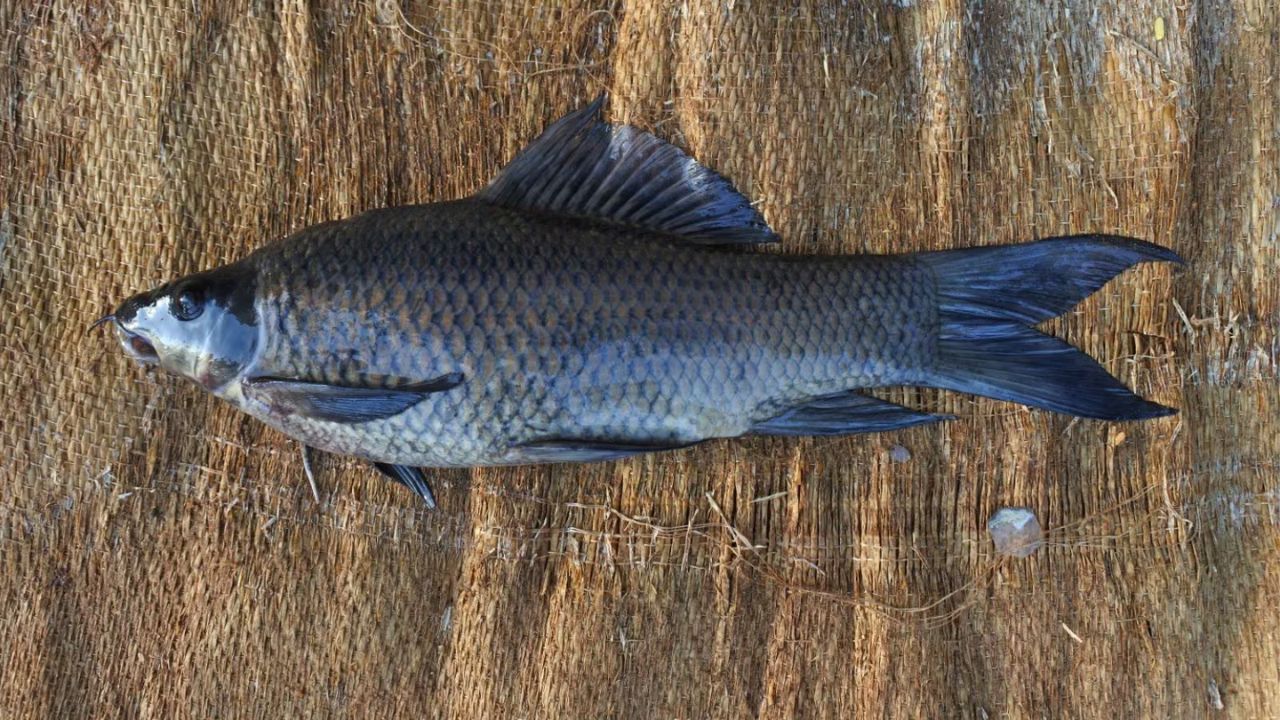
Labeo kaage (Kaage Meenu).

Synopsis: With the help of local fishermen, a group of researchers has discovered that the ‘Kaage Meenu’ in Cauvery, which was considered to be a local carp, is a separate species. The researchers said the discovery happened through continuous interaction with local fishing communities during our exploratory surveys in the Cauvery River basin from 2018 to 2022.
When a group of researchers repeatedly heard from local fishermen about a distinctive dark-coloured fish in the middle stretches of the Cauvery River near Shivanasamudra and nearby regions in Karnataka, they were intrigued.
Initially, the fishermen considered the fish, ‘Kaage Meenu’, to be a local carp. However, its unusual blackish colouration and distinct body features immediately attracted the researchers’ attention, as it did not closely resemble the commonly known Labeo nigrescens species from the Cauvery system.
The fishermen helped the team obtain specimens from their catches, which led to the fish being identified as a new species — the Labeo kaage, previously unknown to science.
Researchers Rahul G Kumar, Charan Ravi, Krishnaprasoon NP and VS Basheer were involved in the discovery of the fish, and their findings were accepted and published in the Journal of Fish Biology on 26 March 2026.
Also Read: How a weed-choked pond in Hyderabad gave world a new species
The researchers said the discovery happened through continuous interaction with local fishing communities during our exploratory surveys in the Cauvery River basin from 2018 to 2022.
“We were conducting a freshwater biodiversity survey there. So, we regularly interacted with fishermen during field visits because of the knowledge they possess about local fish diversity and seasonal occurrence. While examining fish catches, documenting fish diversity and discussing local species with them, we noticed a distinctive dark-coloured fish locally known as ‘Kaage Meenu’. The fishermen informed us that the fish was often seen in certain stretches of the river. Since it appeared unusual compared to the commonly known Labeo species of the Cauvery, it immediately attracted our scientific attention,” Dr Charan Ravi told South First.
Later, we realised that it was a new species after detailed taxonomic and genetic analysis. Later, following scientific study and peer review, the species was formally described as Labeo kaage in the Journal of Fish Biology,” he added.
Ravi is one of the researchers and a scientist from the PAGR Centre of ICAR-National Bureau of Fish Genetic Resources (ICAR–NBFGR), Kochi. His research focuses on the conservation and breeding of endangered fish and the exploration and documentation of freshwater fish biodiversity, among other areas.
Ravi stated that the River Cauvery project is based on the river’s significance as one of India’s most important freshwater systems with high endemic biodiversity. He also stated that many river stretches, like the Cauvery, remained poorly explored from a modern taxonomic and molecular perspective.
The project was initiated to document freshwater fish diversity, assess endemic and threatened species, generate genetic reference data, and support long-term conservation planning through field exploration, taxonomy and molecular studies.
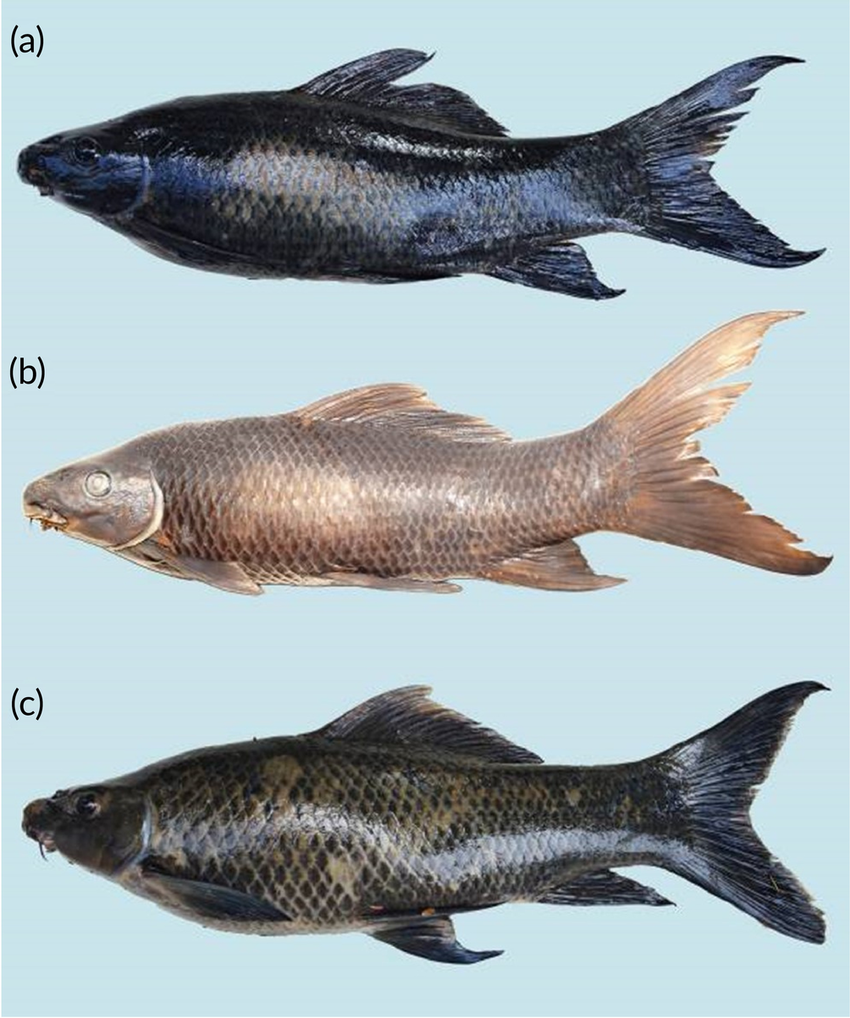
Holotype of Labeo kaage (a) fresh specimen; (b) preserved specimen; (c) paratype of L kaage.
The work was carried out as an institute project under the ICAR-NBFGR, established in December 1983 in Allahabad under the aegis of the Indian Council of Agricultural Research, to undertake research related to the conservation of fish germplasm resources in the country.
One of the main mandates is to catalogue and document the country’s fishery resources.
Ravi said the species was discovered during their extensive exploratory surveys and biodiversity documentation work in the Cauvery River, especially around the Shivanasamudra region.
The fish drew their attention due to its distinct black colouration. Detailed taxonomic examination, comparison with museum specimens, morphometric analysis and DNA-based genetic studies confirmed that it was scientifically distinct from all previously known species.
“In 2019, we got the specimen of this species. One more species, Labeo nigrescens, has also been reported in the Cauvery River. So, we thought it was the nigrescens. However, we doubted that it might be a different species,” said Ravi.
Later, the researchers started working on their hypothesis by collecting Nigrescens specimens to compare and differentiate the two species. While collecting specimens from the Cauvery, Netravati and Tunga and other rivers, the team was able to identify two more new species: Labeo chekida from the Chalakudy River and Labeo uru from the Chandragiri River.
Also Read: New impatiens species discovered in Western Ghats named after Chennai professor
Although Labeo kaage resembles species such as Labeo nigrescens, Labeo filiferus and Labeo calbasu, there are a few differences that set it apart. The fish has a relatively slender body, with its body depth measuring less than one-third of its total standard length. The fish also possesses two pairs of barbels, which are whisker-like sensory organs near the mouth, that are longer than the diameter of its eyes.
One of the fishermen from Kodagu district, while speaking to the Indian Express, told the team that the Labeo kaage builds small nests using gravel, a behaviour that is not seen in related species.
“Labeo kaage seems to prefer fast-flowing river stretches with rocky or hard substrates,” added Ravi. He also highlighted how Labeo kaage seems to be a solitary fish, although most Labeo tend to travel in shoals. However, he stated that more research has to be done in order to confirm whether they are solitary.
Speaking on the rarity of the fish, he said, “They are not regular; they will not come in large numbers in the catch. They come in the catch very rarely. It is not like other Labeo species. If you go to a particular market, you will get tonnes of other Labeo fish, maybe 100 kg or 50 kg, but in this species, you will get one or two, and even that occasionally, not regularly.”
“In the future, we will focus on developing a breeding protocol for this species, how much growth potential it has, and what nutritional benefits it has. Like other Labeo, this fish is also consumed by people, and they give it equal importance,” added Ravi.
Last year, the team discovered a catfish from the Chalakudy River in Kerala called the Horabagrus obscurus. Citing that as an example, Ravi explained how the publication of a new species is a time-consuming process.
“It will not get published within a month or two; it may take years. The kaage took two years to get published,” he said.
He also stated how, from 2019 onwards, they collected about eight specimens of the kaage, but could not regularly visit the place due to Covid. The team managed to work with the fishermen, who froze the fish and later handed them over for research.
The species was named kaage from the Kannada word for “crow”, referring to the fish’s distinctive dark blackish colouration. Since local fishermen already associated the fish with this name (Kaage Meenu), the researchers decided to retain it to maintain the local identity in its scientific name.
“Tomorrow, if we go and ask the fisherfolk for the Kaage Meenu, they will identify it and give that exact specimen to us. Many times, people will keep the name of some well-known taxonomist, institute or river. So, we thought it was better to keep the existing local name,” said Ravi.
Talking about their plans, Ravi explained how their work would focus on the continued exploration and documentation of India’s freshwater fish diversity, especially in biodiversity-rich river systems such as the Cauvery and Western Ghats rivers. “India still has many poorly explored freshwater ecosystems, and we believe several undocumented species may still exist,” he said.
He also stated that the team is interested in topics such as molecular taxonomy and phylogenetics to better understand Labeo kaage’s evolutionary relationships with other Indian Labeo species, assessing its distribution, population status and conservation needs in natural habitats, and studying its biology, ecology, feeding behaviour and reproductive aspects.
Labeo kaage faces threats due to anthropogenic activities
Like many freshwater fishes, Labeo kaage could potentially lose its habitat due to river pollution, dam construction, water extraction, sand mining and unscientific developmental activities.
“This is a rare species. If their habitat is altered, say due to tourism, they get disturbed, as they require a specific habitat. Their behaviour will change, and they may not breed. They may have some migration pattern to lay eggs. Generally, this fish breeds during the monsoon. They migrate to deep pools, and there they release the eggs. We need systematic exploration and taxonomic documentation to identify those species and, in the future, take care of them as well,” explained Ravi.
He also stressed how the protection of freshwater biodiversity requires a combined effort from scientists and citizens alike. While scientists focus on long-term ecological monitoring and more taxonomic research, citizens could lend a hand by adopting sustainable lifestyles and keeping rivers free of pollution, thereby protecting species like the Labeo kaage from extinction even before they are scientifically identified.
(Edited by Muhammed Fazil.)



