

Published Nov 09, 2026 | 5:08 PM ⚊ Updated Nov 09, 2026 | 5:08 PM

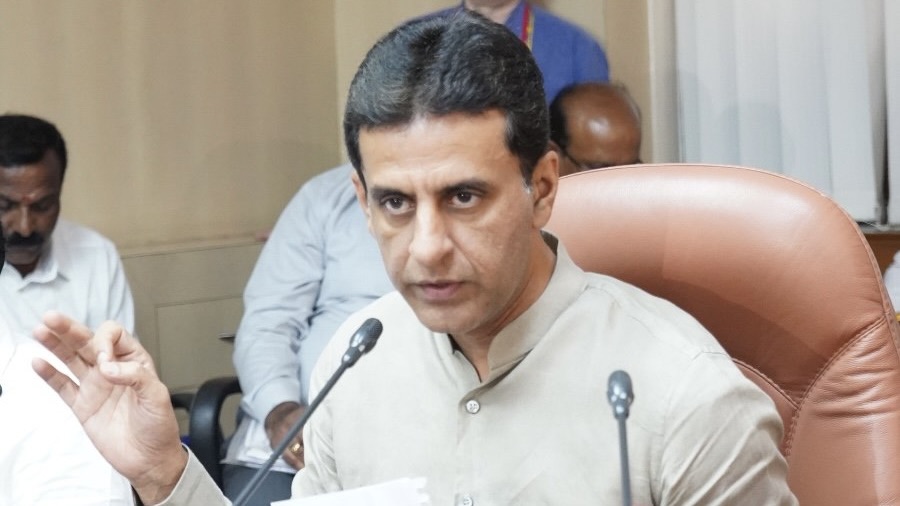
Rizwan Arshad said the Centre's ethanol-blending policy was putting an additional financial burden on ordinary vehicle owners.

Synopsis: Karnataka Food and Civil Supplies Minister Rizwan Arshad on Monday said the State government stood by its findings of excessive ethanol blending in petrol, days after three State-run oil marketing companies said the findings were “not supported by testing conducted through prescribed procedures”. Arshad slammed the OMCs’ response, saying it suggested that Karnataka lacked the technical capacity to determine ethanol content in petrol. He also said the OMCs were contradicting themselves with their claim that blending at refineries and depots was an automated process with no scope for arbitrary changes, while maintaining that instances of excessive ethanol blending were confined to certain retail outlets.
Karnataka Food and Civil Supplies Minister Rizwan Arshad on Monday, 9 November, said the State government stood by its findings of excessive ethanol blending in petrol sold by oil marketing companies (OMCs) in Karnataka. He said the methodology adopted by the State, including gas chromatography, was prescribed under the Motor Spirit and High Speed Diesel (Regulation of Supply, Distribution and Prevention of Malpractices) Order, 2005.
“Every sample collected from September 15 onwards has been signed by the oil marketers, dealers and the concerned officers,” the Minister said while addressing the media at Vikas Soudha.
Under the sampling procedure prescribed by the order, six one-litre samples must be drawn, with two handed over to the dealer, two retained by the oil company or the department, and two sent to a designated laboratory, he said. The sample labels must carry the joint signatures of the concerned parties.
His remarks came three days after he said independent tests conducted by the Department of Legal Metrology had found ethanol concentrations of up to 31.2 percent in petrol sold by major OMCs in Karnataka.
Three State-run OMCs—Indian Oil Corporation Limited (IOCL), Bharat Petroleum Corporation Limited (BPCL) and Hindustan Petroleum Corporation Limited (HPCL)—however, have rejected the findings. In a joint statement issued on Friday, they maintained that the findings were “not supported by testing conducted through prescribed procedures”.
Arshad slammed the OMCs’ response, saying it suggested that Karnataka lacked the technical capacity to determine ethanol content in petrol.
“They are behaving as though Karnataka does not have the capability to figure out how much ethanol is in petrol. It is not rocket science. We are sending technology across the world,” he said. He noted that the State had also sent 63 petrol samples to the OMCs’ own laboratories for testing but had received no results on their ethanol content.
“We received no test results after the samples were sent to these laboratories. This forced us to approach a third-party laboratory,” the Minister added.
Karnataka’s study on E20 petrol has raised serious concerns about fuel quality, consumer rights and vehicle safety. All 63 samples were tested and verified by NABL-accredited independent laboratories.
We demand transparent, independent third-party fuel testing across the country. We stand firmly by our research findings and our commitment to protecting consumer rights.
E20 ಪೆಟ್ರೋಲ್ ಕುರಿತು ಕರ್ನಾಟಕದಲ್ಲಿ ನಡೆಸಿದ ಅಧ್ಯಯನವು ಇಂಧನದ ಗುಣಮಟ್ಟ, ಗ್ರಾಹಕರ ಹಕ್ಕುಗಳು ಮತ್ತು ವಾಹನಗಳ ಸುರಕ್ಷತೆಯ ಬಗ್ಗೆ ಗಂಭೀರ ಪ್ರಶ್ನೆಗಳನ್ನು ಎತ್ತಿದೆ. ಸಂಗ್ರಹಿಸಿದ 63 ಮಾದರಿಗಳನ್ನು NABL ಮಾನ್ಯತೆ ಪಡೆದ ಸ್ವತಂತ್ರ ಪ್ರಯೋಗಾಲಯಗಳಲ್ಲಿ ಪರೀಕ್ಷಿಸಲಾಗಿದೆ.
ಇಂಧನದ ಗುಣಮಟ್ಟದಲ್ಲಿ ಪಾರದರ್ಶಕತೆ ಮತ್ತು ಹೊಣೆಗಾರಿಕೆ ಅತ್ಯಗತ್ಯ. ದೇಶಾದ್ಯಂತ ತೃತೀಯ ಪಕ್ಷದ ಮೂಲಕ ಸ್ವತಂತ್ರ ಪರೀಕ್ಷೆ ನಡೆಸುವಂತೆ ಕೇಂದ್ರ ಸರ್ಕಾರವನ್ನು ಒತ್ತಾಯಿಸುತ್ತೇವೆ. ನಮ್ಮ ಸಂಶೋಧನಾ ವರದಿಯ ಸತ್ಯಾಂಶಗಳಿಗೆ ನಾವು ಬದ್ಧರಾಗಿದ್ದೇವೆ.
#E20 #Ethanol #karnatakaNews #Reports— Rizwan Arshad (@ArshadRizwan) November 9, 2026
Also Read: Keralam orders petrol tests after Karnataka’s ethanol-blending allegations
The Minister said the Centre’s ethanol-blending policy was putting an additional financial burden on ordinary vehicle owners, as higher ethanol content reduced fuel efficiency. He estimated that consumers were spending an additional ₹4,000 to ₹5,000 because of the fall in mileage.
“A NITI Aayog report specifies that if petrol contains 38 MJ of energy, E20 has 30 MJ of energy to fuel vehicles. In addition to this, if more ethanol is being blended, as we have found, every person in India will be affected. Every pocket will feel the pinch,” he added.
Arshad said vehicle mileage had fallen by 20 percent to 30 percent because of ethanol blending, forcing consumers to spend more on fuel. Consumers should not have to bear the additional cost of lower mileage, he said, calling for different blends to be made available according to vehicle requirements.
“Give them the option of E10, E20, E30 or even E100 so they can buy according to what vehicle they have,” he said.
“I have nothing against ethanol blending. However, if the government is claiming that petrol has been blended with ethanol at 20 percent, then this is what they should receive.”
On Sunday, Arshad had shared on X a video of Union Heavy Industries Minister H D Kumaraswamy speaking about a proposal to increase ethanol blending to 30 percent. In the video, Kumaraswamy said discussions had been taking place at the departmental level for the preceding three to four months. He also said the matter did not fall directly under his ministry and that he would seek further information from the concerned departments.
Arshad demanded to know why discussions on increasing the blending limit had not been disclosed and how long the process had been underway before the Centre formally announced the policy.
“He is no ordinary man. He is the Union Minister of Heavy Industries,” the Minister added.
“Before officially bringing this in as a policy, for how many months have you been doing this? Were you treating people’s vehicles as specimens in an experiment? This is what you did with demonetisation and COVID.”
The OMCs have maintained that the alleged instances of excessive ethanol blending were confined to certain retail outlets. But, in their joint statement, they also said that ethanol blending at refineries and depots was an automated process governed by calibrated systems and quality-control protocols, leaving little scope for arbitrary overblending.
Arshad accused the OMCs of contradicting themselves, noting that if blending was a highly controlled and automated process, the possibility of excess blending could not simply be attributed to individual petrol pumps.
“The OMCs themselves have stated that ethanol blending is a controlled and automated process. There are six terminals in Karnataka where such blending takes place. This is not a case of conventional adulteration at individual petrol pumps but a systemic issue,” he added.
The Minister called for a change in policy and said oil companies should not be allowed to test their own products for quality, as this went against the principles of natural justice. He demanded an independent testing mechanism in every State and said inspections should be conducted regularly rather than as a one-time exercise.
“We might be the first State to have set up a mechanism to test independently and, in doing so, we have created a deterrent,” he said.
He urged State governments, irrespective of the political party in power, to conduct independent tests to protect consumers.
Arshad said the Karnataka government would continue periodic and random checks for excessive ethanol blending.
Arshad also said that the Union Government’s General Statutory Rules dated 18 December 2025, which extended the mandatory re-verification period for fuel dispensers from 12 months to 24 months, were allowing dispensing errors to go undetected, short-changing consumers.
“After several consultations, we have found that the oil dispensing mechanism wears out every seven to eight months. This means that consumers might not even be getting the quantity of petrol they are paying for,” he said.
Following the change in the re-verification period in September, the Karnataka Legal Metrology Department inspected fuel pumps across the State and found that 768 of the 805 pumps inspected required recalibration. At 101 pumps, dispensing errors exceeded the permissible limit, the Minister said.
The department registered cases and imposed penalties totalling ₹6.66 lakh.
Arshad said protecting consumers should remain the priority. He also called for fuel prices to account for the fall in vehicle mileage caused by ethanol blending.
(Edited by Dese Gowda)



