

Published Sep 10, 2026 | 10:28 PM ⚊ Updated Sep 10, 2026 | 10:28 PM

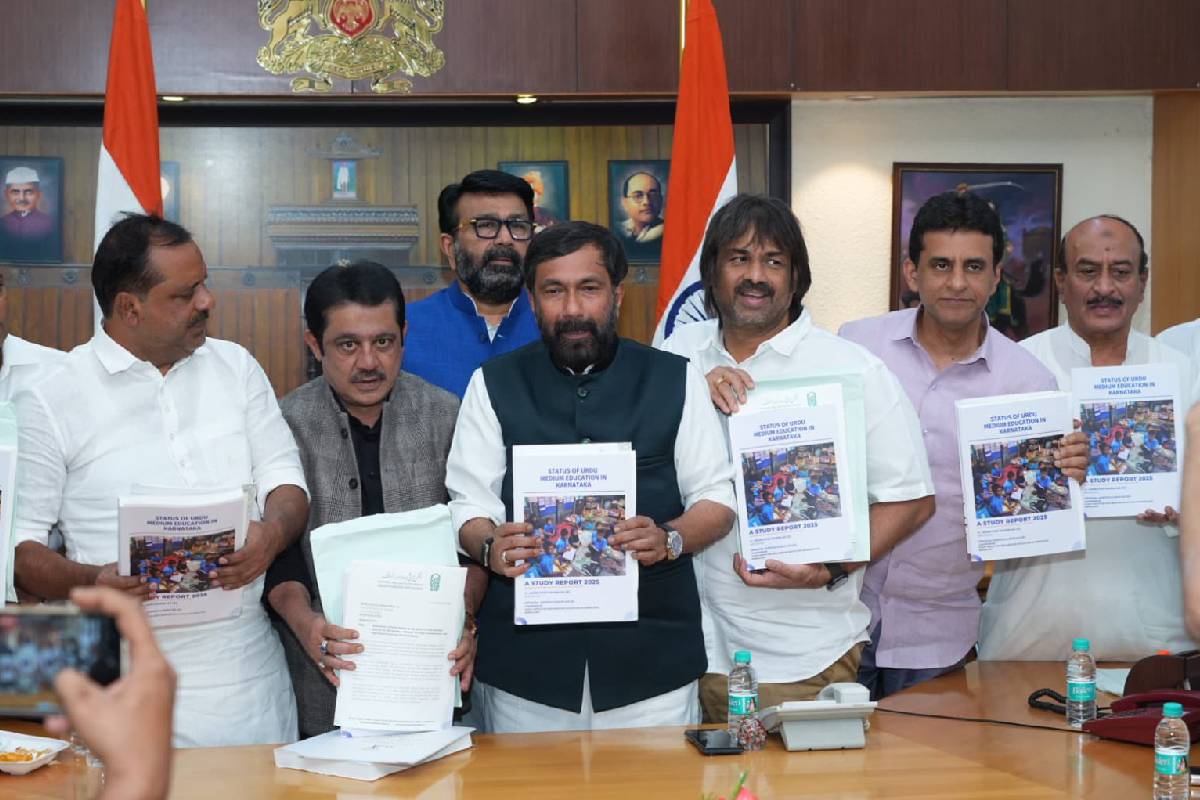
The report was released in the presence of Legislative Council Chairman Saleem Ahmed, state ministers Madhu Bangarappa, UT Khader and Zameer Khan.

Synopsis: A study by Anjuman Taraqqi Urdu (Hind) has highlighted key challenges facing Urdu-medium schools in Karnataka after assessments of 65 schools across eight districts. Released by Minister Rizwan Arshad, the report makes 14 recommendations focused on teacher recruitment, infrastructure, educational resources and quality.
Karnataka Minister Rizwan Arshad on Thursday, September 10, released a study report by the Anjuman Taraqqi Urdu (Hind) on the status of Urdu-medium schools in the state.
In a post on X, the minister announced the release of the report titled ‘Status of Urdu Medium Education in Karnataka – Study Report 2025.’
The report was released in the presence of Legislative Council Chairman Saleem Ahmed and state ministers Madhu Bangarappa, UT Khader and BZ Zameer Ahmed Khan. Bangalore Development Authority (BDA) Chairman N.A Haris, Congress’s Rajya Sabha MP Mansoor Khan and Commissioner for School Education and Literacy Smt. V. Rashmi, along with other senior officials from various departments, were also present at the event.
“The study is significant in understanding the current status of Urdu-medium education across Karnataka and identifying the key areas that require attention. It will help guide policy and planning, particularly in recruitment of teachers, strengthening infrastructure, improving educational resources, and ensuring quality education for Urdu-medium students,” the minister said.
Today, released the “Status of Urdu Medium Education in Karnataka – Study Report 2025” in the presence of Hon’ble Legislative Council Speaker Sri @SaleemAhmadINC , Hon’ble Cabinet Ministers Sri @Madhu_Bangarapp , @utkhader and Sri @BZZameerAhmedK .
The study is significant in… pic.twitter.com/6XZ38Y3YEy
— Rizwan Arshad (@ArshadRizwan) September 10, 2026
The study was conducted by a five-member group comprising distinguished retired senior civil servants, namely Sri Azeezulla Baig, IAS (Retd.); Sri Adoni Syed Saleem, IAS (Retd.); Sri Mohammed Salahuddin, IAS (Retd.); Sri Meer Anees Ahmed, IAS (Retd.), and Sri M.A. Khalid, KAS (Retd.).
Also Read: Karnataka government orders Vande Mataram to be limited to two stanzas at state events
According to Mohammed Obaidulla Shareif, President of Anjuman Taraqqi Urdu (Hind), the study was conducted after extensive assessment based on official data, field visits and first-hand interaction with stakeholders. This included visits to 65 government Urdu-medium schools across eight districts, 98 School Development and Monitoring Committee (SDMC) and parent-teacher meetings, besides consultations with organisations engaged in school education.
In a letter to Legislative Council Chairman Saleem Ahmed, Shareif pointed out that Urdu-medium schools largely cater to students from underprivileged sections of society and stressed the importance of sustaining such institutions.
“Urdu Medium Schools cater substantially to children belonging to economically and socially disadvantaged sections. Strengthening institutions is therefore of considerable importance to their educational advancement, social mobility and future economic empowerment,” he said.
He noted that the report has made fourteen recommendations after analysing the state of the Urdu-medium schools in the state and requested the government to act on the suggestions.
“The Report identifies the principal issues affecting the quality and effectiveness of Urdu Medium Education and makes thirteen recommendations for consideration by the Government and one recommendation for civil society, with the objective of improving infrastructure, teaching standards, educational outcomes and the overall effectiveness of Urdu Medium Education,” he said.
“We are respectfully placing the said Report in your hands, with the earnest hope that you will extend your good offices and support in bringing its recommendations to the attention of the Government and in facilitating their consideration, and, wherever found feasible, their translation into appropriate policy and administrative measures at the earliest,” Shareif said in the letter.
(Edited by Fayisa CA)



