

Published Aug 13, 2026 | 1:29 PM ⚊ Updated Aug 13, 2026 | 1:29 PM

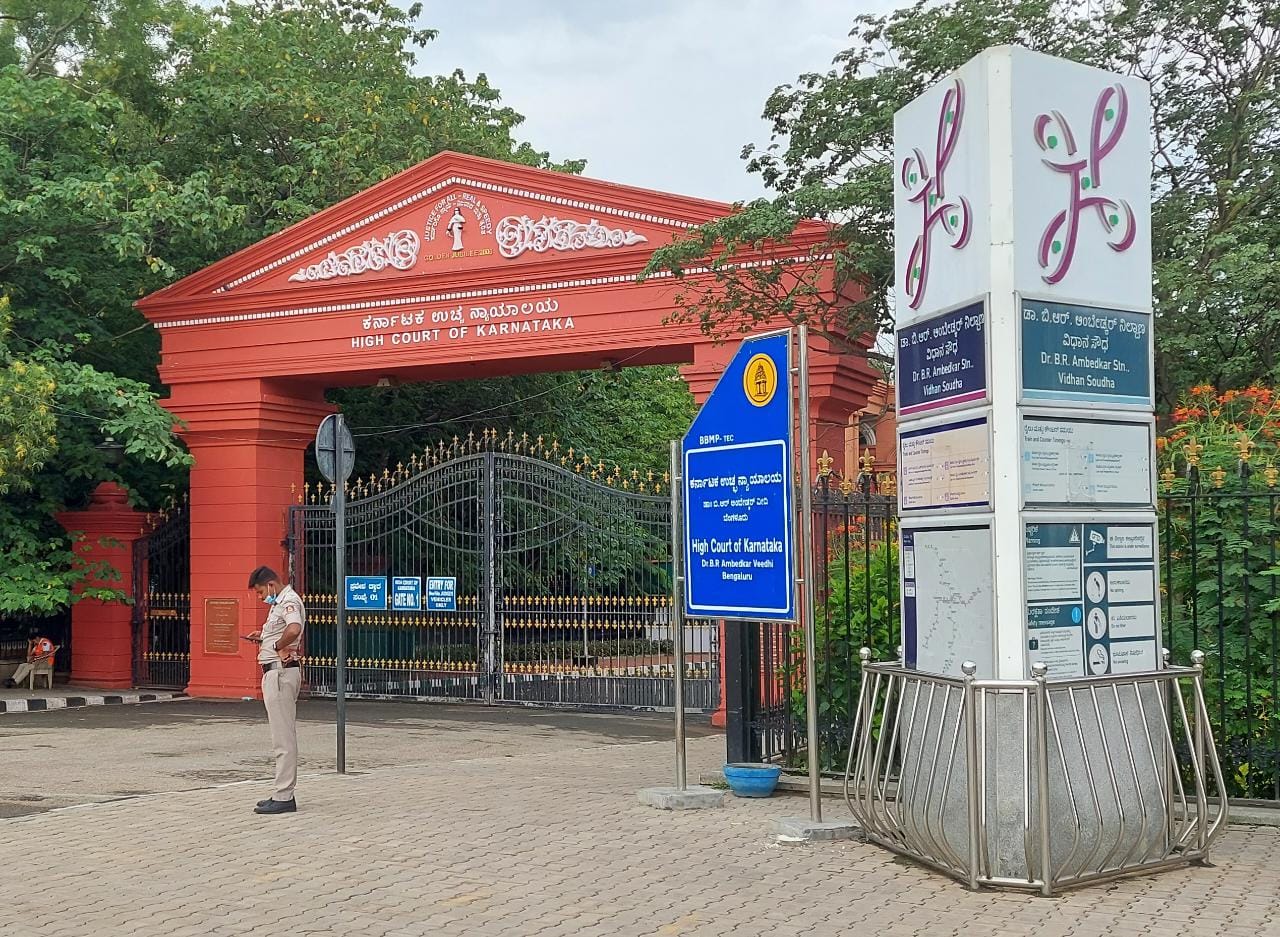
Karnataka High Court. (Anusha Ravi Sood/South First)

Synopsis: High Court clearly delineated the functional boundary between statutory investigative powers and judicial adjudication, observing that Section 106 preserves property while Section 107 adjudicates attachment. Section 106 BNSS serves as an immediate, protective mechanism for police officers to prevent suspected funds from being siphoned off. In contrast, Section 107 BNSS governs formal judicial attachment and permanent forfeiture, requiring Superintendent/Commissioner of Police approval, formal application to the Court, a 14-day show-cause notice, and full judicial hearing.
The Karnataka High Court recently upheld that investigating officers are empowered to freeze bank accounts during an investigation under Section 106 of the BNSS and are not required to invoke Section 107 for attachment of property in every case.
According to Livelaw, the single judge bench of Justice M. Nagaprasanna made the ruling while allowing criminal petitions filed by the State of Karnataka against JAR Gold Retail Private Limited and setting aside orders of the jurisdictional court directing the defreezing of the company’s bank accounts.
The Karnataka Cyber Command in a press release, noted, “Under this provision, police officers are required only to freeze the account during investigation and report the action forthwith to the jurisdictional Magistrate. The judgment explicitly quashed earlier orders passed by the Principal City Civil and Sessions Judge, Bengaluru, which had directed the release of seized gold/silver and the de-freezing of bank accounts in connection with Crime No. 25/2026 of Koramangala Police Station, a case involving M/s JAR Gold Retail Pvt Ltd under Sections 21(1) and 21(2) of the Banning of Unregulated Deposit Schemes (BUDS) Act, 2019.”
Also Read: CCB finds 10 mobile phones in Bengaluru central jail, 1 in Prajwal Revanna’s barrack
High Court clearly delineated the functional boundary between statutory investigative powers and judicial adjudication, observing that Section 106 preserves property while Section 107 adjudicates attachment.
Section 106 BNSS serves as an immediate, protective mechanism for police officers to prevent suspected funds from being siphoned off.
In contrast, Section 107 BNSS governs formal judicial attachment and permanent forfeiture, requiring Superintendent/Commissioner of Police approval, formal application to the Court, a 14-day show-cause notice, and full judicial hearing.
“…Section 106 and 107 of the BNSS deals with different situations. An interpretative exercise that breathes life into one provision by suffocating the another is one that this Court could never undertake. The submissions of learned Senior Counsel for the respondent[Jar Gold] would tumble down under the weight of the statutory text, binding precedents, legislative intent and inevitable consequence of the interpretation canvassed hereinabove…”, the court also observed as per Livelaw.
The press note further explained, “This judicial clarification is of vital importance to law enforcement, particularly in swift digital financial frauds and cybercrime investigations. The High Court emphasized that requiring prior court permission for every account freeze would severely cripple police efforts, as victim funds would vanish before a formal judicial process could be completed, leaving investigators with nothing more than an order of attachment over an empty account. By affirming that police action under Section 106 BNSS remains valid and independent of Section 107 proceedings, the High Court has reinforced the state’s capacity to protect financial victims and secure proceeds of crime effectively.”



