

Published Jul 03, 2026 | 4:59 PM ⚊ Updated Jul 03, 2026 | 4:59 PM

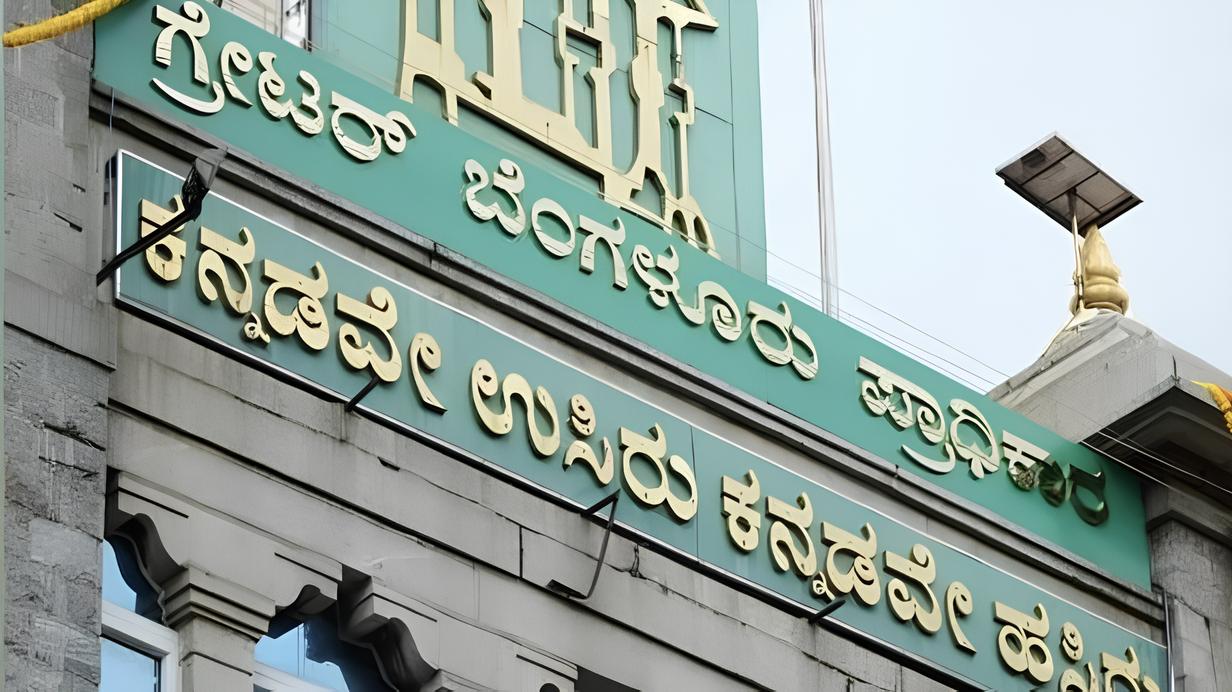
It is expected to minimise repeated road digging in Bengaluru and improve project execution.

Synopsis: The Karnataka government will set up an Executive Committee under the Greater Bengaluru Authority (GBA) to improve coordination among civic agencies, reduce repeated road digging and review infrastructure projects every month. The committee, chaired by the Bengaluru in-charge Minister, will bring together representatives from major civic bodies, while a GIS-based Road History Platform will help agencies share work plans and coordinate road projects in advance.
Bengaluru Development Minister Krishna Byre Gowda on Friday, 3 July, announced a series of measures to improve coordination among civic agencies, saying the Greater Bengaluru Authority (GBA) would play a central role in streamlining infrastructure planning and execution across the city.
The Minister said the GBA’s primary mandate would be to coordinate multiple civic bodies, enabling smoother implementation of development projects while reducing duplication of work. As part of this effort, an Executive Committee will be constituted under the GBA to strengthen interdepartmental coordination.
The committee, to be chaired by the Bengaluru in-charge Minister, will include representatives from the GBA, the five BBMP corporations, the Chief and Commissioner of Police (Traffic), the Managing Directors of the Bengaluru Metro Rail Corporation Limited (BMRCL) and the Bengaluru Metropolitan Transport Corporation (BMTC), officials from the Bengaluru Development Authority (BDA), the Bangalore Water Supply and Sewerage Board (BWSSB), BESCOM, the Fire and Emergency Services Department, and other key civic agencies.
The committee will meet every month to review the progress of infrastructure projects and improve coordination among departments that frequently undertake works on the same roads.
The mechanism is expected to minimise repeated road digging, improve project execution, and strengthen last-mile connectivity to tertiary roads.
Also Read: Negotiate, re-estimate or re-tender: Options before CM DK Shivakumar on Adani tunnel road bid
The committee will also oversee implementation of the Safe Footpath initiative, which began on 1 July in accordance with Supreme Court directions. The drive covers main roads, arterial roads, sub-arterial roads and pedestrian infrastructure.
Officials from the city corporations, along with the traffic police, have been clearing footpaths encroached upon by shop extensions, pushcarts, temporary structures and other obstructions, amid resistance from street vendors, who alleged that the action was carried out with little notice and without alternative spaces for vending.
Officials said nearly 300 pedestrians are killed in road accidents in Bengaluru every year, and the initiative seeks to make footpaths safer and reduce such fatalities.
Gowda said 76.2 km of footpaths were cleared on the first day and 64.5 km on the second, taking the total to 141 km. He added that the exercise currently covers only about 20 percent of the city’s roads, with the remaining roads yet to be taken up.
Citing public feedback, he said the lack of walkable footpaths consistently features among the top five civic concerns raised by Bengaluru residents.
To improve transparency and planning, the government will also develop a GIS-based Road History Platform to maintain a record of works undertaken on every road by agencies such as BESCOM, BWSSB and others.
All civic agencies will be required to upload their action plans to the platform, providing other departments with six months’ advance notice of proposed works to facilitate coordinated execution and prevent overlapping projects.
(Edited by Dese Gowda)



