

Published May 13, 2026 | 8:52 PM ⚊ Updated May 13, 2026 | 9:03 PM

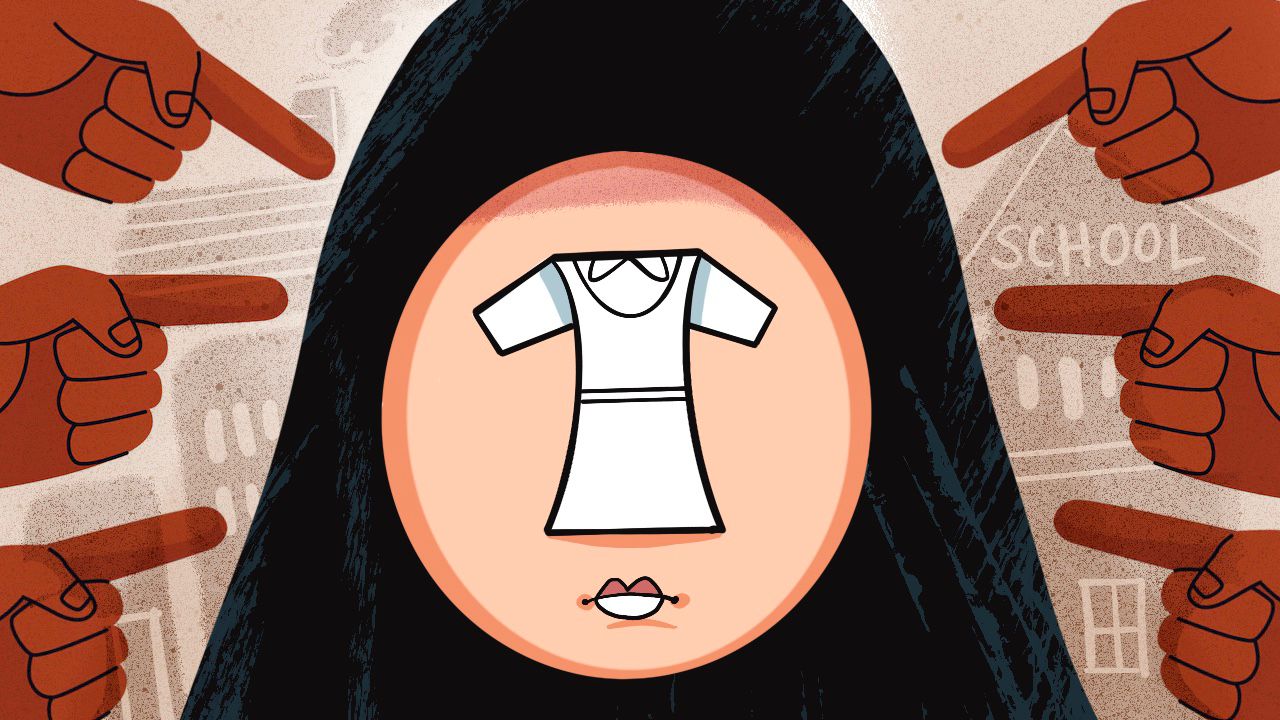
In 2022, the Basavaraj Bommai government banned the hijab in classrooms, stating it “disturb[s] equality, integrity and public law.”

Synopsis: The Karnataka government has withdrawn a 2022 BJP-era order that banned the hijab in classrooms and issued a new directive allowing students to wear limited religious and traditional symbols with the prescribed uniform. The order permits the hijab, sacred threads and similar symbols as long as they do not interfere with discipline, safety or identification, and says students cannot be denied entry for wearing them.
The Karnataka government on Wednesday, 13 May, revoked a 2022 GO issued by the then BJP government that banned the hijab in classrooms.
The GO followed a controversy that began in December 2021, when students at a government PU college in Udupi were denied entry for wearing the hijab.
In January 2022, one of the students moved the Karnataka High Court, seeking a declaration that wearing the hijab is a fundamental right guaranteed under Articles 14 and 25 of the Constitution.
The following month, the then Basavaraj Bommai-led BJP government issued an order prohibiting Muslim girl students from wearing the hijab in classrooms, stating that “clothes which disturb equality, integrity and public law and order should not be worn”.
The Congress government, which had repeatedly promised to withdraw the order, on Wednesday issued a fresh directive allowing students to wear “limited traditional and practice-based symbols” along with the prescribed uniform.
The order said such symbols must complement the uniform and should not alter, modify, or defeat the purpose of the prescribed dress code.
Also Read: Three years in, key Congress manifesto promises in Karnataka remain on paper
Wednesday’s order specifically permits the wearing of the hijab (headscarf), janivara or sacred thread, shivadhara, rudraksha beads, and other similar symbols commonly worn as part of religious or traditional practice. It states that these should not interfere with discipline, safety, or student identification.
The order further clarifies that no student shall be denied entry to an educational institution, classroom, or examination hall solely for wearing such permitted symbols.
At the same time, the GO states that no student should be compelled either to wear or remove these symbols. It added that national and state dress code rules would continue to apply during examinations wherever required.
“The implementation of this order shall be uniform, religious, traditional and non-discriminatory,” the order said.
Invoking social reformer Basavanna, the order said educational institutions must adopt the inclusive principle of “Ivanammava” (“He is one of ours”) to ensure that no student is denied access to education.
The order further said that any circular, resolution, instruction, rule, or directive issued by an institution that contradicts the order shall be null and void.
Also Read: From janivara to hijab: Two dress code rows, two different outcomes in Karnataka
The order comes weeks after another dress code row erupted in Karnataka, when three students were allegedly asked by staff at a college in Koramangala to remove their sacred threads before entering the examination hall for the Common Entrance Test (CET).
Police also filed an FIR against the staff for allegedly hurting religious sentiments, based on a complaint lodged by the students’ parents.
Meanwhile, the hijab dispute remains pending before the Supreme Court after the Karnataka High Court upheld the ban in 2022. The matter has since been referred to a larger bench.
A 2023 report by the People’s Union for Civil Liberties found that Muslim girl students faced humiliation, harassment, and barriers to education after the hijab ban, including discrimination by faculty members, college administrations, and classmates.
(Edited by Dese Gowda)



