
Published Sep 14, 2026 | 7:00 AM ⚊ Updated Sep 14, 2026 | 7:00 AM

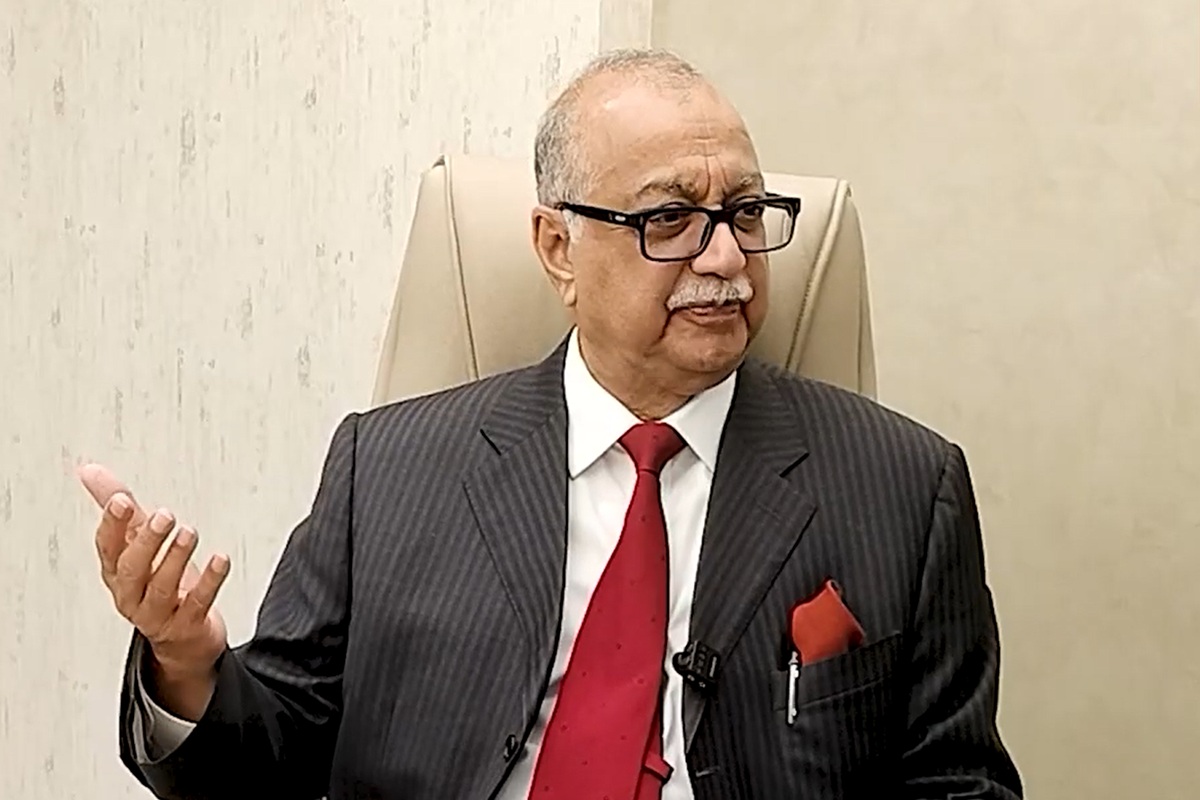
Dr Sudarshan Ballal.

Synopsis: For aspiring minds, Dr H Sudarshan Ballal’s life is a textbook on medical leadership that transcends titles and technology. Born in Udupi, Dr Ballal led by example, placing compassion on a high pedestal alongside competence—two qualities prerequisite for a socially aware professional. Stephen David, who wrote Dr Ballal’s biography, “Leading with Compassion”, has captured the subtle nuances and life events that moulded him into a leading philanthropist-nephrologist. Ahead of his 72nd birthday on 15 September, Dr Ballal spoke about his journey so far and his vision for private healthcare.
With a singular focus on medicine and a career as one of India’s most prominent healthcare experts, Dr H Sudarshan Ballal, Chairman of Manipal Hospitals, has a remarkable 50-year journey. His biography, Leading with Compassion, unveiled in 2025, is an inspiring story of professional expertise and a commitment to compassionate, accessible, humane healthcare.
In conversation with Anusha Ravi Sood, Dr Ballal reflects on his 50-year journey as a renowned doctor, his time as a student, career milestones, and the way forward for India’s healthcare sector.
Edited excerpts:
Q: What was it like to read about your life in print? What was your first impression of your biography, Leading with Compassion?
A: We initially debated the title before deciding on Leading with Compassion. What I see is that most people in the industry and elsewhere have forgotten compassion. It has become very transactional. You see a patient; he’s come with his problems. You try to solve the problems, but there’s no depth.
I have met many patients who said they spent 20 minutes with doctors who never looked at them. The doctors looked only at the computer screens and typed. So I tell my students and colleagues that whether it’s needed or not, first hold their (the patients’) hand, check their pulse, talk to them, find out about their family, their children, their spouse, grandparents, parents. I think that breaks the ice, and then everything becomes much smoother. Another thing I’ve noticed is the sacred doctor-patient relationship, which was something very, very noble when we were growing up. When we became doctors, that relationship slowly started wearing away.
That nobility has lost its sheen. I think one reason is that people don’t spend enough time together. It becomes extremely transactional. Patients come in (armed) with Google searches about their diseases, and doctors respond with ChatGPT. So there’s no human touch at all.
There’s a huge board in my office saying, “Please do not confuse your Google knowledge with my medical degrees”. I remain a firm believer: you should interact with a person, then use AI or other tools to support diagnosis and treatment. Compassion is something that I want to bring back into medicine—not only in medicine, but in every field.
So, that’s why I said, Leading with Compassion. And it was a great thing. It started with whether we should really do the book, because two things were happening: one, I was turning 70. I said, that’s not a great thing to celebrate. But the second was that I completed 50 years as a doctor.
I should reflect on what I have done in the past 50 years. Essentially, this book reflects what I have done in those 50 years: my schooling—high school and college, medical education, undergraduate and postgraduate training in the US, and returning to Manipal. Another unique feature I noticed is that I’m probably one of the few people in the country—maybe in the world now—who has stuck with one organisation for more than 50 years.
I’ve been with Manipal since I joined KMC Manipal as a student in 1970. Nowadays, people change organisations every three to six months. In the biodata, you need about 10 pages to list previous experience. Is that appropriate? I understand there may be reasons, but it’s unusual to stay with one organisation for so long.
I have worked for the last three generations of the Manipal Group, from the founder doctor’s team to the current chancellor of Manipal and the third-generation doctor, Ranjan Pai. I wanted to share it so people could read about it and decide for themselves. It was also fun going through all the old pictures I hadn’t seen in a long time.
It was a great experience. We were very happy that the former chief minister (Siddaramaiah) readily agreed (to launch the biography) and spent more than an hour with us.
Also Read: South India powers India’s organ transplants, but…
Q. You have been part of the government and policymaking for a long time. You’ve been a major contributor to Karnataka, even during extremely difficult times like the COVID-19 period. What has been your experience with government agencies and think tanks? Is there a reluctance to accept advice?
A: I initially thought it would be very difficult to deal with the government. You know, they are in a separate silo. The private sector is in another silo. But to me at least, it changed dramatically during the COVID pandemic. For the first time, I saw how the government and the private sector could work together for the betterment of society, and it was probably a unique experiment.
One of the good things that happened was the public-private partnership. We used to have meetings practically every other day. We met with either the chief minister and the ministers or senior officials. Some unique experiments were happening at that time. For the first time, the government and the private sector came together to set up telemedicine, and we had a hub at Manipal Hospital, alongside specialists from different hospitals.
These interactions reduced COVID mortality in the district headquarters hospitals by 50%. No money was spent. We didn’t bring in any special equipment or appoint any special people. It was just interactions with experts that changed the COVID management process and saved many lives.
That’s when we found there is more room for this kind of arrangement. I hope this will continue beyond COVID.
Also Read: Why India’s transplant crisis begins long before the waiting list
Q. What do you think the private healthcare sector can learn from public health institutions, and vice versa?
A: During my close interactions with the government, I realised that they have a lot of projects that the common man has never heard of, including the people in the medical fraternity. Their programmes for TB treatment, HIV treatment, antenatal care, vaccination for children and nutrition for children are amazing. We don’t notice such programmes because they are not glamorous.
Treating tuberculosis or nutrition issues in a pregnant woman, and vaccinations, are not page-three material for any magazine. So it’s unrecognised. I realised how much work actually happens behind the scenes. And we only look at star hospitals, star doctors, kidney transplants, heart surgeries, brain surgery…
But the government does a lot of things that probably contribute quite a bit to overall healthcare. I think public health is probably, in my opinion, very important. Spending ₹1 on public health probably saves you ₹1,000. I strongly support public health preventive measures and primary healthcare.
So far, all these things have been in the government domain. Unfortunately, people don’t talk about it much. Of course, the private sector has contributed hugely to the country’s current healthcare scenario. I think 70 to 75% of tertiary care in India is now in the private health sector.
When I was growing up, if you had anything more than a cold and cough, you went to Mumbai or, if you were rich, to the US. It has completely changed. Now, Bengaluru has some of the world’s best hospitals, and people from all over the world come here for treatment.
Q: International companies are investing in the Indian healthcare sector too.
A: Yes, absolutely. It happened because of private healthcare. We have taken healthcare to the next level. I don’t see any reason for me or anyone else to go abroad for healthcare. I have a lot of family, including my daughter, in the US. I tell her, if there’s a problem, you come to Bengaluru; we’ll get it sorted out and put you back on the next flight.
And we do that. I arrange for a lot of video consults for my friends and family there (abroad). You know, it takes months to see a doctor (there), with very little control over what’s happening. You’ll have a video consult, and then you can take care of it right away. It is a procedure. They fly in, get the procedure done, and they’re back the next day.
Q. You performed Karnataka’s first cadaver kidney transplant. Could you tell us about it?
A: I had done transplants, including cadaver transplants, in the US. But here, it was challenging. First, when I came here, there was no concept of a cadaver transplant.
Only when your heart stopped beating were you considered (for organ harvesting). The brain-death concept came later, and we adopted it because it was the priority. There were not enough living donors. So fortunately for us, the rule came in, and I must thank our then neurosurgeon, Dr Hegde, who told me that there was a young person who’d had a severe head injury and was potentially brain dead. I was also told that they then lacked the facility to perform the transplant.
He asked us whether he could transfer the patient and do it here. There’s a very interesting story behind this young lady who unfortunately passed away in this incident. Her heart was transplanted earlier. She and her parents knew about the transplantation.
Unfortunately, she had this accident and sustained a severe brain injury. The first thing that the parents told us, the neurosurgeons, was that she wanted to donate. So she was transferred here and, as per appropriate protocol, was declared brain dead, and one kidney was transplanted to a patient here.
The other kidney went to another organisation. So that is actually the dawn of cadaver kidney transplantation in Karnataka.
Also Read: Experts call for expanding donor pool
Q: It is a difficult choice for loved ones to take this call. But there is also, without doubt, a lot of reluctance whether to donate or not. Has it changed?
A: Well, I think things are better. I must give you another example, which truly is enlightening.
We have a doctor with us. I don’t know if you’ve heard of her— a foetal medicine specialist. She was literally after me for the past 10 or 15 years, saying she wants to donate her kidney to someone in need, who doesn’t necessarily have to be known to her.
It doesn’t have to be related. Nothing at all. And she had then signed up as a cadaver donor, but that happens only after death. So she said, ‘No, I want to do something while I am alive.’ She was insistent.
A committee permits you to donate a kidney while you’re alive. The committee asked her one question: ‘Why do you want to donate? This patient is not related, not a friend, and not someone you know.’
For various reasons, the law was unclear on this point. So they rejected her application. She went to the appellate authority. They upheld the rejection. But she was insistent, and despite her family initially being reluctant for her to donate, she said, ‘Nothing doing. I’m an adult. I can make my own decisions.’
She went to the High Court. The Honourable High Court of Karnataka said it was a very noble act. She should be allowed to donate, and Manipal Hospital should form a committee to choose the appropriate recipient. So, a committee of doctors chose the most appropriate candidate, and she finally donated the kidney.
The recipient is doing very well. This is the first altruistic donation in the state of Karnataka,
I applaud her because despite many obstacles, she still went ahead. I hope the government develops a methodology for this. The High Court has instructed the government to make rules for this kind of donation.
Q: In both instances that you mentioned, what struck me is that both donors were women — years apart and in different scenarios — which draws my attention to a lot of studies about how women, by a large margin, outnumber male donors, especially when it comes to a living-organ transplant. Why is it so? I find it fascinating and slightly uncomfortable.
A: My experience is that women, in general, are large-hearted. I don’t know if it’s their maternal instinct. Every time someone needs a kidney, the first person who comes forward is his wife, mother or sister.
There are very few good men left in the country. Statistically, about 75% of the donors are women. Invariably, it’s the mother or the wife first. And after them, comes the sister.
Q: A recent study says women accounted for 11,319 live organ donors while men stood at 5,298.
A: I would not be surprised at all. There are patriarchal issues also. I have had patients from patriarchal families. They bring the sister or someone, saying she’ll donate the kidney. We then interview the sister separately. They are often reluctant, but cannot say no in public. We tell them she’s not fit to donate, which is better than forcing someone to run.
They do not have the strength to say no, maybe because of the patriarchal setup. I have done that a few times. If we find that the woman is reluctant, we may say she’s not fit to do it. And, you know, people don’t ask you why she is unfit.
Also Read: Kerala infant’s organs to give five patients a second chance
Q: There’s a popular saying, “Vaidyo Narayano Harih” (Doctor is God). But have AI & Google superseded the ‘Harih’? Is it annoying when patients come with Googled diagnosis?
A: I guess we have to adapt. Maybe 30 years ago, it would have annoyed me. But now I see my children, my nephews, and nieces all with the same attitude—Gen Z, as they call themselves. You get used to it. I would not say it’s annoying. Sometimes you feel, why would they bring all this?
They can speak with us, and it is important to speak with us. Google gives you a lot of information. For instance, I would never travel without Google Maps anymore. It gives you good knowledge. But you need the right context.
You search ‘headache’. You’ll have 100 diagnoses. The first might be a brain tumour. You have swelling, a brain tumour, and cancer. So you say, ‘Some swelling on my left foot.’ They’ll say rheumatoid arthritis and so many exotic diagnoses. Please make sure you have the right context. I encourage people to look it up on Google, use ChatGPT, and discuss it with their doctor.
There may be subtle things that you may not pick up, which can be diagnosed only through conversation or examination.
Feeling the patient’s pulse, putting your hand on their back, and talking to them makes a huge psychological difference.
Observation is actually the key. The patients also feel more comfortable. So a patient wonders, ‘Why was the doctor looking only at the computer and didn’t even touch me?’ It won’t make them comfortable.
Also Read: Doctors say AI can explain, but not decide
Q: What was Dr Sudarshan Ballal like as a student? You passed with a medal for best outgoing student.
A: Studious! I think I was very studious and probably had no interests other than studies.
I used to study for about 16 hours a day, literally. During my school days, my only focus was on becoming a doctor. Of course, you didn’t have NEET and all those entrance exams; your pre-university score determined whether you became a doctor.
When my (PU) results came, I jumped with joy. I got high marks, and I was guaranteed a seat in Karnataka.
So that was, I think, the reason I studied so hard. Of course, there was a lot of motivation for me to be a doctor. Many of my family members, including my brothers, were all doctors. There was a very famous doctor in our hometown, Dr Shetty. He treated everything, from cataracts and tooth pain to draining abscesses, vaccinations, paediatrics, adults, and the elderly.
He was also our family’s mentor. Doctors are the social pillars of society; we have tremendous respect for them.
Q: Who inspired you the most?
A: I’ve had many inspirations, but as I said, this doctor in my town, my brothers and my brother-in-law is very famous.
You might have heard of him, Professor Pai. I stayed at his house while I was studying in Manguluru. Many of the people I knew were doctors, and they were a source of inspiration for me.
Q: What is the most challenging thing about being a doctor?
A: Well, I think one is that you play with life and death every day.
I found it hard to accept someone who’s not doing well, especially when you lose someone young or a kid. That is really depressing, at least early in your career. After a while, you learn how to deal with such things. It is not that the loss is any less, but you learn to deal with it better.
The other thing, which was an eye-opener for me, is that when I came back to India, and say, your kid or husband has kidney failure and needs a transplant or something to that effect, they’ll consider it certain death.
It’s like the death knell because they didn’t have the money to pay for it. That’s what really bothered me. In the US, you have kidney disease, you go on dialysis, get a transplant, and then Medicare or someone takes care of you. Never talk to the patient about treatment costs. Never, never. You had a physician assistant and your representatives who talked to them about the insurance. Here it was different.
It was far worse when I came, because only 5% of the people were covered by any form of insurance. Now it’s much better— 60 to 70% of them are covered. But you know, it’s like this: if you have money, you live. If you don’t have money, you die. It’s something very hard for anyone, especially for us as doctors, because you know that you can save this person. You can subsidise a few people, but you cannot subsidise everyone.
So that was hard. But slowly, things are getting better.
Q: Did that realisation lead you to initiate free transplants and subsidised treatment services?
A: I think it is a need of society, and it’s the obligation and the responsibility of people who can do it. But it’s still a drop in the ocean. We have a trust in my father’s name, where we subsidise dialysis. We do many paediatric transplants at extremely low cost or free of charge.
But to me, that’s just a drop in the ocean. We are proud to have helped some people in need, and I hope more people will come forward.
The government is also launching many schemes, and hopefully India in 2047 will be very different from what it is today.
Q. Do you have any regrets in life?
A. I regret that I never learnt flying and skiing. I’ll tell you the story behind it. When I was in America, there was a flying school nearby. I also had many friends, doctors, who went to Colorado in the winter to ski. However, for whatever reason, my wife was hell-bent on me not learning to fly.
She said first learn to run. So she never let me join the flying school. And of course, skiing is also accident-prone. So I couldn’t do either of these things. But now, I cannot do them anyway. I cannot get into a flying school now, nor can I go skiing. But other than that, no major regrets. These are all small things in life.
Q: What is the next milestone you are looking forward to?
A: Lead a happy life. Be happy and be yourself.
Q: If not a doctor, what would you have been?
A: Believe it or not, I would have been an IAS officer.
Q: One thing you think the Indian healthcare sector needs immediately?
A: I think more focus on preventive and public health, and providing access to tertiary care—the government sector appeals to young doctors.
Q: Your advice to young doctors?
A: There are no shortcuts in life. You have to work hard to be successful.
Q: You don’t want to be a politician?
A: Well, I don’t think I’m suited or meant for that, honestly.
(Edited by Majnu Babu).



