

Published Nov 23, 2026 | 6:09 PM ⚊ Updated Nov 23, 2026 | 6:09 PM

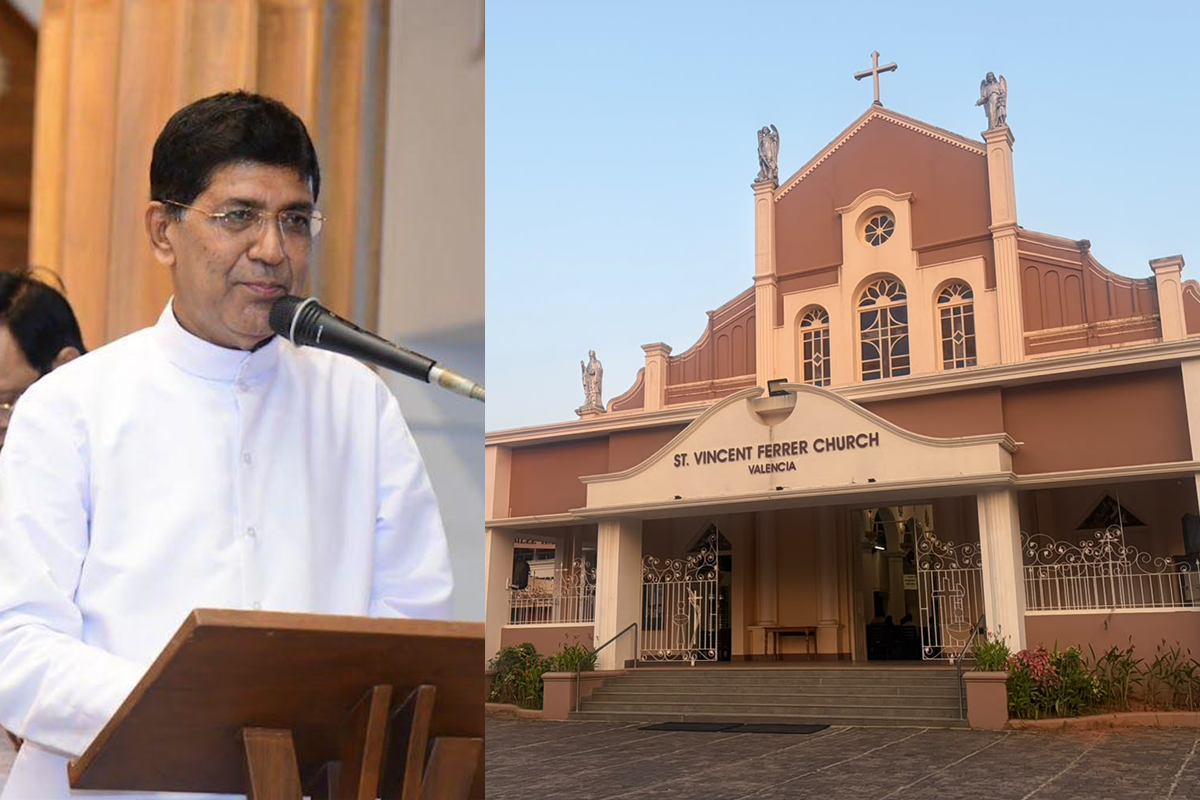
Father Cyprian Pinto

Synopsis: For the first time, the parents of two boys who accused a Catholic priest of sexual abuse recount what happened after they came forward: the pressure to withdraw their complaints, the investigative lapses and the toll the pursuit of justice has taken on their families.
They came forward to seek justice. Months later, the families of two minor boys who have accused Mangaluru priest Cyprian Pinto of sexual harassment find themselves contending with a different ordeal.
They now face pressure from some in their communities, lapses in the investigation and a legal process that has taken its toll on their homes and livelihoods. Pinto has since been arrested for the second time on 18 November, but for the families, the consequences of speaking out are far from over.
For Anthony’s (name changed) mother, the pressure was palpable wherever she went. “People approached me even there and directly told me to withdraw the case. They said it wouldn’t bode well for the family,” she says.
The identity of 14-year-old Sebastian (name changed) and his family is no longer private within their community; this exposure has brought the family the ire and judgment of the community. By September, news of the alleged abuse had begun to circulate in Valencia’s close-knit Catholic community, despite the POCSO Act’s safeguards against the disclosure of a child’s identity.
In August, five altar servers realised that others, too, had faced the abuse they had privately experienced. They learnt it while discussing their experiences with each other. The scale of the alleged abuse, and the fact that several boys had similar accounts, prompted them to bring the matter to the attention of the church leadership.
On 17 August, the boys and their parents met with Bishop Peter Paul Saldanha of the Mangaluru Diocese. The boys submitted written requests, seeking the church to take note of and act against child sexual harassment.
“He (Father Cyprian Pinto) said not to reveal the matter to anyone and said that people may feel jealous of me,” a 14-year-old boy wrote. The alleged abuse occurred multiple times from May 2025, after Father Pinto was appointed to the church, the letter said.
It was here that Stanley KV, co-founder of Odanadi and a key figure who later brought attention to the abuse, recognised one of many errors in processing the case.
“Under Section 21 of the POCSO Act, the head of any company or institution, educational or religious, is mandated to report an offence by a subordinate,” he said. By failing to do this, the head is liable to face one year in prison.
In August 2022, Odanadi (companion) had played a pivotal role in unearthing a high-profile series of alleged sexual abuses involving the Murugha Mutt in Chitradurga.
Also Read: Mangaluru priest arrested again in another child sex abuse case
The parents also said they were reluctant to take the matter to the police. Key church leaders — and even the Bishop — had already made comments about the toll that a police investigation would take on the families.
“We were worried that we would be singled out and talked about in society if we took the case to the police,” said Sebastian’s mother. She was also worried that the spectre of the abuse would haunt Sebastian’s future if they sought legal recourse.
The church, on the other hand, was made up of people the family had known their whole lives: friends, neighbours, and leaders. The Bishop also ensured the matter would be treated with the gravity it deserved and that a canonical inquiry, at the behest of the Diocesan Ecclesiastical Tribunal, would begin after the Monthi festival.
“There was trust that at that time the Bishop would handle it,” said a neighbour of Sebastian’s family, a key figure who has provided support.
Konkani-speaking communities in the Konkan and Canara regions celebrate Monthi, a Catholic Christian festival, annually on 8 September. It marks the Nativity of the Blessed Virgin Mary and serves as a harvest thanksgiving festival (Novem) for Mangalorean Catholics.
Almost a fortnight later, the results of this ecclesiastical inquiry were not made public. Hope was waning.
Some concerned parents wrote to the Directorate of Child Protection, seeking an investigation. The Directorate subsequently directed the District Child Protection Unit in Mangaluru to investigate the allegations and submit a report. The Pandeshwar police led an inquiry into the matter, but crucially, no FIR was registered at the time.
The police initiated a pre-arrest inquiry. They recorded statements from Pinto, the parish priest who succeeded him, and the church administrator, and submitted a report on 15 September.
“It is mandatory for the police to register an FIR in child sexual abuse cases. Time is of the essence in POCSO cases. By delaying the registration of FIR, the police have allowed the influence of the church and society to touch the victims,” said Stanly.
Acknowledging the lapse, Mangaluru Police Commissioner Sudhir Kumar Reddy said the investigating officer was unaware of the procedure. “A departmental enquiry is ongoing regarding this, and a disciplinary action proportionate to the lapse will be initiated,” he said.
When asked if the delay meant that Sebastian’s family could be influenced, Reddy said, “If there are any pressures, the family can bring it to the police. We will take action.”
Also Read: Mangaluru priest arrested again in another child sex abuse case
Stanley learnt of the case in mid-October through activists trying to draw attention to the issue.
“I was on social media when I saw a creator appealing for the public not to support Cyprian Pinto. I wrote to the CWC (Child Welfare Committee) and the Mangalore Police immediately,” he said.
Two months after the case came to light, after passing through the hands of the Bishop, the DCPU, and the Pandeshwar police, an FIR was finally registered on 15 October.
This day has stayed in Sebastian’s mother’s memory. She recalled loud knocks on the door at 8 pm, a time when most neighbours would be home and awake.
“They hadn’t provided any prior intimation, and they were screaming that they were the police. They were coming to record my son’s statement,” she said. The visit confirmed for her neighbours—many fellow parishioners—the news they had been hearing.
News of the FIR’s registration had already reached church functionaries. “I received a call from the vice president of the parish pastoral council. He was furious; he asked us why we had registered the FIR,” Sebastian’s mother says. The Vice President went on to claim that the contact details of the four other boys had ‘leaked’ because of the FIR registration. “He told us that it was us who would go to jail,” she adds.
The next day, the parents said, the vice president gathered the remaining four boys and reportedly said, “You know the boy who registered the FIR. If the police come to you, say that nothing happened.”
On the church steps, the same boys now stood away from Sebastian.
“The way people see us at church and in our community has changed. It is as though people we were close with are also avoiding us,” she said. Indirectly, through her son or daughter, she hears how people are discussing the matter.
Roy Castelino, the Public Relations Officer for the Diocese of Mangalore, denied that the church pressured any parents. “The Bishop has not discouraged anyone from seeking legal recourse. Anyone who feels aggrieved or believes that they have been wronged has every right to approach the appropriate legal authorities,” he said.
Church-goers and parishioners declined to speak about the matter. Some even said they didn’t go to the parish when South First told them about the case.
Also Read: How survivors of a Kerala cricket coach’s sexual abuse brought down a predator
On 18 October, Pinto was arrested and was sent to judicial custody. This marked two months after the letter recorded the instance of abuse.
Already, four of the five children, who had come forward, declined to go ahead with the case. “Delays in processing the POCSO cases are especially costly; it discourages families from continuing in the case. Here, there was such a delay in registering the FIR itself,” said ML Parashuram, co-founder of Odanadi.
At the end of his judicial custody, the Additional District and Sessions Judge, Fast Track Sessions Court-1, Mangaluru, granted Pinto conditional bail on 29 October.
In his plea, Pinto alleged that he was falsely implicated because the youth was disgruntled with disciplinary measures, including closing the church gates early. Representing the accused, Advocate Rajesh Kumar Amtady argued that more than two months had passed between the alleged incident and the complaint’s filing. Additionally, the advocate argued that Pinto had surrendered to the police and since he was over 60, he was not in good health.
The delays had consequences, as community member Oscar Luvis pointed out. Luvis and a group of people have banded together, unofficially counselling the parents, making videos to raise awareness in the community and following up with authorities. One of his early videos brought the matter to Odanadi’s attention.
“The reasons cited in the bail plea were not exactly true. The FIR was registered late because of the Church’s own inquiry and then the police inquiry,” Luvis said.
Police department sources also confirmed that Pinto was arrested near Mangaluru and that he had not surrendered. The question now is how he secured conditional bail.
Though Sebastian’s statement has been recorded in accordance with the procedure prescribed by POCSO, the process has taken a toll on his family. “There is only one breadwinner in the family, and he was asked to visit the station multiple times,” his parents said. It added to the family’s strain.
They also said CWC often made calls without checking where they were. It compromised their privacy. In a community where news travels fast, preserving confidentiality has proved difficult. Sebastian has attended a counselling session, but the family has yet to receive the services of a support person.
The burden on the family could have also been mitigated if there had been a combined FIR including the complaints of all five children. However, due to a combination of factors – delay in investigation, pressure from society and the survivor’s turning hostile, the pressure of the pursuit of justice disproportionately rests with them, they said.
“I want also to put this behind my son and me. The length of the procedure is adding to the strain and tension in our home,” the mother said.
Their experience pointed to a wider problem in the pursuit of justice under the Protection of Children from Sexual Offences (POCSO) Act. According to the National Crime Records Bureau’s Crime in India 2024 report, only 32.3% of POCSO trials completed in 2024 ended in conviction.
Nearly 2.87 lakh cases were pending trial at that year-end. For families, pursuing justice can mean overcoming institutional delays, social stigma, and pressure from communities they have known all their lives.
Also Read: Sexual abuse of children is not limited to girls in India
When Sebastian’s story came to light, 13-year-old Anthony felt a sense of righteous indignation, his mother recalled. Before Pinto was appointed parish priest of St Vincent Ferrer’s Church in Valencia in May, he had served at St Sebastian’s Church, Permannur, for six years.
On 13 May, shortly before Pinto’s transfer, Anthony had gone to the church for the Holy Communion ceremony of a friend’s son. When they were briefly alone, Pinto allegedly groped him.
“My son wanted to report the case even then. However, we knew he was being transferred, so we decided against it,” his mother said.
But as Anthony watched Sebastian’s family endure delays and pressure to drop the case, he decided he could no longer remain silent. “He, too, wanted to tell his story and file a complaint against Pinto,” the mother said.
Police registered an FIR on 8 November based on Anthony’s complaint, and recorded his statement a few days later. However, the family remains in the dark about many of the intricacies of the POCSO case.
Notably, the CWC was absent from both cases. The Committee acts as the child’s dedicated protective and rehabilitative authority alongside the criminal investigation. While the Special Court conducts the criminal trial against the accused, the CWC manages the child’s safety, custody, emotional recovery, and legal navigation from day one.
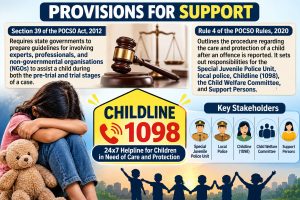
The law provides for someone to guide a child and their family through the unfamiliar terrain of a POCSO case—explaining the proceedings and helping them access the services they need. Section 39 of the POCSO Act, 2012, provides for the involvement of experts to assist children during the pre-trial and trial stages, while Rule 4 of the POCSO Rules, 2020, places the responsibility of facilitating a support person on the Child Welfare Committee (CWC). The Supreme Court had clarified that providing a support person to a child victim is mandatory and cannot be left to the discretion of the authorities.
However, Anthony and his family were not told that such help was available. Two of the five members of the Dakshina Kannada CWC denied that the law made such a provision.
“The police tell us when there is a child who is in need, we will assign a support person,” said Dr Akshatha Adarsh, Chairperson of the Dakshina Kannada Child Welfare Committee.
The CWC had also not arranged for any counselling session for Anthony, though there were ‘plans’ to arrange one soon, the members said. A 2019 report by the Supreme Court Registrar also found that support persons had been appointed in only 4% of POCSO cases.
Without this support, the families have had to navigate the aftermath of the allegations largely on their own, even as pressure to withdraw their complaints has followed them beyond the police station. Even in the safety of her own home, Anthony’s mother has received calls from ‘concerned’ friends and associates of the family, warning her against the course they had chosen. But seeing how steadfast her son has been in a situation no child should be put in has bolstered her own strength. “I told them I would stand by my son,” she said.
Also Read: MBBS doctors should be trained to identify child abuse
“I still get nightmares about it,” a 34-year-old man recalled what he said had happened to him when he was 14 or 15.
The allegations against Pinto have brought back memories he had spent years trying to make sense of. He said the priest sexually abused him on two occasions—once at Pinto’s residence, after he was invited for dinner, and again during a church trip.
“I had two incidents with him,” he said, declining to go into the specifics. He recalled that other boys in their circle were going through similar experiences, though he cannot say how many.
“I cannot prove it, because no one will come out and speak about it in public.”
Allegations against Pinto did not surface in public for the first time. In December 2004, Mangaluru-based Kannada daily Karavali Ale published a report, attributed to an anonymous Christian youth group, alleging that an unnamed priest was sexually exploiting boys.
The trauma, the man said, came into focus much later, when he began to understand what he had experienced as a child. The community’s response has only deepened his distress.
“I feel low when people support him but not the victims. It has damaged my relationship with the Church. I don’t go to church very often,” he said.
What pains him most is that some people who know Pinto’s alleged continue to defend the priest. “They brushed it off, saying he is a man of God.”
He sees in the boys who have now come forward a courage that he and his friends could not summon. “I salute their courage and their parents’ support. It’s not easy. We did not have the guts to come out then,” he said.
The man expressed fear that pressure from members of the Catholic community could force the families to withdraw their complaints, while others may remain silent, convinced that the justice system will fail them. Pinto has already secured bail once, he said. “I won’t be surprised if he’s out again.”
(Edited by Majnu Babu).



