

Published Jul 15, 2026 | 7:40 PM ⚊ Updated Jul 15, 2026 | 7:40 PM

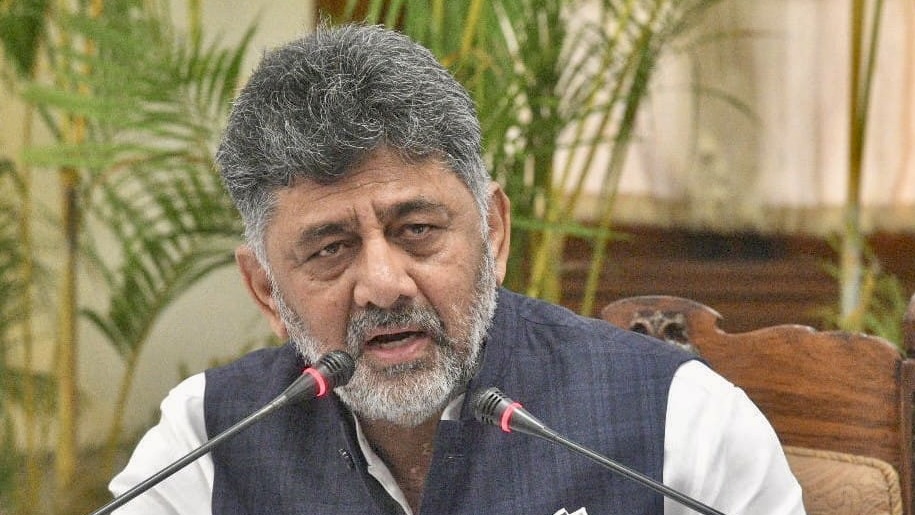
The bill was seen by critics as attempts to ease legal hurdles for the contentious tunnel road project.

Synopsis: The Karnataka government has unveiled the draft Apartment (Ownership and Management) Bill, 2026, to replace two five-decade-old laws governing apartment ownership and management, and has invited public feedback until 6 August. Chief Minister DK Shivakumar said the legislation was intended to safeguard the interests of property owners, improve the governance of apartment associations, and support planned high-rise development in Bengaluru.
The Karnataka government has proposed the Karnataka Apartment (Ownership and Management) Bill, 2026 to overhaul the ownership, governance and management of apartment complexes.
The draft legislation, unveiled on Wednesday, 15 July after discussions with apartment owners’ associations in Bengaluru, seeks to replace the Karnataka Apartment Ownership Act, 1972 and the Karnataka Ownership Flats (Regulation of the Promotion of Construction, Sale, Management and Transfer) Act, 1972.
The government said the new legislation is intended to update the legal framework governing apartment ownership and management while bringing it in line with the Real Estate (Regulation and Development) Act (RERA), 2016.
If enacted, the Bill would apply to apartment projects with more than eight units. It proposes to place implementation under the Urban Development Department through a designated competent authority, vest ownership of the project land and common areas with apartment owners, and restrict apartment associations to management, maintenance and administrative functions.
The government has invited public feedback on the draft until August 6, after which suggestions will be reviewed before the Bill is finalised and introduced in the Karnataka Legislature.
Speaking at an interaction with representatives of apartment associations at Bengaluru’s Nehru Planetarium, Chief Minister DK Shivakumar said the government was committed to protecting apartment owners’ interests.
“This Bill is being introduced to safeguard the interests of property owners. Leaders of all political parties, MLAs, and other stakeholders have been given an opportunity to express their views. I cannot take a unilateral decision,” he said.
The draft Bill introduces several key changes that would affect how apartment complexes are owned, managed and redeveloped.
The proposed Bill also places a series of new responsibilities on developers.
Also Read: Chinnaswamy stadium stampede: Suspension of 3 IPS officers revoked
Chief Minister DK Shivakumar said Bengaluru has nearly 40 lakh properties, with 26 lakh already brought under the state’s e-Khata system.
He said while the majority of developers had adhered to planning norms, some had exploited loopholes by constructing more floors than permitted under their sanctioned building plans. According to him, such violations were more frequently seen in smaller developments built on individual sites or revenue land.
The Chief Minister also pointed to recurring disputes within apartment communities, saying many homebuyers found that the terms promised by developers changed between the booking stage, property registration and eventual handover.
“People often face one set of promises while signing agreements, another during registration, and yet another after taking possession of their homes. It is disappointing. In some apartment associations, a handful of troublemakers create unnecessary disputes,” he said.
Shivakumar also recounted his own experience with apartment associations, saying he had faced hostility despite being an owner.
“In one apartment where I owned a flat, my name was put up on the notice board even before my registration was completed. A similar thing happened to me in Benniganahalli. They even said I would not be allowed inside. Such apartment associations do exist,” he said.
Also Read: Bengaluru daycare alleges extortion bid by former employees amid child cruelty case
Chief Minister DK Shivakumar said the government is encouraging vertical growth in Bengaluru, with high-rise development to be supported by improved road infrastructure.
He said work on the 132-km Bengaluru Business Corridor was progressing and defended policy measures such as Premium Floor Area Ratio (FAR) and Transferable Development Rights (TDR) to enable planned urban expansion.
Responding to concerns over these policies, Shivakumar said the government would consider legally valid suggestions and make changes where required.
“Give us legally sound suggestions and we will act accordingly. We have introduced floor-wise Premium FAR and also provided TDR. A few people holding bogus Premium FAR approvals approached the court, delaying the policy for nearly a year and affecting many construction projects. The court later ruled in favour of the government, recognising that we had taken the right decision,” he said.
He said the government’s broader focus was to make urban administration more accessible and resolve disputes through consultation rather than prolonged legal battles.
“Decentralisation of power is our objective. We want disputes to be resolved through dialogue rather than litigation. The voice of the people should become the voice of the government. We must all work together as Team Karnataka,” he said.



