

Published Aug 14, 2026 | 3:27 PM ⚊ Updated Aug 14, 2026 | 3:27 PM

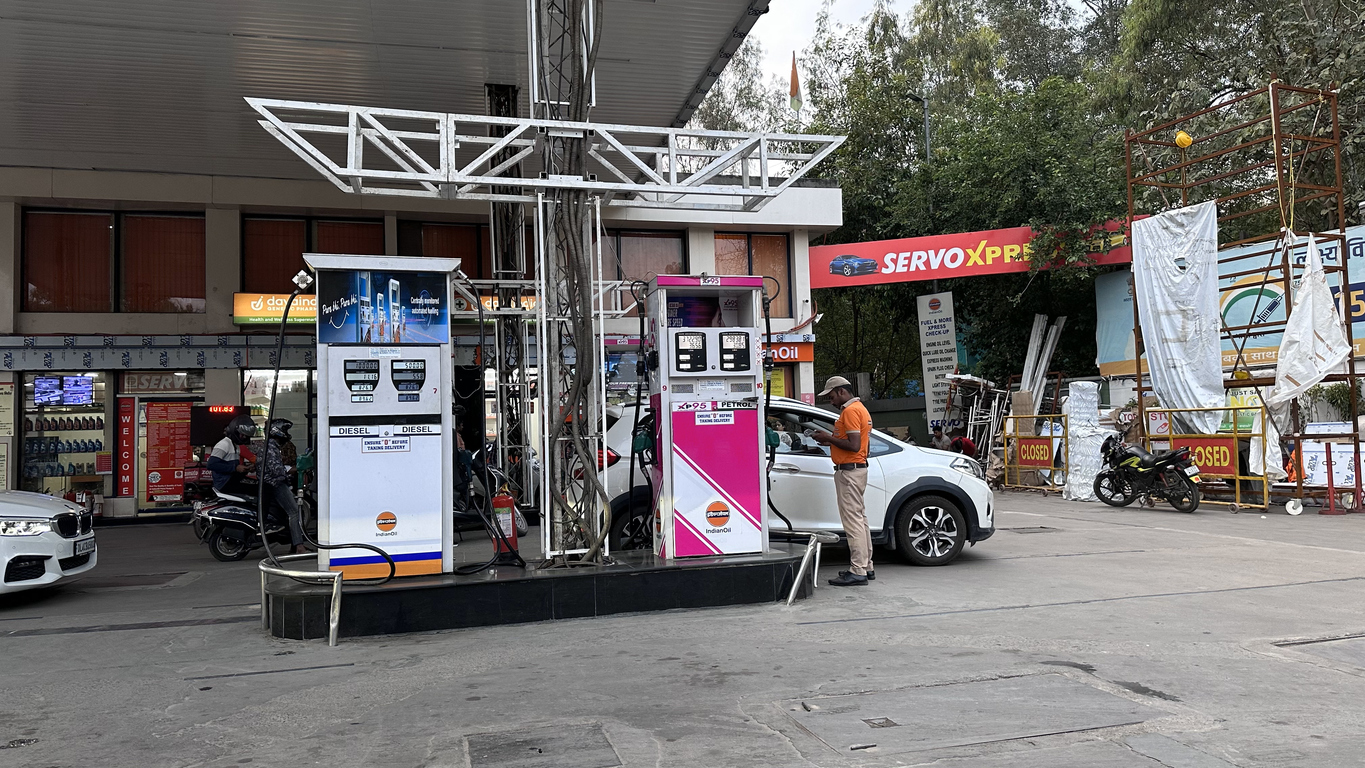
Fuel station operators said motorists have routinely raised concerns about mileage, but none about engine failures.

Synopsis: Bengaluru motorists have reported lower mileage, stalling and other drivability problems following the nationwide shift to E20 petrol from 1 April 2026. Technicians say ethanol may not be responsible for every vehicle problem and recommend measuring mileage through full-tank-to-full-tank tests rather than relying on dashboard readings. Concerns have also grown over unclear guidance from automobile manufacturers on E20 compatibility, particularly for older vehicles.
The nationwide transition to E20 petrol has drawn mixed reactions from motorists in Bengaluru, with some reporting lower mileage and poorer drivability.
Under the Union government’s Ethanol Blended Petrol (EBP) programme, the target for 20 percent ethanol blending was brought forward from 2030 to 2025–26 under the Ethanol Blending Roadmap. From 1 April 2026, petrol sold across India has been mandated to contain 20 percent ethanol and 80 percent petroleum.
The mandate applies to petrol sold by state-owned oil marketing companies—Indian Oil Corporation Ltd. (IOCL, or IndianOil), Bharat Petroleum Corporation Ltd (BPCL) and Hindustan Petroleum Corporation Ltd (HPCL)—as well as private companies such as Reliance BP Mobility (Jio-bp), Nayara Energy Ltd and Shell India. It also covers most higher-octane fuels typically marketed as “power” or “premium” petrol.
Currently, only RON 100 fuels, such as XP100 and poWer100 from IOCL and HPCL, respectively, are exempt from the mandate. These two variants typically cost 40–50 percent more than regular fuel and are available at a very limited number of outlets.
Some motorists say they are getting lower mileage and are therefore paying more for the same distance travelled. Others have reported changes in drivability and concerns about higher maintenance costs.
Compatibility with vehicles is among the main concerns raised by motorists, particularly owners of older vehicles. A key concern is the effect of ethanol on internal combustion engine components. Motorists have attributed damage to engine parts to ethanol’s hygroscopic nature – its ability to attract and absorb moisture from the air.
Automobile technicians, however, say motorists may be wrongly attributing every vehicle problem to ethanol-blended fuel. They point out that not every mechanical or performance issue that appears after the introduction of E20 can be attributed to the fuel.
Also Read: Bar Council of India backtracks, hands CJP an accidental win
For some Bengaluru motorists, the shift to E20 has been accompanied by lower mileage and changes in engine performance. Sandeep V, who owns a Volkswagen Polo petrol bought in 2019 and a Maruti Suzuki Ignis bought in 2022, reported lower mileage, reduced engine power, jerking and unusual engine noises.
“I had a bad experience with E20 petrol. I experienced mileage and performance issues after using ethanol-blended petrol. This was accompanied by reduced engine power and noises,” he said.
Sandeep said his Volkswagen Polo, which earlier returned around 13 kmpl in city driving, dropped to about 8 kmpl after using E20. He later tried Shell petrol, costing around ₹130 a litre, before switching to Indian Oil’s XP95. He said he noticed an improvement in the car’s performance and mileage after the switch. –
“I pay ₹120–130, but it is worth the price,” he said, referring to the higher price of premium petrol.
Royal Enfield rider Siddharth S said his motorcycle’s mileage had fallen from around 36–41 kmpl to 30–34 kmpl. While the difference was less noticeable during city riding, he said it became more significant during highway and long-distance journeys.
“A couple of times I experienced stalling issues, and the mechanics and bike service owners are not entirely aware of this issue,” he said. He added that some mechanics had recommended premium petrol, although such fuels can also contain ethanol.
Fuel station operators said motorists have routinely raised concerns about mileage, but none about engine failures.
Abdul Salaam, who manages a Bharat Petroleum outlet in Jayanagar, said some customers had reported mileage reductions of around 10–15 percent.
Also Read: Explained: Mines and Minerals Amendment Bill and how it threatens states’ fiscal autonomy
Vikyanth, a senior Hyundai technician with around 15 years of experience, said ethanol-blended petrol can attract more moisture, but regular petrol can also accumulate moisture through condensation and temperature changes.
He stressed that leaving vehicles unused for long periods usually contributes to fuel-system problems, irrespective of the type of petrol used.
He said vehicles and fuel-system materials have improved over the years and that he had not received complaints from regularly driven vehicles where E20 could specifically be identified as the cause.
On mileage complaints, he said many motorists rely on dashboard readings, which are averages and can be affected by traffic and idling. “Cluster mileage is an average figure, not the exact mileage,” he said.
He recommended a full-tank-to-full-tank test to measure mileage accurately.
Also Read: Modi, Shah finally turn up in Lok Sabha only for Speaker to adjourn sine die in under four minutes
The lack of transparency from both the government and automobile manufacturers has added to the confusion. While some manufacturers, particularly the German carmaker Audi, have explicitly warned their customers against using E20, most others have not issued clear guidelines.
Similarly, Shell India says it expressly disclaims “responsibility for any adverse effects that may result from the use or application of the ethanol blended fuel in the customer’s vehicle(s).”
Vikyanth noted that Hyundai has been producing E20-compliant vehicles since 2023.
Shila Madan, a professor of urban planning, said E20 should not be viewed merely as a change in fuel composition, but as part of a broader shift towards cleaner urban transport.
“The transition to E20 has to be holistic. We have to look at cleaner fuel, vehicle compatibility and the impact on consumers together. Older vehicles may face performance or durability concerns if they are not designed for higher ethanol blends,” she said.



