


Appearing for Sosale, Senior Advocate Sandesh J Chouta alleged procedural irregularities, stating that Sosale was neither served arrest documents nor informed of the grounds for his arrest at the time.

Published Jun 09, 2025 | 7:14 PM ⚊ Updated Jun 09, 2025 | 7:14 PM

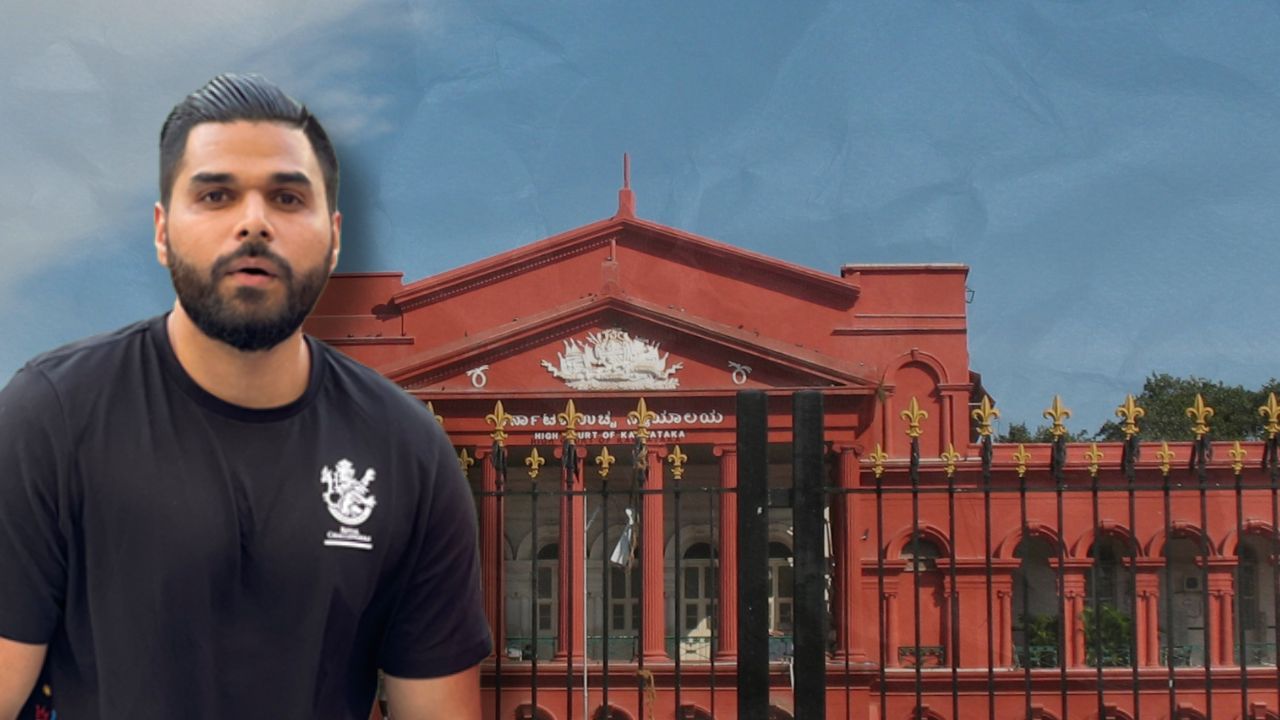
Sosale's counsel aruged that the arrest was politically motivated and not based on any investigation.
Synopsis: The Karnataka High Court on Monday questioned the legality of Nikhil Sosale’s arrest during a hearing on his relief plea, with proceedings set to continue on Tuesday. Sosale, Marketing and Revenue Head of Royal Challengers Bengaluru (RCB), was detained by the Central Crime Branch in the early hours of 6 June following a stampede outside M Chinnaswamy Stadium on 4 June during an RCB felicitation event. The court has sought clarification on the grounds for arrest, after Sosale’s counsel alleged that it was carried out on the Chief Minister’s orders without due process.
The Karnataka High Court on Monday, 9 June, heard a petition filed by Nikhil Sosale, Marketing and Revenue Head of Royal Challengers Bengaluru (RCB), challenging the legality of his arrest by Bengaluru Police in the early hours of 6 June, LiveLaw reported.
The arrest followed the deadly stampede outside M Chinnaswamy Stadium in Bengaluru during the RCB felicitation event on 4 June, held to commemorate the team’s first IPL title win the previous night.
Appearing for Sosale, Senior Advocate Sandesh J Chouta argued that the arrest was politically motivated and not based on any investigation. He stated that Sosale was detained by the Central Crime Branch (CCB) around 4.30 am at the airport, even though the state government had informed the High Court a day earlier – during suo motu proceedings – that the investigation had been transferred to the Criminal Investigation Department (CID).
“In our case, the arrest has taken place at 4.30 am and not by Cubbon Park police but by the Central Crime Branch (CCB) at the airport,” Chouta submitted. “This arrest has not happened on the basis of any investigation but on orders of the Chief Minister.”
He further alleged procedural irregularities, stating that Sosale was neither served arrest documents nor informed of the grounds for his arrest at the time.
“What is the time, reasons and grounds of arrest given?” the Court asked.
“At 2.20 PM we were given. They have not given any time of arrest,” Chouta replied.
Chouta told the court that the decision to arrest officials from RCB, DNA Entertainment, and the Karnataka State Cricket Association (KSCA) was taken at a meeting chaired by the Chief Minister on the night of 5 June.
“Around 9 PM, decisions are taken by the Chief Minister. Decision is taken to arrest officials of RCB, DNA, and KSCA. This was conveyed in a press meet and has appeared in both electronic and print media,” he said.
The bench questioned whether the Chief Minister could publicly direct arrests. In response, Chouta contended that such directions would be illegal, arguing that the power to arrest rests solely with the investigating officer, as established by precedent.
The Advocate General (AG) of Karnataka, appearing for the state, informed the court that he would seek instructions on whether the investigation had been formally “transferred” or merely “handed over” to the CID – a distinction the court observed could have a significant bearing on the legality of the arrest. He also submitted that interim relief should not be granted unless the arrest was found to be unlawful.
The bench reserved its decision on interim relief and adjourned the matter to Tuesday, directing the state to clarify the sequence of events, the basis for the arrest, and the legal authority of the officers involved.
The court also heard preliminary arguments from counsel for RCB and DNA Entertainment, who face similar allegations. The bench asked the state to explain how the accusations against these two entities differed from those levelled against KSCA officials, who have already been granted protection from coercive action under a prior court order.
“Show me how allegations against RCB and DNA are different.”
The prosecution alleged that RCB and DNA had organised the event without permission and had encouraged public attendance via social media. However, the bench questioned whether such actions – absent a specific statutory violation – could attract charges like culpable homicide or causing hurt.
The AG stated that the FIR accused RCB of conducting the event without permission and referred to social media posts inviting the public. The Assistant State Public Prosecutor added:
“The allegation is that they tweeted inviting people.”
The court asked:
“Do you call this an allegation? What is the offence? Let us be very clear.”
Senior Advocate CV Nagesh, representing other petitioners, sought interim protection, arguing that the FIR did not contain specific or individualised allegations sufficient to constitute a cognisable offence.
The court directed the state to file its responses to the petitions by Wednesday.
Meanwhile, the Advocate General gave an assurance – recorded by the court as a “gentleman’s promise” – that no coercive action would be taken against the petitioners until the hearings conclude.
(Edited by Dese Gowda)


