

Published Apr 20, 2026 | 11:56 AM ⚊ Updated Apr 20, 2026 | 11:56 AM

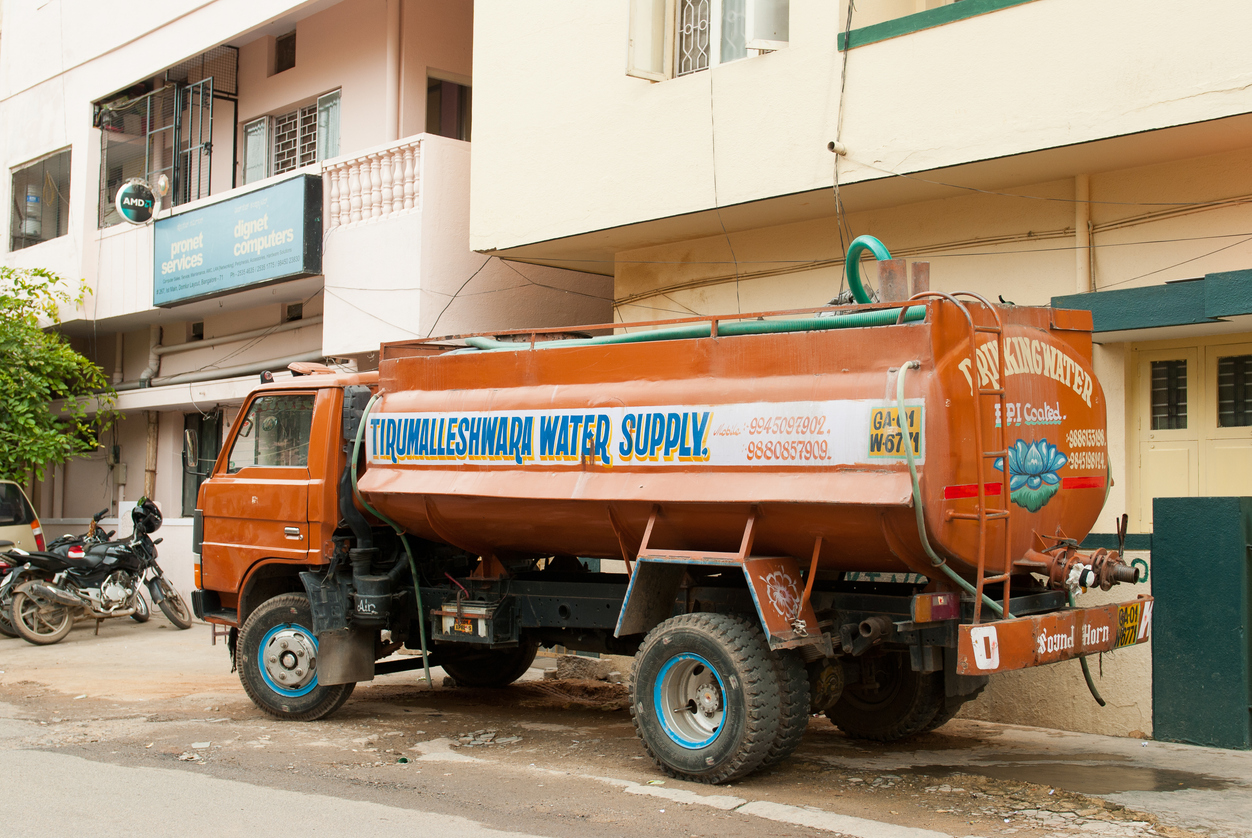
Representational image. Credit: iStock

Synopsis: Bengaluru braces for a hotter 2026 summer, with BWSSB assuring no repeat of the 2024 water crisis. Adequate storage in KRS and Kabini dams, lake‑recharging with treated wastewater, and Sanchari Cauvery services aim to offset groundwater shortages in 65 wards. Experts stress distribution challenges remain, urging rainwater harvesting, wastewater reuse, and judicious consumption to secure the city’s water future.
With the India Meteorological Department (IMD) forecasting that the 2026 summer in Bengaluru will be hotter than usual, the city braces for extreme heat. However, the question of water supply remains due to past water shortages, especially in 2024.
The Bangalore Water Supply and Sewage Board (BWSSB) has assured the city that there is sufficient water in the KRS and Kabini dams and has taken other steps to reduce the impact of groundwater shortages in some wards.
According to BWSSB Chairperson Dr. Ram Prasath Manohar, the BWSSB has learned from the 2024 experience, thereby guaranteeing to “Bengaluru residents that there will be no water crisis this summer, provided the water is used judiciously.”
In 2024, Bengaluru faced an extreme water crisis, with people told to limit water use to essentials and avoid activities such as gardening, swimming pools, and car washes. In the summer of 2024, not only were Bengaluru residents told to ration their water, but they also had to pay almost double the price to meet their daily water requirements.
With private water tankers charging almost Rs. 800 more for a 12-000 litre tanker, the situation worsened when some tank vendors did not show up due to groundwater scarcity. Due to the drying up of borewells, several women were forced to stand in lines waiting for their turn to fill up water from water tankers that arrived once every two weeks, sometimes even engaging in fights and arguments in the process.
Sindhu S Mallya, residing in Century Saras, Yelahanka, told the South First that, to cope with water crises in previous years, their residential society had taken steps, including water conservation, and had instructed residents to use less water when groundwater levels were low.
Ganesh Shanbhag, a Bengaluru resident who pioneered rainwater harvesting systems in the city, attributed the crisis to the lack of rainfall and infrastructural mismanagement.
Additionally, Vikas Brahmavar Adiga, CEO and co-founder of Boson Whitewater, said that “There was a water crisis because the distribution of water was not enabled properly. The second reason was that many lakes were dry for months together because they were being desilted, and they did not have enough water to recharge the ground in those regions.”
He also said that over the past 18 to 20 months, significant work has been undertaken to fill the lakes, and the new phase of Sanchari Cauvery has been initiated to supply more water to citizens.
Dr Ram Prasath Manohar had previously stated that the Krishna Raja Sagara and Kabini dams have sufficient drinking water for Bengaluru’s residents, and that there will not be a water crisis in the summer of 2026. Shanbhag pointed out that it had rained heavily over the past year and that the Cauvery catchments have adequate water, but the challenge would be distributing the water across Bengaluru, a view Adiga amplified.
Also Read: From Ramanagara to Raichur, water scarcity grips districts across Karnataka
The Indian Institute of Science (IISC) conducted a study using AI that revealed groundwater scarcity in 65 wards of Bengaluru. Acknowledging the results of this study, the BWSSB stated that to facilitate water supply in these wards, it has taken adequate measures, including deploying Sanchari Cauvery services. While Shanbhag said that the deployment of Sanchari Cauvery is a right step, he also said that the Cauvery cannot give an infinite supply of water.
While both Shanbhag and Adiga said that treated wastewater should also be considered in these wards, Shanbhag also stated that the “Cauvery cannot give you enough water, it is finite, so treated water should be looked at as the third source of water after Cauvery and borewell, and it should be a lifeline to the city. Treated water should be diverted to agriculture, industries, and construction sectors,” and that the government and BWSSB should be strict in enforcing rules defining the purposes for which such wastewater can be used.
To address declining groundwater levels, especially in the 65 wards identified by the IISC, BWSSB plans to use treated wastewater to recharge lakes. According to this plan, treated wastewater from sewage treatment plants will be diverted to replenish lakes, preventing them from drying up in the summer.
Acting on its plan, the BWSSB is set to fill up eight lakes in the Bengaluru South City Corporation with wastewater treated by sewage treatment plants in the next month. As a result, Konanakunte, Chunchaghatta, Bandepalya, Pillaganahalli, and surrounding areas will see groundwater levels rise. This plan involves approximately 6 to 8 pipes from various treatment plants to these lakes to ensure they receive a year-round water supply.
Shanbhag and Adiga noted that filling up lakes with treated wastewater is a beneficial long-term solution, as lakes require a continuous supply during the summer.
Shanbag said that it is a real good solution for Bengaluru. However, Adiga added that the treatment of wastewater should be done properly and the resultant water should meet all standards properly, and to a level where people are confident to use it as an alternative to freshwater, and that there should be a holistic use of such water, rather than limiting it to non-essential uses.
Also Read: Why summer 2026 is likely to be hotter than 2025 in Karnataka
Both Adiga and Shanbhag agreed with Dr Manohar that Bengaluru is better placed than it was in 2024, due to higher rainfall and improved infrastructure management.
However, while the solutions employed by the BWSSB seem to reduce the struggles caused by water shortages, it must be noted that the board deployed approximately 1,700 water tankers in the summer of 2024. While this fleet has increased over the past two years, the pace of increase cannot keep up with the rising demand for water.
These tankers are also very expensive to maintain and operate. While prioritising commercial and institutional consumers, these tankers serve residential colonies less, especially those in the outskirts, leading residents to resort to private water tankers, which can be expensive at times.
Areas such as VV Puram in Basavanagudi, Nanjappa Layout in Shantinagar, Frazer Town, and Kalkere in Ramamurthy Nagar have reported water scarcity, with people having to rely on pricy private water tankers. In these areas, water supply from BWSSB has been irregular and inadequate, with some areas receiving Cauvery water for only a few hours once or twice a week.
Residents have also learned from their experience in the previous years and have taken steps to counteract a potential water crisis. Mallya noted that Century Saras has taken several measures, including installing rainwater harvesting systems, water aerators, and a rainwater recharge well. To prepare for a potential crisis in 2026, they have generated “awareness to use less water by residents by optimising their use of washing machines, showers, and baths, if there is a shortage of groundwater.”
BWSSB has also notified that the lake filling program will continue, but citizens must reduce dependence on groundwater and opt for Cauvery connections wherever possible.
Shanbhag also added that while the city is better equipped to deal with a potential water crisis in 2026, civilians should be prepared for anything and adopt practices such as harvesting and metering.



