

Published Jul 21, 2026 | 6:12 PM ⚊ Updated Jul 27, 2026 | 10:47 PM

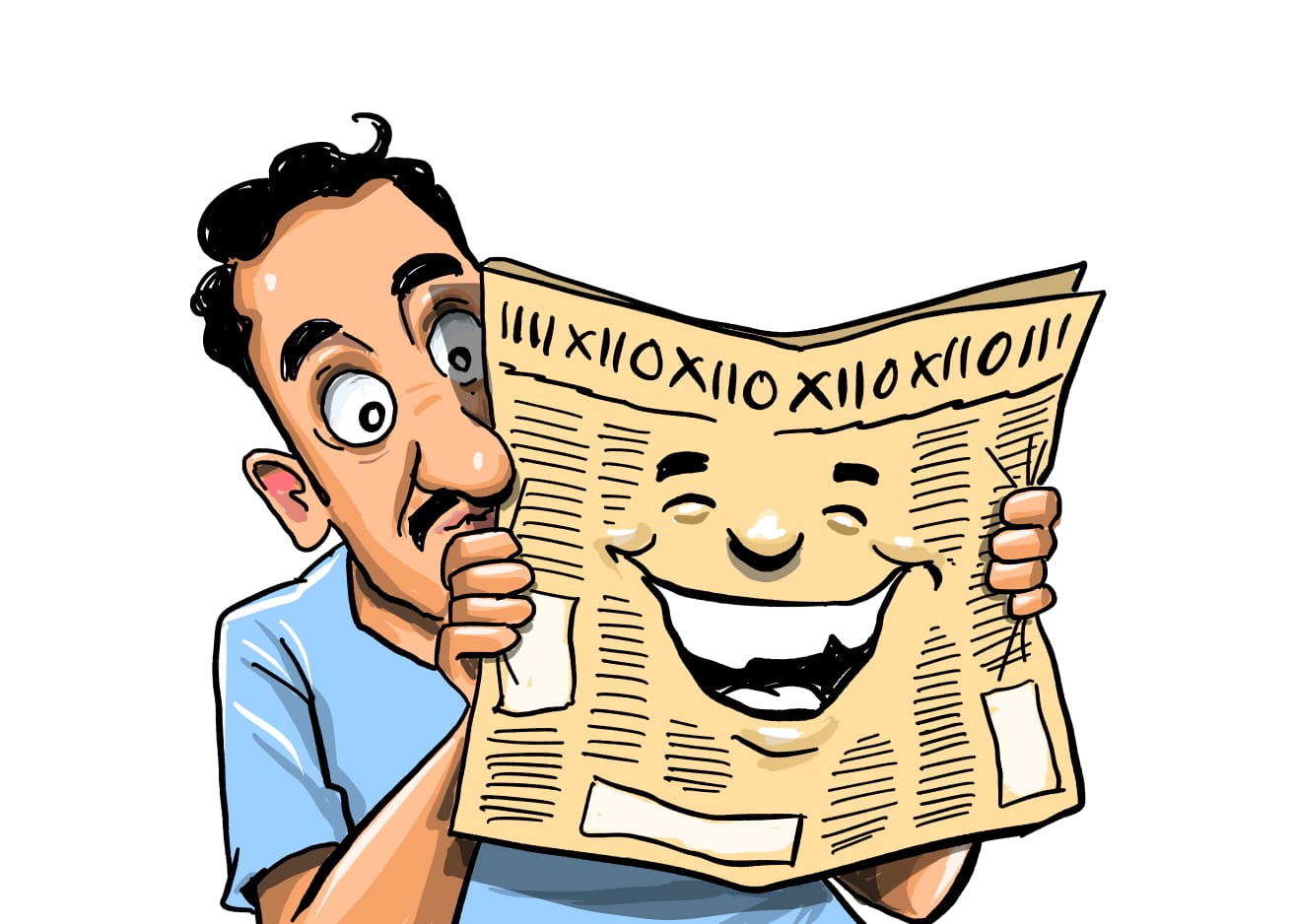
InJest in a satirical column by South First. Names, places, situations are all fictitious. Caricature by Satish Acharya/South First.

The Top Minister’s Office released a statement blaming the first Top Minister of the country, Mr Nehru, for the violent police reaction to peaceful student protesters.
The brief ended with a brief note briefing that a new brief would soon brief the reasons why Nehru was to be blamed once they came up with the reasons, but he was surely to blame, as always.
When Satire Satya reached out to a very senior confidential source in the TMO, he was further briefed on this unprecedented step of acknowledging a mistake.
The peon in the Top Minister’s Office told Satya, “We are not saying that claims of a lathi charge and necessary police violence caught on camera are true.
“The government is clear that whether something is true or not true is subjective and not important. Whether positive or negative news, we acknowledge things based on the objective method of whether they are viral or not viral,” he explained honestly.
Satya was quick to move on as he saw lathi wielding and barricade welding policemen a kilometre away.
He reached out to the new Commissioner brought in specially to wipe out the protest peacefully without any damage to government property and image.
The Commissioner, mistakenly identifying Satya as a TV ‘journalist’, gave him an exclusive interview.
After being thrown under the same bus into which the protesters were thrown by the House Minister, he agreed that mistakes were made by mistake.
Also Read: Protest isn’t a language Narendra Modi’s BJP understands, only electoral outcome is
The Commissioner blamed a general lack of intelligence and information on all sides for the violence: “Even our confidential informants were unable to give us anything.”
When hardly pushed to reveal these sources, he voluntarily revealed them:
“Our primary source of intelligence, TV news channels, did not show any crowds at the protest site or that a protest like this was taking place, so we didn’t know anything about them. Even when they tweeted, they said hardly a dozen or so students were there.”
He went on:
“And when we finally found out, through YouTubers, that they were marching towards us, we put the fastest route into GPS. It showed us a route for cars instead of one for walking, so we ended up cordoning off the wrong path.”
Satya deduced that this led to panic among the police as the students reached the location from another direction and caught them by surprise.
“But instead of sitting on our hands when the crowd of thousands of protestors sneaked up on us, we decided to sit on them,” the Commissioner said, expecting praise.
The interaction also revealed that, with human intelligence lacking, police roped in artificial intelligence to advise them on how to handle large crowds of protestors.
“Sadly, AI gave us the wrong solution due to human error,” he told Satire Satya with a smile.
“Useless AI gave us the ‘lathi route’ as the best option because the constable gave the wrong prompts. He forgot to type ‘peaceful’, ‘students’ and the location in his prompts.
“So the answer AI gave was for how to tackle dissenters in China and North Korea, which we failed to notice since it was not in our official language,” the Commissioner said.
“The cops on the ground and on top of students were just following those orders not given by me (just following the lathi route).”
Also Read: Rahul Gandhi, Kharge lead protest at PM’s residence, seek Modi, Shah and Pradhan’s resignations
The Commissioner was clear that students and protestors were to blame too.
“We trusted the students to behave like students and get violent. So our plan was to beat them violently once they got violent. They didn’t, but we stuck to our side of the agreement and plan that did not exist,” the Commissioner said.
He agreed that changing the Commissioner by the House Minister was a problem too.
“Of course it has been a cause of problems. If he was in charge, all this would be his headache and not a problem for me,” he explained with calm agitation.
As soon as he realised that Satya was not who he thought he was, he ended the interview, toeing the party in power’s line.
“Every lathi hit and every tear gassing is Nehru’s fault. I will get back to you with why and how once we figure it out and my promotion orders come tomorrow,” was his parting shot to Satya.
The government, as promised, came up with a new brief in the evening:
“Though the reasons why it was Nehru’s fault are still being figured out, those agitating against the government should acknowledge how the government’s inaction has helped increase the income of all the youth pakoda and samosa sellers, who have earned additional income through increased sales at the protest site and along the route.”
(InJest is a satirical column from South First. Names, places and situations referred to in this satirical piece are fictitious and are not intended to hurt any sentiments. The column is meant to be taken with a pinch of salt and a whole lot of laughs.)
(Written by Prabhpreet, an Unsanskari Writer, with a lifelong experience of laughing at things that make him cry.)



