

Published Jul 08, 2026 | 7:00 AM ⚊ Updated Jul 08, 2026 | 7:00 AM

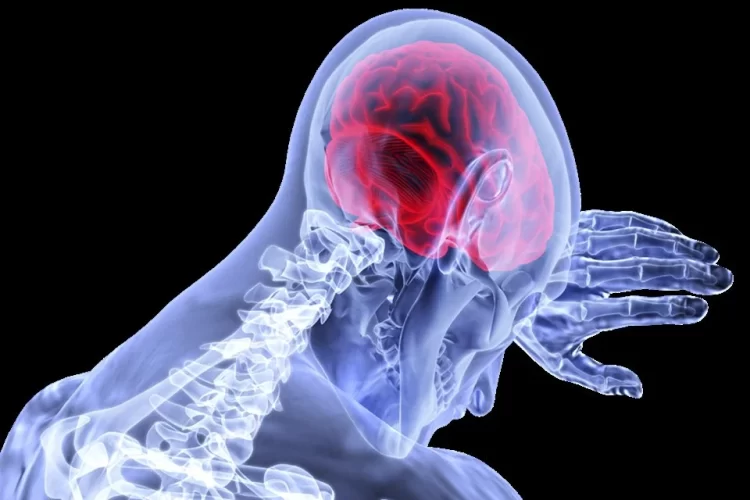
CVT-related stroke predominantly affects young males in India. (Supplied)

Synopsis: Young Indian men account for most cerebral venous thrombosis-related strokes, with anaemia, alcohol use and elevated homocysteine emerging as major risk factors, an ICMR registry study has found. Most patients recover, but delayed hospital arrival, older age, impaired consciousness and swallowing difficulty significantly increase the risk of death within three months.
An Indian Council of Medical Research (ICMR) study has contradicted a decades-old assumption that cerebral venous thrombosis (CVT) is a condition that targets young women.
Researchers tracked 575 cases across 30 hospitals between January 2020 and December 2022. Men accounted for 60% of them.
“In India, CVT-related stroke predominantly affects young males,” the authors noted in the study that was published in the Indian Journal of Medical Research. “Anaemia, alcohol use, and hyperhomocysteinemia are the major risk factors.”
Also Read: Urgency in recognising, preventing life-threatening condition
CVT forms when a clot blocks a cerebral vein, preventing the draining of blood, building pressure, and, in some cases, resulting in bleeding.
Doctors in North America and Europe linked the condition mainly to women, pregnancy, and birth control pills. Those regions reported incidence rates of one to two per 1,00,000 people, with in-hospital death rates of around 3%, the study’s introductory part said.
South Asia carried a different load. The paper noted that the region accounted for up to 50% of strokes among young people and 40% among women.
“Recent studies suggest that the demographic and clinical patterns of CVT in Asia differ considerably from those reported in Western countries,” the authors wrote, pointing to younger onset and fewer cases among women.
Also Read: Virtual and interactive games speed up stroke recovery
Patients in the registry averaged 37.5 years. Researchers found that 72.4% fell in the 18 to 44 age bracket.
Men averaged 38.7 years, and women, 35.7 years. Most patients, 59.8%, came from rural areas.
Headache led every symptom list, appearing in 81.4% of cases. Motor weakness followed at 49.6%, and seizures were reported in 45%.
“There were no significant differences between males and females for the clinical features,” the study stated, pointing to a pattern in symptoms that affected both genders.
Also Read: Nearly 4 in 10 stroke patients in India wait more than a day to reach hospital
Alcohol use appeared in 30.9% of all cases. Among men, the figure climbed to 50.8%. Among women, it was 0.4%.
Smoking tobacco followed the same line. It affected 29.5% of men and 0.4% of women, the study found.
Smokeless tobacco use also showed a similar gap, affecting 29.2% of men compared to 11.2% of women. Homocysteine levels, a marker tied to clot formation, ran high in 32.8% of men and 17.4% of women.
“Alcohol and tobacco use were predominant among men,” the authors noted, while flagging a limitation: “Detailed information on the type, duration, and quantity of alcohol and tobacco exposure was not collected in the registry.”
Also Read: Brain stroke awareness very low in Hyderabad, Bengaluru
Anaemia topped every risk factor in the dataset, affecting 32.6% of all patients. Among women, the number rose to 44.7%. Among men, it sat at 24.5%.
Pregnancy, the postpartum period, and hormone treatment still played a role among women, accounting for smaller shares than earlier studies abroad had reported.
The authors called anaemia and lifestyle exposure a shift away from the pregnancy-linked pattern that dominated Western medical literature.
“These findings indicate a changing pattern of CVT in India, with nutritional deficiencies and lifestyle factors playing a greater role than pregnancy-related conditions,” they wrote.
A separate review cited in the paper flagged “iron deficiency anaemia as an under-investigated risk factor for CVT in young populations,” a point the authors used to push for wider screening.
Also Read: Kerala study sheds light on ways to prevent stroke recurrence
Patients took a median of 37.45 hours to reach the hospital after exhibiting the symptoms. Around 60% arrived more than 12 hours after the onset. About one in four accessed medical care within a day.
The gap between symptoms and treatment determined survival odds. Patients who arrived between 12 and 24 hours after onset carried four times the risk of death compared with those who reached the hospital sooner, the study’s regression analysis showed.
“These delays point to poor public awareness of stroke symptoms and limited access to timely emergency care,” the researchers wrote.
Brain imaging picked up haemorrhagic infarction, where a clot triggered both blockage and bleeding, in 30.8% of patients. The study found it in 36.5% of female patients, against 26.9% of male cases.
Roughly one-third of patients showed no visible tissue damage on scans despite confirmed clots in their veins.
The superior sagittal sinus and transverse sinus carried the bulk of the clots, the study found. Nearly two-thirds of patients, 62.4%, had clots spanning more than one vein or sinus.
Anticoagulants reached 79% of patients, the standard approach for this stroke type. Antiplatelet drugs were administered to 9.4% of the patients studied.
Surgery was rare. Decompressive craniectomy occurred in 5.7% of cases, and haematoma evacuation in 1%.
The outcomes improved over time. At discharge, 49% of patients scored a good outcome on the modified Rankin Scale. By three months, that number climbed to 74.8%.
The study noted that 9.2% of patients died within three months. The death rate exceeded figures reported elsewhere in Asia, the authors noted, even as most patients recovered to lead an independent life.
Age was a major factor in the mortality analysis revealed. Patients between 45 and 59 years faced 12 times the death risk of patients between 18 and 29 years. Patients over 75 years faced 18 times the risk.
Impaired consciousness at admission doubled the odds of death. Difficulty swallowing, known as dysphagia, tripled the odds.
“Older age, delayed hospital presentation between 12 and 24 hours, impaired consciousness, and dysphagia at onset predict higher mortality,” the authors added.
Rural areas presented a higher mortality rate. Among patients who died, 77.4% were from rural areas, compared with 56.9% among urban survivors.
The authors recommended the inclusion of anaemia screening in the existing nutrition programmes. They called for routine homocysteine testing among young adults and other groups at risk.
They also urged hospitals to speed up referral chains and cut the time between symptom onset and treatment.
“Improving awareness among healthcare providers and the community, strengthening referral pathways, and ensuring timely access to neuroimaging and anticoagulation are essential to improve outcomes,” the authors wrote.
The members of the team were from 11 institutions. Dr Prashant Mathur of the ICMR-National Institute of NCD Epidemiology led the correspondence for the paper published on Wednesday, 1 July.
The registry included 34,792 stroke cases nationwide, of which cerebral venous thrombosis accounted for 1.6%. Researchers termed it the largest dataset of its kind in India.
“Our findings highlight key differences in the demographic and risk factor profile of CVT in India compared with Western populations,” the authors wrote. “Early identification of major risk factors may help reduce the disease burden,” they added.
(Edited by Majnu Babu).



