

Published May 08, 2026 | 7:00 AM ⚊ Updated May 08, 2026 | 7:00 AM

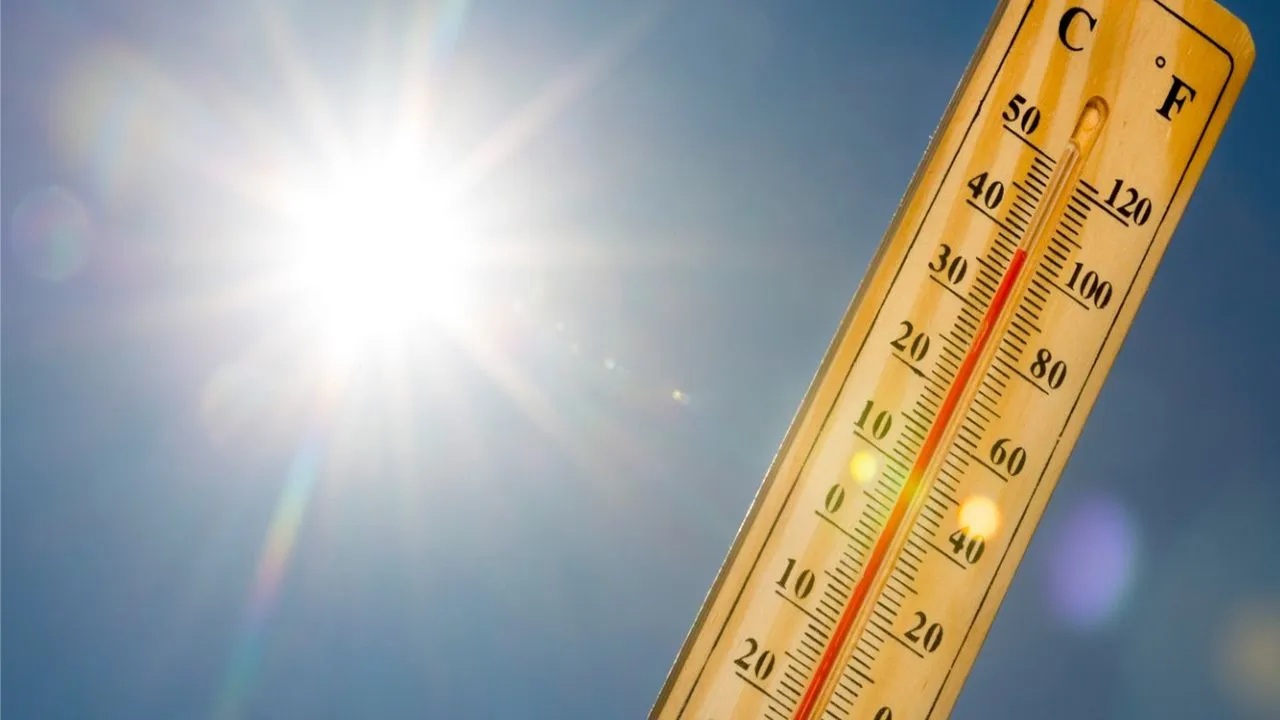
Doctors say one of the most at-risk groups this summer are people working long hours outdoors.

Synopsis: Emergency wards in Chennai hospitals are seeing a rise in heat-related cases, from dehydration to heat stroke.Doctors warn that ignoring early symptoms can lead to serious complications.
With summer heat intensifying and daytime temperatures rising across India, particularly in South India, people affected by dehydration, sunstroke, and other heat-related illnesses are flocking to hospitals.
On sweltering afternoons in Chennai, the emergency wards fill in a pattern doctors are beginning to recognise. A worker walks in after hours under the sun, visibly drained. An elderly patient arrives, weak and confused. A young adult, who had a headache, now needs an IV line.
Doctors said this is what the city’s heatwave increasingly looks like on the ground — not dramatic surges, but a steady stream of heat-linked cases that intensify through the day, especially in the afternoons.
Also Read: Monsoon-driven “moist heatwaves” pose hidden health risk across India, says study
Heat stroke remains the most serious end of this spectrum, triggered when the body loses its ability to regulate temperature.
“Heat stroke is when the core body temperature crosses 40 degrees Celsius or 105 degrees Fahrenheit. At that point, the body gets heated up, and there will be no sweating,” said Dr Ram Mohan KR, HOD & Senior Consultant – Emergency Medicine and President of the Society of Emergency Medicine, Tamil Nadu Chapter.
He explained that patients often present with dizziness, vomiting, headache, and altered behaviour. “They may not be conscious enough to talk, or may be semi-conscious. There can be confusion and excessive breathing, with a high heart rate,” he said.
According to him, this condition is closely linked to dehydration. “All the water content in the body gets depleted, and only then does the heat start to increase in the body,” he added.
Doctors said exposure patterns are clearly visible in the kind of patients coming in.
“A lot of the patients are people who’ve been out in the sun for long hours — delivery boys, drivers, construction workers,” said Dr Neeraj Mangla, Consultant, Emergency Medicine, MGM Healthcare, Malar- Adyar.
He added that elderly individuals are particularly vulnerable, especially those who are not hydrating adequately. Many arrive later in the day with weakness or confusion.
Dr Ram Mohan also pointed to physiological vulnerability. “Elderly people and children are more prone because they have less fat beneath the skin, so dehydration and heat absorption happen faster,” he said.
While hospitals are not formally overwhelmed, emergency teams are seeing clusters of similar cases.
“On very hot days, especially afternoons, you do see a bunch of similar cases coming in together,” said Dr Mangla.
He noted that these cases are managed within the regular emergency flow, though patients with similar symptoms are often monitored together informally.
Alongside heat stroke and dehydration, Dr Mohan said doctors are also seeing a rise in food poisoning and fever cases, adding to the overall load.
Once a patient is identified with heat stroke, the focus shifts to rapidly reducing core body temperature.
“We have to bring down the core temperature of the body. It is not the usual temperature checked in the mouth or armpit — we monitor the rectal (core) temperature, which reflects the actual internal temperature,” said Dr Ram Mohan.
He explained that treatment involves both internal and external cooling. “We give IV fluids — cold saline, around 22 to 24 degrees Celsius — and apply cold cloth to areas like the armpit, head, and groin, along with air flow to help with heat evaporation,” he said.
This process, he added, works on the principle of conduction and convection to remove heat from the body.
Also Read: DPH orders free ORS supply, heatstroke preparedness across Tamil Nadu
Doctors warned that heat stroke is not just about temperature — it can trigger systemic complications.
“When the body temperature increases, the blood gets heated, and enzymes can get denatured. This can lead to complications like renal impairment and blood-related disorders,” said Dr Mohan.
He added that multiple systems, including blood pressure regulation, can be affected, making early intervention critical.
Simple precautions that can prevent emergency visits
(Edited by Muhammed Fazil.)



