

Published May 22, 2026 | 5:02 PM ⚊ Updated May 22, 2026 | 5:02 PM

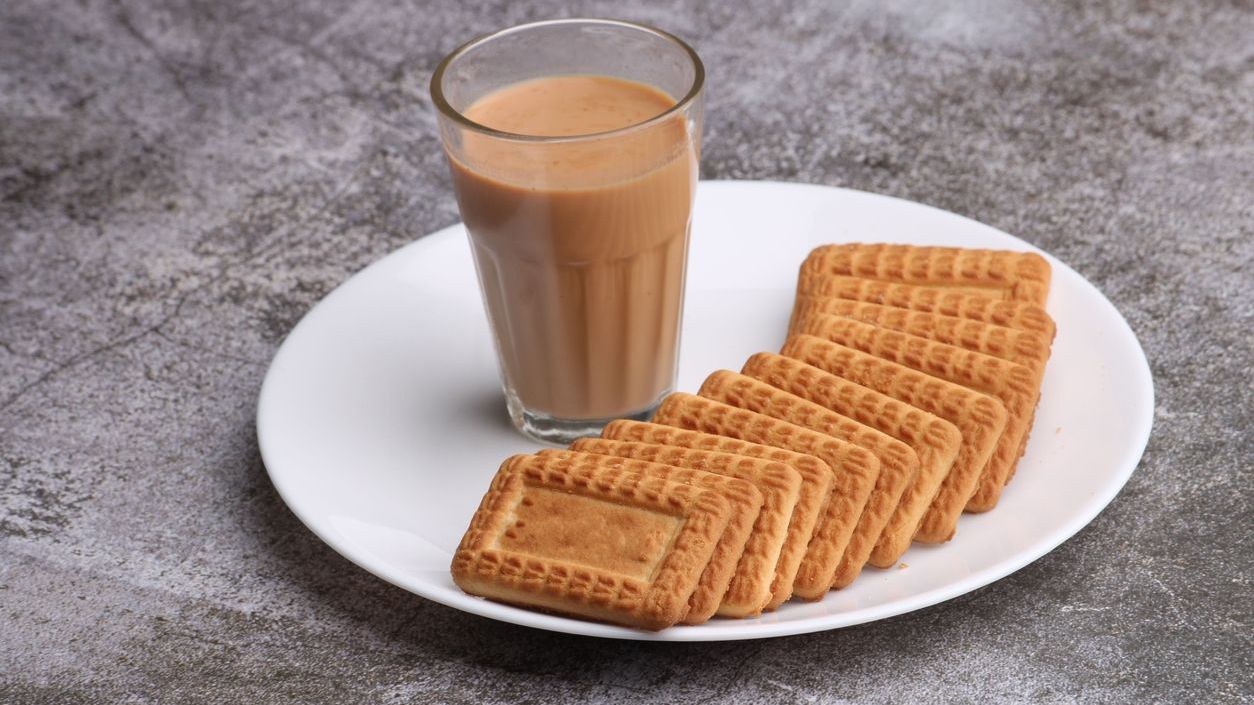
Biscuits.(iStock)

Synopsis: A study on 2,112 biscuit products sold across India finds that four out of five contain artificial flavours and palm oil. Three out of four use refined flour as their base. A National Institute of Nutrition study found that 75.4 percent of consumers say they read food labels. Only 14.7 percent actually read the ingredient list.
You pick up a digestive biscuit. The packet says high-fibre. It says multigrain. You put it in the trolley. However, four out of five biscuits contain artificial flavours. The packet says that only in fine print.
A study by NatFirst on 2,112 biscuit products sold across India finds that four out of five contain artificial flavours and palm oil. Three out of four use refined flour as their base.
NatFirst, a packaged food data platform, built its findings from 1.3 million consumer-initiated product scans through its TruthIn app, covering 23,000 products across 25 food categories. The TruthIn rating system rates products on a scale of 0–5, drawing from three components: category-specific nutrition, ingredient quality and processing levels, assessed against Food Safety and Standards Authority of India (FSSAI), ICMR-NIN (National Institute of Nutrition) and World Health Organisation (WHO) guidelines.
Biscuits, as a category, scored between 0.7 and 1.9. The scale defines anything below two as “poor.”
Also Read: Jwala Gutta donated 60 litres of breast milk. Here’s what India’s NICUs actually need
Sandwich biscuits scored 0.7. Filled biscuits scored 0.8.
Ninety-nine percent of sandwich biscuits are high in saturated fat. Eighty-eight percent exceed added sugar thresholds. One hundred percent contain additives. Ninety-two percent carry artificial flavours.
Filled biscuits recorded similar numbers. Ninety-five percent are high in saturated fat. Eighty-seven percent are high in added sugar. Ninety-nine percent contain additives.
“The patterns are consistent across categories, with HFSS ingredients, artificial flavours and colours appearing repeatedly in products consumed daily, often by children,” said Dr Aman Sheikh Basheer, co-founder and chief medical officer of TruthIn, in a statement.
The study does not name any brand. It covers patterns across the category.
Digestive biscuits scored 1.9, the highest within the segment.
Over 80 percent qualify as rich in dietary fibre. Nearly 60 percent contain moderate protein.
Eighty-eight percent also exceed added sugar thresholds. Ninety-four percent are high in saturated fat.
“For the first time in India, we have built a structured, scalable data-driven analysis that decodes what is actually in Indian packaged food,” Ravi Teja Putrevu, co-founder and chief executive of TruthIn, said in a statement. “Nutrition transparency should be accessible to all.”
Also Read: No cosmetic can be injected, India’s drug regulator tells beauty clinics
A National Institute of Nutrition study found that 75.4 percent of consumers say they read food labels. Only 14.7 percent actually read the ingredient list.
While most checked expiry dates, several others stopped at the brand name.
“The issue is not that food labels do not exist, but whether everyday consumers can meaningfully decode them to make informed choices,” said Dr Basheer.
Processed and packaged foods now account for the highest share of food expenditure in Indian households, at 9.84 percent of monthly per capita expenditure in rural homes and 11.09 percent in urban homes, according to the Household Consumption Expenditure Survey 2022-23.
The Economic Survey 2025-26 flagged the rise of ultra-processed foods as a driver of India’s growing obesity burden, pointing to marketing aimed at children and adolescents as a key factor.
The report noted that even the better-performing products within the biscuit segment require moderation. Smaller portions consumed less frequently still contribute to sugar, saturated fat and calorie intake.
The study covered data collected between January 2024 and November 2025, drawn from consumer-initiated product label scans. It is not a lab audit, a consumption study, or a brand ranking tool.
(Edited by Muhammed Fazil.)



