

Published Aug 19, 2026 | 7:00 AM ⚊ Updated Aug 19, 2026 | 7:00 AM

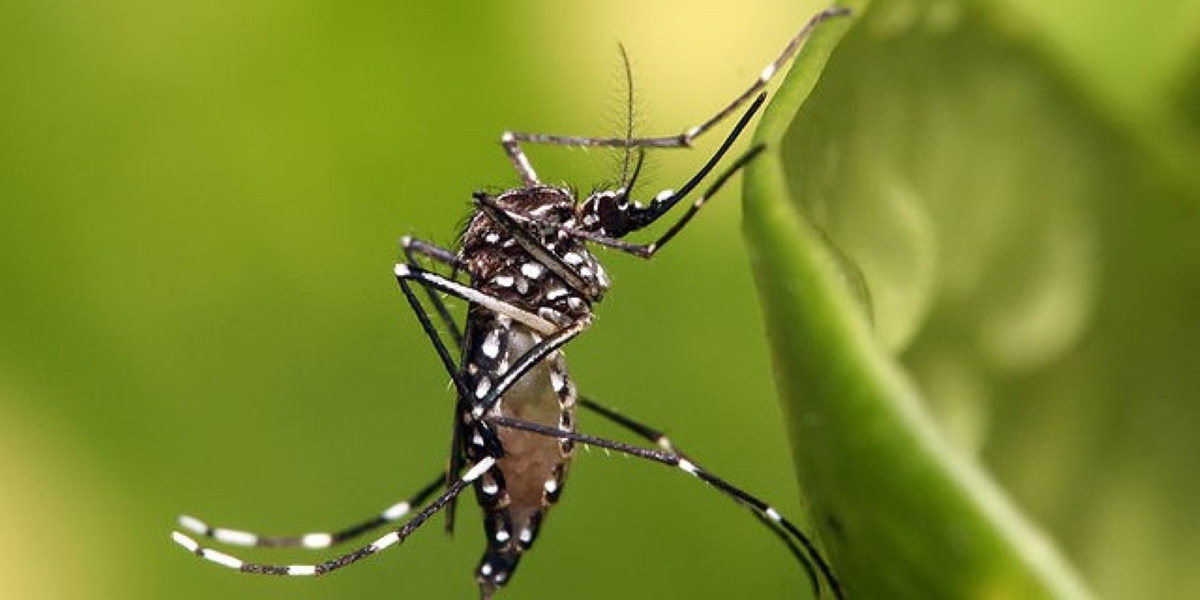
Aedes aegypti mosquito. (Creative Commons)

Synopsis: Peak dengue months differ in South India. RTI data show four states reached their highest 2026 count so far in July, while Andhra Pradesh peaked in January. Rainfall, temperature, mosquito breeding, water storage and surveillance shape when cases rise, with studies finding weather can precede dengue cases by several weeks.
No single month has the highest dengue cases across South India. The month with the highest reported cases differs from state to state. It can also change within the same state from one year to the next.
Data accessed through RTI by South First from the National Centre for Vector-Borne Disease Control (NCVBDC) showed different years and months, highlighting a rise in dengue across Andhra Pradesh, Karnataka, Keralam, Tamil Nadu and Telangana.
In 2026, four of these five states have recorded their highest monthly dengue count so far in July. Keralam reported 3,093 cases, Tamil Nadu 2,191, Karnataka 840 and Telangana 307. Andhra Pradesh went a different way. Its highest count so far came in January, at 255 cases.
The 2026 figures are provisional and run only through July. Across India, the NCVBDC recorded 35,023 dengue cases and 44 deaths between January and July. Tamil Nadu has reported the highest dengue cases(9,691 cases), while Keralam reported the highest number of fatalities (31).
The data can show when each state has recorded its highest monthly count so far this year. They can’t say whether July will hold as the final peak.
Also Read: A guide to navigate through the viral disease
Tamil Nadu’s highest monthly count came in September 2024, at 4,347 cases. In 2025, the count peaked in November, at 3,465. In 2026, July leads so far, at 2,191.
Keralam’s highest month was July in 2024, at 3,863 cases. In 2025, the peak moved to June, at 2,071. This year, July again leads with 3,093 cases.
Karnataka went from 12,248 cases in July 2024 to 959 in September 2025. July 2026 leads so far, with 840 cases.
Telangana’s highest month moved from August 2024, at 3,914 cases, to September 2025, at 2,008. July leads so far in 2026, with 307 cases.
Andhra Pradesh stands apart. Its highest count was 945 in September 2024 and 402 in September 2025. In 2026, January leads so far, at 255 cases.
The pattern is not simply an early or late dengue season. The timing of the highest monthly count itself moves.
A 2025 study by Monisha Balasubramaniyan and Yoganandan Veeran tracked dengue and climate data across Andhra Pradesh, Karnataka, Keralam, Tamil Nadu, Telangana and Maharashtra between 2013 and 2022.
The researchers found that rainfall changes showed up in dengue cases about four to six weeks later. A 100mm rise in monthly rainfall lined up with a 15% to 25% rise in cases.
In plain terms: the rain that helps create mosquito breeding sites doesn’t produce a rise in dengue cases in the same month. It shows up weeks later.
“Rainfall plays a crucial role in driving outbreaks in this region,” the researchers write. “Increased humidity directly impacts the availability of mosquito breeding sites.”
They also found that temperature matters. Dengue transmission was highest between 26°C and 30°C, rather than simply increasing as temperatures rose. But rainfall does not have a simple one-way effect.
The study noted that rain can create breeding sites, while heavy rainfall can also wash those sites away. The amount and timing of rainfall therefore matter when looking at subsequent dengue cases. Weather conditions can occur weeks before cases are reported, and the relationship is not identical in every state.
Among the six states studied, Keralam showed the tightest link between rainfall and dengue cases. Cases tracked rainfall from about four weeks earlier more closely here than anywhere else in the study. Keralam also received the most rain of the six states, averaging 2,845mm a year.
Keralam’s peak month shifted across the three years: July in 2024, June in 2025, and July again in 2026.
“The warm, humid climate and high annual precipitation create ideal habitats for mosquito proliferation,” the researchers wrote. “Keralam reports the highest dengue incidence, averaging 49.27 cases per million population from 1998 to 2014.”
The study’s historical data also warrant caution. Across the six states, transmission peaked mainly between October and December, after the monsoon, with smaller peaks between April and June.
Keralam’s July 2026 count leads so far. What happens later in the year remains unclear.
Also Read: South India dominates India’s dengue burden
Tamil Nadu’s three-year pattern differs from Keralam’s. Its peak moved from September in 2024 to November in 2025 to July so far in 2026.
The study found that rain factored into Tamil Nadu’s case numbers after about six weeks. That gap means a rise in cases in a given month doesn’t necessarily reflect that month’s weather.
The study also found that cases and deaths moved closely together in Tamil Nadu during the years it covered. Its broader conclusion: shifts in rainfall and temperature can build conditions that favour Aedes mosquitoes.
“Rising temperatures and altered precipitation patterns created favourable conditions for the proliferation of Aedes mosquitoes,” the researchers write. “Extreme rainfall events in 2017 led to a sudden surge in dengue cases.”
Tamil Nadu’s July 2026 count sits below its 2024 and 2025 peaks. It’s still the highest month reported so far this year.
Also Read: Dengue strikes one in three fever patients in South India
Karnataka’s numbers move more than any other state’s in this data. The state recorded 12,248 cases in July 2024. Its 2025 peak fell to 959 in September. July 2026 leads so far, at 840.
The peak month swung from July to September and back to July.
Rainfall, humidity and temperature don’t carry the same weight in every state, the six-state study found. What holds in Karnataka doesn’t transfer to another state.
The study’s authors argued that this matters for planning dengue control. Treating all six states as one transmission zone misses these differences.
Telangana moved from August to September to July; Andhra Pradesh breaks the pattern.
Telangana recorded 3,914 cases in August 2024. Its 2025 peak came in September, at 2,008. In 2026, July leads so far, with 307 cases.
The peak month moved again. That shift alone doesn’t prove Telangana’s dengue season has moved earlier. It does show why a fixed calendar month for surveillance can miss year-to-year change.
Andhra Pradesh is the one state among the five whose 2026 high didn’t land in July.
It recorded 945 cases in September 2024 and 402 in September 2025. In 2026, January leads so far, at 255 cases. July recorded 204.
Andhra Pradesh matters here because it tests the pattern. If all five states had shifted the same way, the data might point to a broader regional shift in timing. Instead, one state moved on its own track.
The climate study found that rainfall-case relationships varied across all six states it covered. That supports reading each state on its own terms, rather than treating South India as one dengue season.
A separate 2026 scoping review examined 40 studies on dengue in India, published between 2015 and 2024. Rainfall, temperature and humidity were the most frequently reported factors linked to dengue. The review also found other drivers: water storage, waste management, urbanisation and population density.
Many of the studies it covered reported a gap of five to 12 weeks between weather conditions and dengue cases.
“Dengue persistence in India is influenced by climatic suitability, mosquito density, and breeding-site availability,” the review states.
The authors also name surveillance, mosquito control and community response as forces that work against transmission.
The month dengue peaks isn’t decided by rainfall alone. Rain builds breeding conditions. Temperature shapes mosquito survival and how fast the virus develops inside them. Water storage and waste create breeding sites of their own. Surveillance and mosquito control cut into transmission from the other side.
Together, these explain why the peak month moves.
Four of the five southern states have recorded their highest monthly dengue count so far in July 2026. Andhra Pradesh has not.
That doesn’t mean July will be the final peak. The research suggests more movement: rain and other weather conditions can precede dengue cases by weeks, and that gap differs by state. What happens around people’s homes, and how fast surveillance and mosquito control respond, matter just as much.
(Edited by Majnu Babu).



