

Published Aug 01, 2026 | 11:00 AM ⚊ Updated Aug 01, 2026 | 11:00 AM

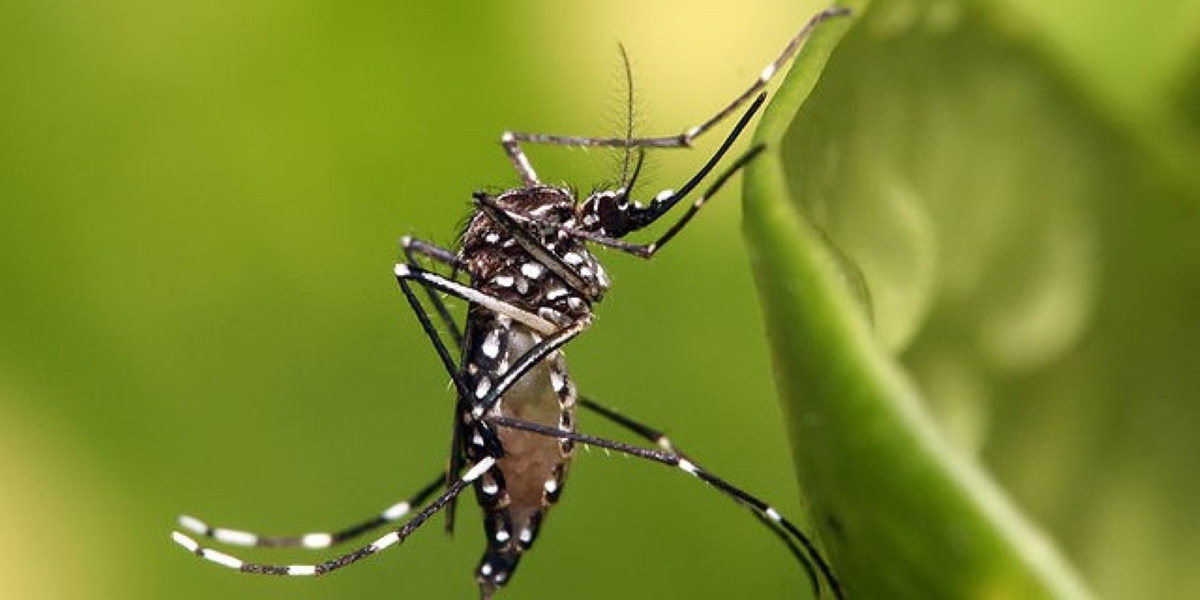
Aedes aegypti mosquito. (Creative Commons)

Synopsis: South India accounted for over 63 percent of India’s dengue cases in the first half of 2026, with Tamil Nadu reporting the highest infections and Kerala recording nearly two-thirds of all deaths, according to Rajya Sabha data. The story also examines nationwide trends and recent ICMR findings showing DENV-2 predominates across southern states.
South India continues to bear the brunt of India’s dengue burden, with Tamil Nadu reporting the highest number of cases and Kerala accounting for nearly two-thirds of all dengue deaths recorded in the country this year, according to data tabled in the Rajya Sabha.
Figures shared by the Union Ministry of Health and Family Welfare in response to a Rajya Sabha question on 28 July show that India recorded 23,952 dengue cases and 31 deaths between January and June 2026. Five southern states—Tamil Nadu, Kerala, Karnataka, Andhra Pradesh and Telangana—together accounted for 15,137 cases, or 63.2 percent of the national caseload during the first six months of the year.
The data was furnished by Minister of State for Health Anupriya Patel in response to a question by Rajya Sabha MP Narain Dass Gupta on surveillance of monsoon-related diseases.
Tamil Nadu remained India’s biggest dengue hotspot, reporting 7,511 cases and three deaths till June 2026. Kerala followed with 4,458 cases, but recorded 19 deaths—the highest in the country and accounting for 61.3 percent of all dengue fatalities reported nationwide this year.
Karnataka reported 1,601 cases without any deaths, followed by Andhra Pradesh with 968 cases and no deaths, and Telangana with 599 cases, also reporting no fatalities. Together, the five southern states reported 22 of India’s 31 dengue deaths, with Kerala contributing the overwhelming majority.
Outside South India, Maharashtra reported 2,676 cases and one death, while West Bengal recorded 1,831 cases and eight deaths, making it the second-highest contributor to dengue fatalities this year. Gujarat reported 488 cases, Madhya Pradesh 452, Puducherry 398, Delhi 360, and Uttar Pradesh 343 cases till June.
The latest figures indicate that India’s dengue burden has moderated after the sharp rise seen in 2024.
According to the Ministry’s data, dengue cases increased from 19,097 in 2023 to 32,403 in 2024, before declining to 25,492 in 2025. During the first six months of 2026, the country had already reported 23,952 cases, suggesting that transmission remains substantial midway through the monsoon season.
Deaths followed a similar pattern. India reported 46 dengue deaths in 2023, rising to 95 deaths in 2024, before falling to 36 in 2025. Till June 2026, 31 deaths had already been recorded.
While Tamil Nadu reported nearly 1.7 times more dengue cases than Kerala, the latter recorded more than six times as many deaths.
Kerala’s 19 deaths contrast sharply with Tamil Nadu’s three, even though Tamil Nadu has consistently reported the highest number of dengue infections in recent years. Karnataka, Andhra Pradesh and Telangana, despite recording thousands of infections collectively, reported no dengue deaths during the same period.
The government data does not explain the reasons behind the higher mortality reported by Kerala. Factors such as disease severity, healthcare-seeking behaviour, referral patterns, underlying health conditions, timing of diagnosis and differences in death reporting require expert assessment.
Also Read: Just 3-4 days of extreme heat during pregnancy can raise risk of low birth weight
Responding to the question in the Rajya Sabha, Minister of State for Health Anupriya Patel said that while public health is a state subject, the Centre provides financial and technical support under the National Health Mission for the prevention and control of dengue and other monsoon-related diseases.
Patel said the National Centre for Vector Borne Diseases Control (NCVBDC) administers the National Vector Borne Diseases Control Programme, under which a nationwide surveillance network comprising 887 Sentinel Surveillance Hospitals (SSHs) and 27 Apex Referral Laboratories (ARLs) has been established for free dengue diagnosis. She added that the Government of India supplies IgM diagnostic kits to these laboratories through the National Institute of Virology (NIV), Pune.
“The Government is actively collaborating with State Health Departments and Urban Local Bodies to enhance sanitation, strengthen mosquito control measures, and increase public awareness for the prevention and control of malaria and other vector-borne diseases,” Patel said in her written reply.
She also said the Centre has strengthened integrated vector management through indoor residual spraying in high-risk areas, anti-larval measures in urban localities, distribution of bed nets in malaria-endemic regions, capacity building of frontline workers, disease surveillance, and rapid response mechanisms. States have also been trained to upload disease data to the Integrated Health Information Portal–Vector Borne Diseases (IHIP-VBD) for real-time monitoring.
Patel further informed the House that the Centre “regularly issues advisories to States and Union Territories” to continue preventive and curative measures, maintain adequate stocks of diagnostic kits, drugs and insecticides, strengthen disease surveillance systems, and ensure rapid deployment of response teams for early detection and containment of outbreaks during the monsoon season.
The Rajya Sabha data comes days after an Indian Council of Medical Research (ICMR)-led nationwide molecular surveillance study highlighted changing dengue transmission patterns across the country.
The study analysed 6,889 laboratory-confirmed dengue samples collected from 45 laboratories across 25 states and Union Territories between 2023 and 2025. Researchers found that DENV-2 accounted for 51 percent of infections nationwide and was the predominant dengue serotype across all southern states, including Andhra Pradesh, Karnataka, Kerala, Tamil Nadu, Telangana and Puducherry.
The researchers also found that India is witnessing increasing co-circulation of multiple dengue serotypes. Eight states and Union Territories recorded all four dengue virus serotypes, while about 7 percent of patients had concurrent infections involving more than one serotype, a pattern associated with more severe clinical illness.
The authors cautioned that continuous molecular surveillance is becoming increasingly important as India prepares for future dengue vaccine introduction.
“Continuous monitoring of circulating serotypes of dengue virus remains crucial for public health decisions regarding dengue vaccine introduction in the regional immunization program,” the researchers wrote.
The findings suggest that while South India continues to account for a significant share of India’s dengue burden, understanding which virus serotypes are circulating, and how they change over time, will be critical for outbreak prediction, clinical preparedness and future vaccination strategies.



