

Published Jan 07, 2026 | 7:00 AM ⚊ Updated Jan 24, 2026 | 6:03 PM

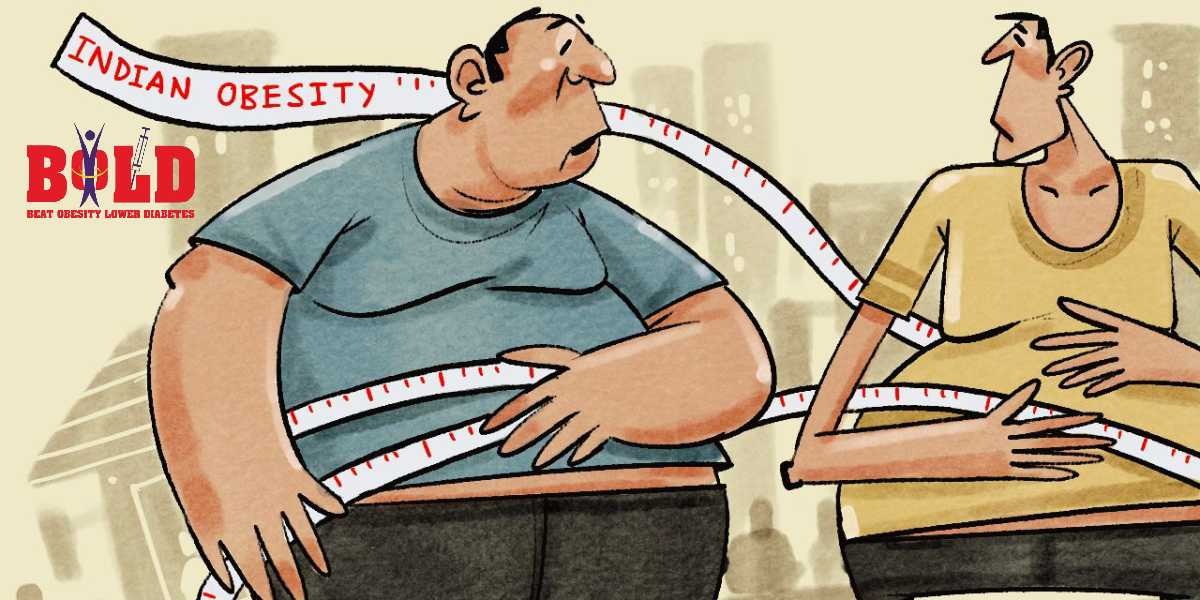
Fat accumulates not just under the skin but around organs. This visceral fat releases hormones and inflammatory substances that interfere with normal body functions.
Synopsis: Asian obesity differs significantly from Western obesity. Body Mass Index has never been the most accurate marker for Indians, for whom abdominal fat is the primary concern. Many Indians appear lean but still carry significant belly fat. This is why waist circumference becomes crucial for the Indian population.
Obesity occurs when a person carries an excessive amount of body fat, which can significantly impact health. The condition develops when someone consumes more calories than burnt. The body stores this surplus energy as fat.
The extra weight strains nearly every system. Hearts pump harder to circulate blood through more tissue. Joints bear loads they never evolved to carry. Insulin struggles to manage blood sugar as cells become less responsive to its signals.
Fat accumulates not just under the skin but around organs. This visceral fat releases hormones and inflammatory substances that interfere with normal body functions.

Dr Vidya Tickoo, Consultant Endocrinologist and Diabetologist at Yashoda Hospitals, Hyderabad, explained the condition. “Obesity refers to excess fat in the body, whether stored beneath the skin or deposited around internal organs. This excess fat drives several diseases, including diabetes, high blood pressure, cardiovascular disease, and complications affecting the heart, kidneys, and liver. In simple terms, unhealthy fat accumulation leads to multiple systemic health problems.”
Measuring this fat accurately is challenging. Different tools serve different purposes, and what works for one population may mislead in another.
“Traditionally, obesity has been assessed using body weight or body mass index. That approach is simplistic. Over time, we have understood that Asian obesity differs significantly from Western obesity,” said Dr Ravula Phani Krishna, Senior Consultant Surgical Gastroenterologist at KIMS Hospital, Hyderabad.
Medical professionals commonly use body mass index (BMI) as a first screen. The formula divides weight in kilograms by height in metres squared. Someone who weighs 80 kilograms and stands 1.75 metres tall has a BMI of 26.1.
The World Health Organisation has set the ranges. A BMI under 18.5 indicates underweight. Between 18.5 and 24.9 falls into the normal range. From 25 to 29.9 signals overweight. At 30 and above, it means obese.

Dr. Vidya Tickoo
Clinics favour BMI because it requires only a scale and a tape measure. A general physician can calculate it in seconds during a routine appointment.
“BMI still has value. It is an easy, quick tool that helps clinicians broadly classify patients as underweight, overweight, or obese. In routine clinical practice, we cannot ask every patient to undergo advanced tests like DEXA scans. BMI offers a practical starting point,” Dr Tickoo said.
But the tool carries significant flaws. BMI cannot distinguish between muscle and fat. It also ignores where fat sits in the body.
The limitation becomes especially apparent in Indian populations. “When it comes to measuring obesity, BMI has never been the most accurate marker for Indians. In our population, abdominal fat is the primary concern. Many Indians appear lean but still carry significant belly fat,” Dr Tickoo said.
Dr Krishna concurred. “Central obesity is driven by visceral fat and is closely linked to metabolic syndrome. “Metabolic syndrome includes high cholesterol, hypertension, diabetes, coronary artery disease, and fatty liver disease. In Indian men, especially, obesity predominantly affects the abdominal wall. This central, visceral obesity represents the most harmful form.”
Research demonstrates this gap. “However, BMI can be misleading. An Indian person may have a normal BMI but still be obese. This was demonstrated in the so-called YY paradox, where an Indian individual and a person from the US had the same BMI of 23.5, but the Indian had a much higher body fat percentage,” Dr Tickoo said.
Dr Krishna described patients slipping through BMI screening. “Many patients appear thin but have low skeletal muscle mass and a small abdominal bulge. These individuals may look lean, but they carry significant visceral fat. In such cases, visceral fat becomes the most important marker of disease risk.”
This discovery led clinicians to look for better markers, particularly ones that capture abdominal fat.
Waist circumference measures the girth of a person’s waist at the narrowest point, usually just above the belly button. A tape measure wraps around the bare abdomen while the person stands and breathes normally.
The measurement targets visceral fat, the type that packs around internal organs and releases inflammatory chemicals that disrupt metabolism.

Dr. Ravula Phani Krishna
“Because of this, the way we measure obesity has evolved. Relying only on body weight or BMI fails to capture the real risk. The focus has shifted towards quantifying central obesity,” Dr Krishna said.
“This is why waist circumference becomes crucial for our population. The waist circumference cut-offs for Indians are lower than those for Caucasians. For women, a waist circumference above 80 centimetres indicates obesity. For men, the cut-off is 90 centimetres. This is a simple measurement that anyone can do at home,” Dr Tickoo said.
Dr Krishna mentioned specific thresholds signalling severe risk. “In the Indian context, newer methods focus on central obesity and visceral fat rather than BMI alone. A waist circumference greater than 100 centimetres indicates severe obesity, regardless of body weight.”
“The simplest methods to assess central obesity include waist circumference and waist-to-height ratio. These measures do not depend on body weight. Instead, they directly reflect abdominal fat, which drives metabolic syndrome and its complications.”
The test takes 30 seconds and costs nothing. But people must measure consistently at the same spot each time.
This calculation divides waist circumference by height. Someone with a 90-centimetre waist and 180 centimetres tall has a ratio of 0.5.
The number reveals risk more accurately than waist circumference alone, as it accounts for body size. “A waist-to-height ratio above 0.5 signals high metabolic risk,” Dr Krishna said.
The measurement requires no special equipment but adds precision that plain waist circumference misses. Still, it cannot reveal exactly how much fat sits where or distinguish between different types of fat tissue.
For that level of detail, technology steps in.
Bioelectrical impedance analysis machines measure body composition by sending electrical signals through the body. Different tissues conduct electricity at different rates. Fat, muscle and bone each respond distinctively, allowing the machine to estimate body composition.
“For those who want a deeper assessment, bioelectrical impedance analysis machines are available. However, the low-cost devices commonly seen in gyms or clinics lack accuracy. High-quality machines are expensive, costing around ₹1–2 lakh, but they provide reliable data. Many clinics are now adopting these devices,” Dr Tickoo said.
Dr Krishna highlighted what these devices reveal about muscle and fat balance. “Another important shift in thinking is that obesity is not only about how much fat a person has, but also about the balance between skeletal muscle and fat.”
“Three-dimensional body analysis and bioelectrical impedance analysis help estimate skeletal muscle and visceral fat composition. This muscle-to-fat ratio plays a crucial role in determining metabolic risk.”
“A person may have relatively less overall fat but low muscle mass and excess central adiposity. Such individuals can be thin and still be metabolically obese.”
These devices bridge the gap between simple measurements and advanced imaging. But when absolute precision matters, one technology stands above the rest.
DEXA stands for dual-energy X-ray absorptiometry. The machine sends two low-dose X-ray beams through the body. Different tissues absorb the beams at different rates. Bone blocks more radiation than muscle, and muscle blocks more than fat. A computer analyses the patterns and calculates exactly how much fat, muscle and bone a person carries, and precisely where each sits.
“DEXA is essentially an X-ray-based test. It is simple, quick, and non-invasive. At our hospital, it costs around ₹5,000, and prices are similar elsewhere,” Dr Tickoo explained.
Doctors originally developed DEXA to assess bone strength and diagnose osteoporosis. The same technology now serves a broader purpose. “DEXA was originally developed to assess bone strength and diagnose osteoporosis. Using the same technology, it now helps measure body composition, including total fat, fat distribution, visceral and subcutaneous fat, muscle mass and lean mass.”
MRI scans offer similar precision. “Advanced imaging, such as MRI scans and DEXA scans, allows direct quantification of visceral fat. In India, many individuals who are not visibly obese develop diabetes at a young age. When we assess them using MRI or DEXA, we often find visceral fat levels exceeding 30 percent,” Dr Krishna said.
He provided specific clinical thresholds. “Visceral fat measured through MRI or DEXA becomes concerning when the visceral fat area exceeds 100 square centimetres or when the volume crosses two litres.”
The scan takes 10 to 20 minutes. A person lies still on a table while a mechanical arm passes overhead. The radiation dose equals about one day of natural background exposure.
The precision proves particularly valuable for people who exercise regularly. “This is particularly useful for people who exercise regularly. In individuals who do strength training, body weight may not change significantly because fat loss occurs alongside muscle gain. The weighing scale may not reflect this improvement, but DEXA or good-quality bioimpedance analysis clearly shows reductions in fat percentage and increases in muscle mass,” Dr Tickoo said.
Dr Krishna explained how these scans reveal hidden risks. “Using these tools, we can identify Indian men and women who are not overweight by conventional standards but are skinny fat, with excess visceral fat and a higher risk of insulin resistance and metabolic syndrome.”
Access has expanded as awareness grows. “DEXA scans are now being used more frequently. Earlier, obesity was not discussed as openly, but with rising awareness, more patients want precise information about their body composition, and doctors are increasingly advising DEXA scans for this purpose,” Dr Tickoo said.
She summarised why these measurements matter. “That is why these tools matter. They help us understand what is truly happening inside the body, beyond what weight alone can show.”
(Edited by Majnu Babu).


