

Published Aug 21, 2026 | 7:00 AM ⚊ Updated Aug 21, 2026 | 7:00 AM

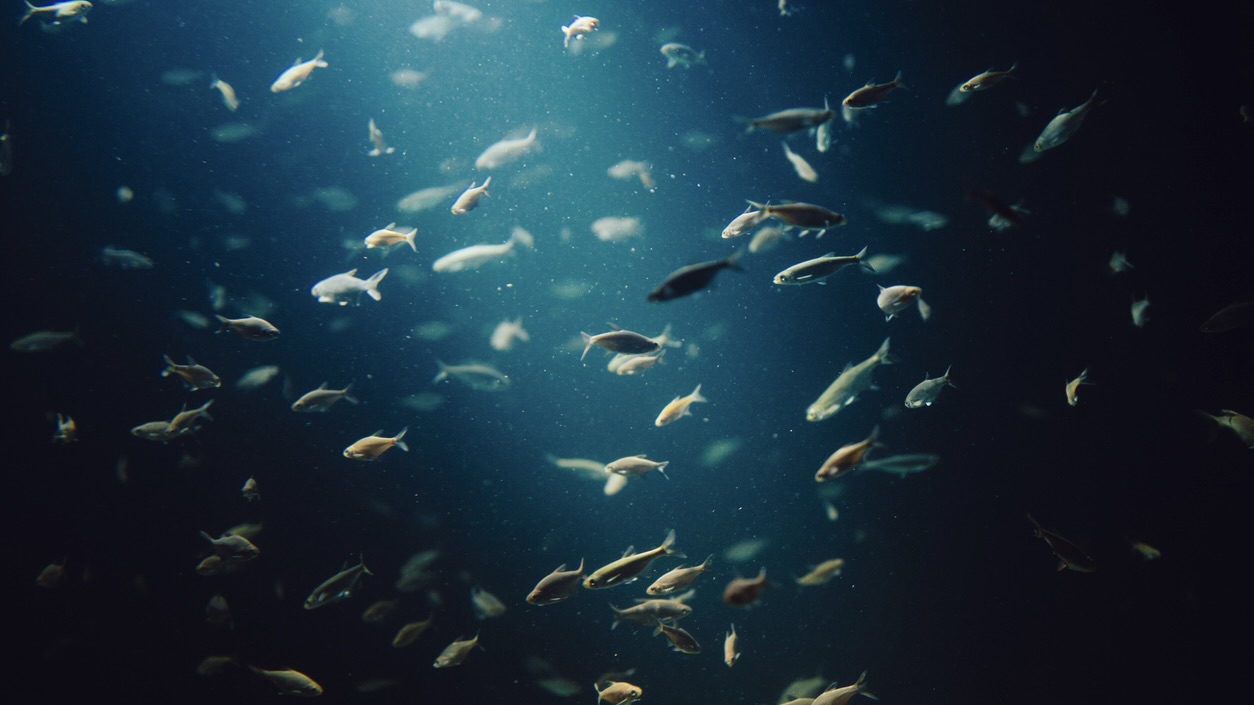
Fishing, industry and tourism along the 130-km stretch of coastline off Visakhapatnam are the main sources feeding plastic into the water.

Synopsis: A study by Andhra University researchers has found microplastics in the edible muscle of fish sampled at Visakhapatnam Harbour, with 94 percent of the 130 fish examined containing plastic particles. Neurologist Dr Sudhir Kumar noted that research in recent years has shown microplastics accumulating in several vital human organs. Though animal studies have raised concerns about their possible effects, he said evidence of their health effects in humans remains limited.
Microplastics have been found in the edible muscle of fish sampled at Visakhapatnam Harbour, according to a study by researchers at Andhra University.
Published in the International Journal of Environmental Sciences, the study examined 130 fish—110 anchovies and 20 Indian ribbonfish—for plastic particles in their gut, gills and edible muscle. Microplastics were found in 94 percent of the fish sampled, with an average of 8 ± 7 particles per fish.
The highest concentration of particles was found in the gastrointestinal tract, followed by the gills and the muscle.
“Overall, when both the gastrointestinal tract (GIT) and fish muscle samples were taken into account, a highly negative correlation coefficient existed between the average weight of the fish and the average number of microplastics per individual,” the authors write.
They add that particles found in muscle “confirms that some particles are capable of moving beyond the digestive tract and gills into internal tissues.”
The findings come as research has documented microplastics in human blood, the placenta, liver, kidneys and the brain, Dr Sudhir Kumar, senior neurologist at Apollo Hospitals Hyderabad, who was not involved in the study, said.
“Researchers have found microplastics in human brains at much higher concentrations than in the liver or kidney, with plastic accumulation appearing to grow over time,” he said.
“Microplastics tend to accumulate in fat-rich tissue like the brain’s myelin sheath, the insulation around neurons.”
Also Read: Do menu labels make diners choose fewer calories? ICMR trial in Chennai says yes, by 12%
Among the particles recovered, fibres made up 79.8 percent, followed by fragments at 11.4 percent, foams at 8.8 percent and beads.
Most particles measured between 0.5 mm and 4.5 mm, though their size varied by tissue. Particles found in the gills were smaller, while those in the muscle were larger.
The researchers recorded seven colours, with red and blue occurring most often, followed by black, transparent, white, green and yellow.
Using micro-Fourier transform infrared spectroscopy, the team identified specific polymers. Polyamide and polyethylene terephthalate, or PET, were the most common, followed by polyester, polyethylene, polyacrylate and polypropylene.
“Similar polymer compositions among species suggest that the same sources contributed to the formation of microplastics, including synthetic materials from fishing operations,” the study notes.
According to the researchers, fishing, industry and tourism along the 130-km stretch of coastline off Visakhapatnam are the main sources feeding plastic into the water. They also point to sewage discharge, urban runoff, industrial waste, fishing gear, tourism, river inflow and agricultural runoff.
“Domestic, industrial and urban sewage enter the coastal environment and may increase pollutant levels, including microplastics,” the study states.
Anchovies face a particular risk because they filter feed. Suspended plastic particles can resemble the plankton they feed on, leading them to ingest plastic along with their food.
“Suspended microplastics can resemble their natural prey, increasing the likelihood of ingestion,” the researchers write. “These findings emphasize the need for taking care and proper disposal of plastic wastes and treatment.”
Also Read: South India has no single dengue season, it differs across states
Animal studies have shown that microplastic exposure can trigger oxidative stress and inflammation that disrupt neurotransmission and impair cognition, Dr Kumar said. But evidence of harm in humans remains inconclusive.
“Human data is still emerging, but the biological plausibility is real. Important to note that causation is not proven yet,” he said.
He also pointed to methodological criticism of some early studies that reported high concentrations of microplastics in human brains, including concerns over contamination controls and claims subsequently challenged by follow-up research.
“The honest scientific position is that it is a concerning signal, not yet a confirmed verdict,” he said.
“Plastic pollution entering the sea fragments into particles small enough for marine life to absorb; fish take it up through feeding, we take it up by eating the fish.”
He said reducing exposure could involve varying protein sources, reducing synthetic fibre shedding, using a laundry filter bag and avoiding heating food in plastic containers. But the larger problem required better waste treatment.
“Support better waste treatment; this is fundamentally a pollution problem, not just a diet one.”
“This is early-stage science: the dose, mechanism, and real-world harm in humans are still being worked out. But we don’t fully understand it yet is a reason for more research and better waste management, not for ignoring it.”



