

Published Aug 03, 2026 | 10:00 AM ⚊ Updated Aug 03, 2026 | 10:00 AM

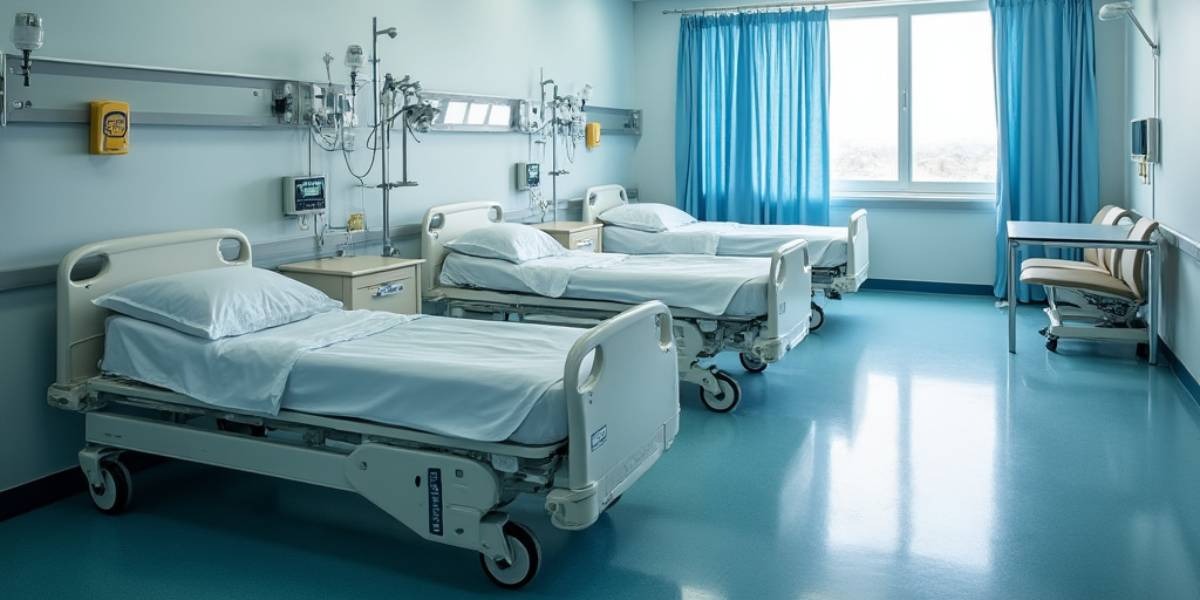
Hospitals increasingly track their revenue from each bed they fill, per day.

Synopsis: Manipal Health’s upcoming IPO offers more than a corporate fundraising story. An analysis of its prospectus shows how India’s private hospitals are increasingly driven by chronic diseases, higher revenue per occupied bed, government-funded insurance, urban expansion and workforce challenges, revealing the changing economics and priorities of the country’s healthcare sector.
Bengaluru-based Manipal Health Enterprises’ Initial Public Offering (IPO), which opened on 29 July, has been subscribed 4.92 times. The listing closes on Wednesday, 5 August.
Manipal’s red herring prospectus shows an industry where the biggest source of revenue is increasingly shifting towards chronic diseases such as heart disease, cancer and kidney failure, rather than general medicine treatment for communicable diseases.
It also highlights how government-funded health insurance schemes are accounting for a growing share of hospital payments, reducing reliance on private Third-Party Administrator (TPA) insurance as well as patients paying out of their pockets.
At the same time, hospitals are finding it harder to retain nurses.
And for investors, one metric has emerged as a key indicator of performance: how much revenue a hospital generates from every occupied bed; not how many patients visit the hospital.
Also Read: The state that is most ill, most hospitalised, and pays the most
Hospitals reported size in beds and patients treated. Increasingly, they report Average Revenue Per Occupied Bed, or ARPOB, which tracks how much money a hospital earns from each bed it fills, per day.
The figure covers surgery, intensive care, diagnostics, procedures, implants and pharmacy tied to the inpatient stay. It does not track room rent alone. A patient admitted for a heart bypass or a liver transplant generates far more revenue than a patient admitted for a relatively minor, routine illness. So, a hospital treating fewer patients with serious illness can earn more than another running near full capacity with simpler cases.
Manipal reported ARPOB of ₹68,957.84 per occupied bed per day for fiscal 2026, against occupancy of 64.47%. Three years earlier, in the 2023 fiscal, its ARPOB stood at ₹58,864.75 and occupancy at 63.47%. Revenue per bed rose by nearly 17% over three years; occupancy moved by roughly one percentage point.
Also Read: Kerala’s neighbourhood clinics and nursing homes are rapidly disappearing
Manipal did not invent this metric. Narayana Hrudayalaya’s 2015 prospectus already named ARPOB improvement as a stated goal, tied to a plan to grow its tertiary care focus. The company then reported ARPOB equivalent to roughly ₹15,900 per bed per day.
Aster DM Healthcare reported ARPOB of ₹22,175 across its India hospitals in its 2017 filing. Hyderabad-based Krishna Institute of Medical Sciences(KIMS) reported ₹21,823 for the nine months to December 2020, ahead of its 2021 listing.
Gurugram-based Global Health Limited, which runs Medanta, reported company-wide ARPOB of ₹54,547.29 for fiscal 2022. Similarly, Gurugram-based Paras Healthcare, which filed its prospectus in June 2026, reported ₹47,397.82 for fiscal 2026.
These numbers span different years, definitions and accounting periods. Read together, they still show a trend: hospital chains have spent a decade training investors to watch revenue per bed as closely as bed count itself.
Also Read: Healthcare expenditure: Here’s where your money goes
Manipal’s cardiac sciences, oncology, neurosciences, gastro sciences, orthopaedics and renal sciences under one label, CONGO-R. These six specialities accounted for 64.30% of gross inpatient revenue in fiscal 2026, up from 61.55% two years earlier.
Within that group, cardiac sciences alone contributed 16.61% of gross inpatient revenue in fiscal 2026, followed by orthopaedics at 12.08%, oncology at 9.96%, neurosciences at 9.21%, renal sciences at 7.19% and gastro sciences at 7.05%.
Other filings show a similar pattern with different weightings. Paras Healthcare draws its largest speciality share from oncology, at 21.63% of revenue in fiscal 2026, ahead of neurosciences and cardiac sciences.
Medanta’s filing points to cardiac sciences and oncology as its main revenue drivers. Narayana built its brand on high-volume cardiac surgery. KIMS has run strong cardiac and renal programmes since its own listing.
Each condition in the CONGO-R group needs specialist doctors, costly equipment and extended monitoring, all of which raise the price of a bed-day. As chronic disease replaces infectious illness as India’s dominant health burden, hospital revenue follows the same shift.
Manipal’s payer mix moved over the same three years. Cash and self-pay patients accounted for 34.38% of gross inpatient revenue in fiscal 2023 and fell to 30.33% in fiscal 2026.
Government schemes, including CGHS and state programmes, rose from 11.04% in fiscal 2024 to 13.80% in fiscal 2026. Insurance and third-party administrators held near 49% to 50% across the period.
Manipal’s filing flags a trade-off in this shift. Government receivables take longer to collect than cash or insurance payments, which raises working capital risk even as the government’s share of revenue grows.
Paras Healthcare shows a sharper version of the same move. Government and public sector revenue reached 41.28% of its total in fiscal 2026, up from 29.76% two years earlier, while self-pay fell from 40.63% to 33.88% over the same span. Paras also draws two-thirds of its revenue from tier-2 cities, where government scheme dependence tends to run higher than in metro markets.
Manipal adds beds once occupancy at a hospital nears 70%, treating existing capacity as the first lever before construction begins. Its plan calls for 751 brownfield beds and 1,943 greenfield beds by 2030, concentrated in Karnataka, Maharashtra, Goa, West Bengal, Delhi-NCR and Mumbai. International patient programmes target Bengaluru, Kolkata, Delhi and Mumbai.
These markets carry higher insurance penetration, larger pools of paying patients and stronger demand for complex procedures than most of India’s smaller cities and towns. The strategy makes commercial sense on its own terms, and it also means private investment keeps clustering where it already sits, leaving many underserved districts to depend on public hospitals for tertiary care.
Manipal’s network has expanded through acquisitions as much as new construction. Columbia Asia, Medica Synergie, AMRI Hospitals and Sahyadri Hospitals all joined the network through deals rather than fresh builds, and IPO proceeds will retire debt tied to these transactions.
The pattern extends across the sector. Large hospital groups increasingly buy regional chains to expand their footprint and referral base faster than building from scratch. It allows smaller networks to expand and consolidate a market dominated by multiple independent operators.
Manipal’s fiscal 2026 workforce data shows doctor attrition at 8.8%. Nurse attrition was more than double, at 19.56%. Paramedic attrition stood at 16.32%, and senior hospital management attrition at 11.52%.
The filing notes that doctors have historically worked as consultants rather than employees, which is why the company only began tracking doctor attrition this year.
Nurses, employed directly, have opportunities not only from rival hospital chains but from health systems abroad. High turnover raises recruitment costs and disrupts continuity of care, a cost the balance sheet absorbs, but the prospectus does not quantify in outcome terms.
ARPOB measures money, not health. A hospital can raise the figure by adding costly, well-reimbursed procedures without treating more patients or reaching areas that lack hospital beds altogether.
Manipal’s prospectus does not claim otherwise. It sets out a growth model built on complexity of care, government and insurance financing, acquisition-led expansion, and workforce retention, which it states as its commercial strategy. What the filing does not answer is where prevention and primary care fit into an industry increasingly built to reward tertiary intervention over early treatment.
The question is outside any single company’s balance sheet. But Manipal’s prospectus, read with filings from Narayana, Aster, KIMS, Medanta and Paras, offers a glimpse into how India’s private hospital sector has redefined what counts as growth over the past decade: not more patients, but more revenue from each one who stays.
(Edited by Majnu Babu).



