

Published Apr 24, 2026 | 8:00 AM ⚊ Updated Apr 24, 2026 | 8:00 AM

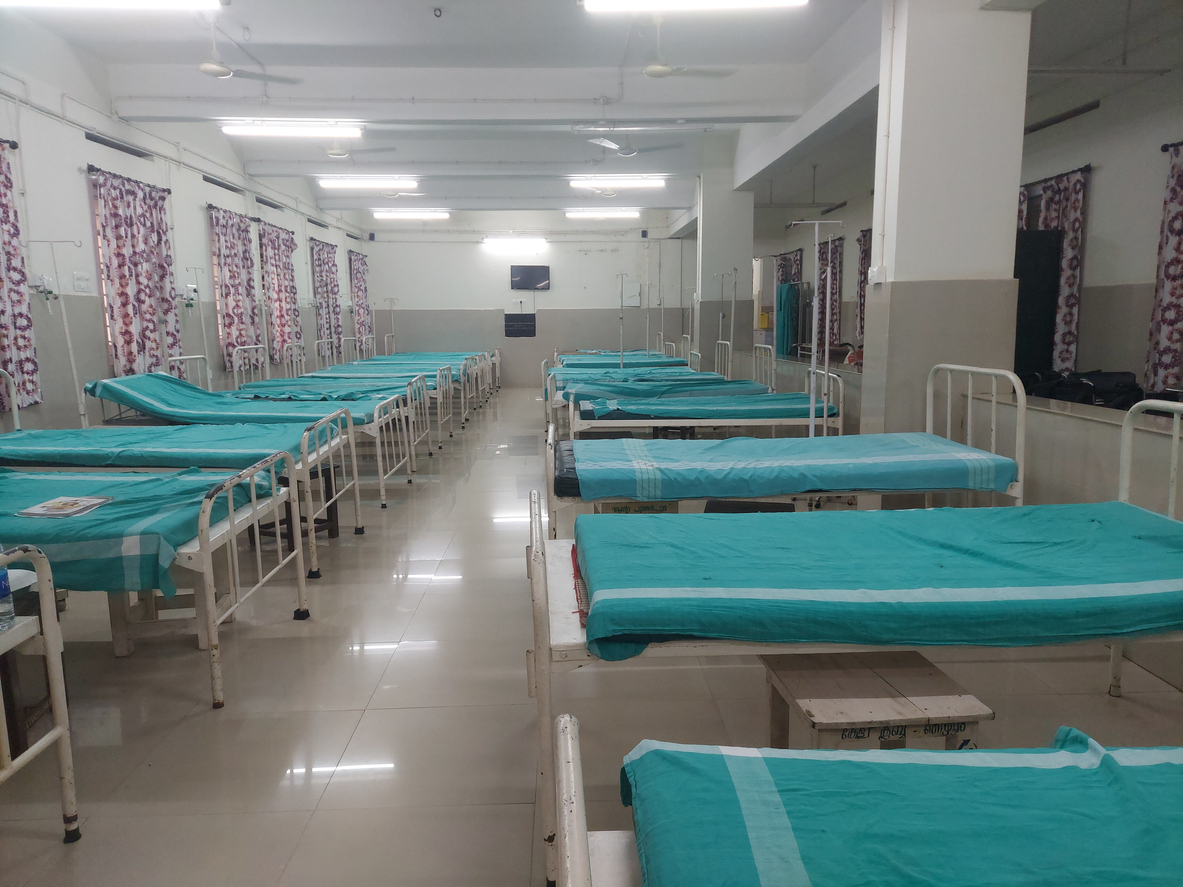
Representational image

Synopsis: Kerala’s health paradox is this: it is a state that has done almost everything right on health access and awareness, yet finds itself paying more, hospitalising more, and carrying a heavier financial burden than almost anywhere else in India. The question for policymakers is no longer whether Kerala has good healthcare. It is whether that healthcare is sustainably affordable for the households that need it most.
Kerala has long been held up as India’s healthcare success story. High literacy, strong public health infrastructure, near-universal institutional deliveries, and health indicators that rival middle-income countries. The state has earned its reputation over decades of sustained investment in human development.
But a government survey released last week presents a more complicated portrait. The 80th Round of the National Sample Survey (NSS) on Household Social Consumption: Health, published by the Ministry of Statistics and Programme Implementation (MoSPI) on 20 April 2026, shows a state where more people report being ill than anywhere else in India, where hospitalisation rates are more than three times the national average, where private hospitals handle the majority of serious care, and where the financial burden on households is among the heaviest in the country.
Kerala’s health story in 2025 is not a failure. But it is a paradox that deserves a closer look.
Also Read: Kerala’s neighbourhood clinics and nursing homes are rapidly disappearing
Start with the most basic measure: how many people reported suffering from an ailment in the 15 days before the survey.
Nationally, 13.1 percent of the population reported illness. In Kerala, that figure is 39.7 percent, the highest of any state in the country by a significant margin. The next closest states are West Bengal at 24.5 percent and Andhra Pradesh at 21.1 percent. Kerala’s figure is more than three times the national average.
This is not a new phenomenon. Kerala has consistently recorded high morbidity rates in previous NSS surveys, and researchers attribute it largely to greater health awareness, higher willingness to report illness, better access to diagnosis, and an older population that naturally carries a higher disease burden.
The gender breakdown is telling. Among women aged 60 and above in Kerala, the illness reporting rate is 81.8 percent, the highest of any demographic group in any state in the survey. Among men of the same age, it is 73.1 percent. Both figures are far above the national elderly averages of 45.4 percent for women and 42.5 percent for men.
Even among younger age groups, Kerala stands apart. In the 15-29 age bracket, 17 percent of Keralites reported illness, against a national average of just 4.5 percent. Among those aged 30-44, the rate is 24.6 percent in Kerala against 8.4 percent nationally.
Kerala’s hospitalisation rate of 92 per 1,000 persons is the highest in the country. The national average is 29 per 1,000.
Among the elderly aged 60 and above, Kerala’s hospitalisation rate reaches 186 per 1,000, more than double the national figure of 81 for the same age group. Even for the 45-59 age bracket, Kerala records 103 hospitalisations per 1,000, against the national average of 42.
Among children aged 0-4, Kerala’s hospitalisation rate is 128 per 1,000, nearly four times the national average of 34. Even in the 5-14 age group, where most states record single-digit or low double-digit rates, Kerala records 53 per 1,000 against the national average of 11.
These numbers reflect a state where people seek in-patient care far more readily than elsewhere, whether because of better access, higher health consciousness, greater insurance coverage, or the genuine prevalence of conditions requiring hospitalisation. Likely it is a combination of all four.
Also Read: Collapse of trust: Beneath rubble lies Kerala’s healthcare illusion
All of this care comes at a price.
Kerala’s average out-of-pocket medical expenditure per hospitalisation case is ₹41,410, the third highest among southern states and well above the national average of ₹34,064.
The public-private divide in Kerala is sharp. A hospitalisation in a government facility costs an average of ₹9,433, while a private hospital stay averages ₹56,150. Charitable hospitals sit in between at ₹35,258, though that figure itself is significant.
Urban Kerala records an average hospitalisation cost of ₹43,238, and rural Kerala ₹39,496. The rural-urban gap is relatively narrow compared to states like Telangana, but both figures are above their respective national averages.
When non-medical costs such as travel, food, and attendant expenses are included, the total average expenditure per hospitalisation in Kerala rises to ₹45,245, the fourth highest among all states nationally.
A key driver of Kerala’s high costs is the dominance of private hospitals for in-patient treatment.
In Kerala, 66.5 percent of all hospitalisation cases take place in private facilities. The national average is 60.3 percent. In urban Kerala, the figure is 69.1 percent. Only 30 percent of Kerala’s hospitalised patients use government facilities, and 3.5 percent use charitable hospitals.
This means that the majority of Kerala’s hospitalised patients, including those in rural areas where 63.9 percent go to private hospitals, are paying private hospital rates. Given how frequently Keralites are hospitalised compared to the rest of the country, the cumulative financial exposure is considerable.
Kerala’s maternal health indicators are strong on coverage, but tell a nuanced story on cost and institutional choice.
Ante-natal care coverage stands at 99 percent statewide, with 100 percent in rural areas and 98 percent in urban areas. Post-natal care coverage is 94 percent overall. These are among the best figures in the country.
Institutional deliveries are universal in Kerala. Every birth recorded in the survey took place in a hospital, with no home births reported in either rural or urban areas.
But where those births take place reveals a striking preference for private care. In Kerala, 70.8 percent of institutional childbirths occur in private hospitals, the highest proportion among all southern states and one of the highest in the country. Only 27.2 percent of births are in government hospitals, and 2 percent in charitable facilities.
The cost implications are significant. The average out-of-pocket expenditure for a delivery in a private hospital in Kerala is ₹49,029, against just ₹4,463 in a government facility. Nationally, the private hospital delivery average is ₹37,630, making Kerala’s private maternity costs notably higher.
The average out-of-pocket expenditure for ante-natal care in Kerala is ₹10,878, the second highest in the south after Telangana’s ₹12,355. Post-natal care costs average ₹13,885, the highest of any state in the country.
For non-hospitalised treatment during the 15-day reference period, Kerala’s costs are more moderate but still above the national average in some categories.
The overall average out-patient expenditure in Kerala is ₹530 in rural areas and ₹511 in urban areas, both below the national averages of ₹852 and ₹921 respectively. This suggests that for routine care, Kerala’s public health system is functioning as a relatively affordable first point of contact.
At government hospitals, Kerala’s out-patient cost averages ₹169 in rural areas and ₹173 in urban areas, among the lower figures in the south. This indicates that public facilities in Kerala, while underused for hospitalisation, do provide accessible day-to-day care at low cost.
Private hospital out-patient costs in Kerala are ₹971 in rural areas and ₹871 in urban areas, broadly in line with the national average.
Also Read: Kerala household’s hospital bill runs Rs 10,341 out-of-pocket compared to Rs 5,290 across India
For out-patient treatment, Kerala shows a relatively balanced use of healthcare providers compared to other southern states.
In rural Kerala, 49.2 percent of treated ailment spells are handled by government or public hospitals, one of the higher public utilisation rates in the south. Private hospitals account for 32.8 percent and private doctors or clinics 16.8 percent.
In urban Kerala, public hospital use drops to 36.5 percent, with private hospitals at 39.4 percent and private doctors at 23.3 percent.
This pattern suggests that for routine illness, Keralites do use public facilities in significant numbers. It is when conditions become serious enough to require admission that the shift to private care becomes pronounced.
Perhaps the most important story within Kerala’s data is the burden carried by its older population.
Kerala has one of India’s oldest demographic profiles, a consequence of decades of low fertility, high life expectancy, and significant outmigration of working-age adults. The survey data reflects this directly.
The illness reporting rate among those aged 60 and above in Kerala is 77.8 percent, far above the national average of 43.9 percent for the same group. The hospitalisation rate for this group at 186 per 1,000 is the highest in the country. These are not just statistics. They represent a large and growing cohort of elderly Keralites requiring frequent, expensive, and largely private medical care.
As the state’s demographic profile continues to age, the financial pressure on households, the public health system, and insurance schemes will only intensify.
Kerala’s high morbidity and hospitalisation numbers are not straightforwardly bad news. They reflect a population that is aware of its health, willing to seek care, and able to access it. In that sense, they are a sign of a functioning healthcare culture.
But the data also reveals a system under financial strain. High hospitalisation rates combined with a strong preference for expensive private care means that Kerala households face some of the heaviest medical bills in the country. Insurance coverage has expanded, but the out-of-pocket figures in the survey represent costs after reimbursement, meaning even insured patients are bearing significant burdens.
The state’s public hospitals are affordable and reasonably well used for routine care. But for serious illness, childbirth, and elderly care, the gravitational pull of private facilities is strong, and the bills that follow are steep.
Kerala’s health paradox is this: it is a state that has done almost everything right on health access and awareness, yet finds itself paying more, hospitalising more, and carrying a heavier financial burden than almost anywhere else in India. The question for policymakers is no longer whether Kerala has good healthcare. It is whether that healthcare is sustainably affordable for the households that need it most.
(Edited by Sumavarsha)



