

Published Sep 05, 2026 | 7:00 AM ⚊ Updated Sep 05, 2026 | 7:00 AM

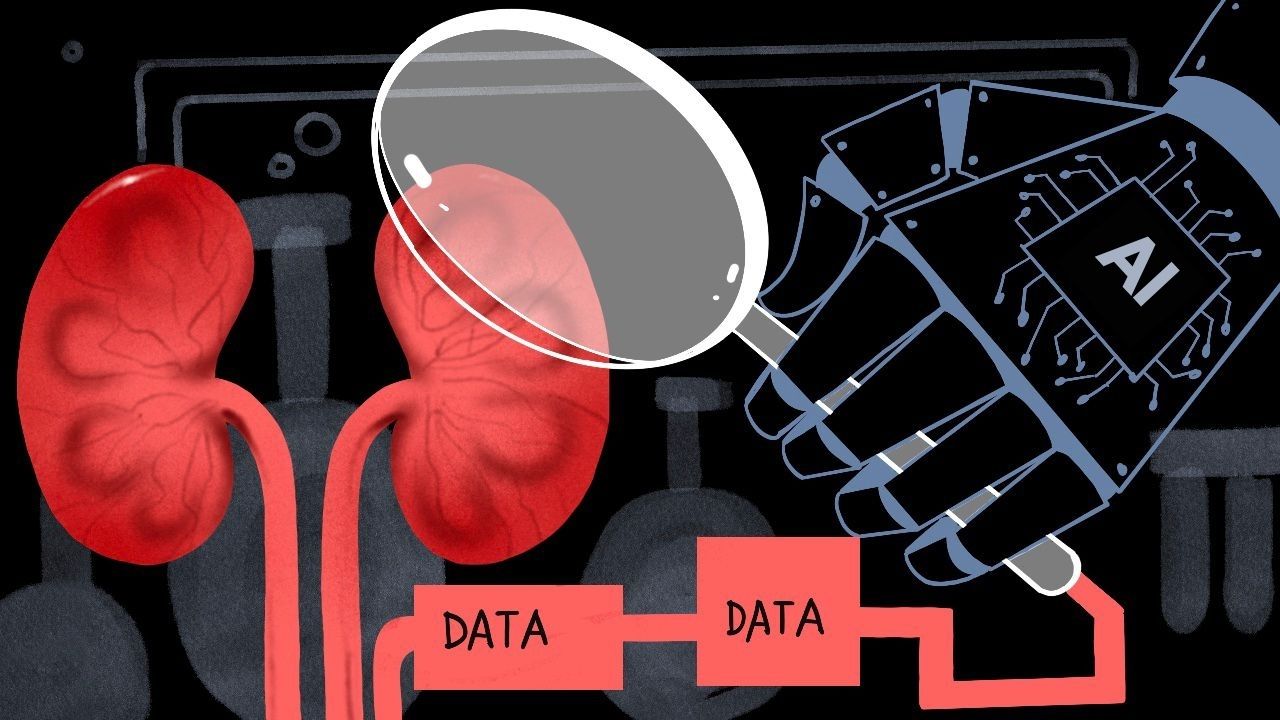
CKD is progressive and can eventually lead to end-stage renal disease, requiring dialysis or kidney transplantation.

Synopsis: Researchers from IIT Madras and CMC Vellore have developed three AI-based technologies to detect and assess kidney disease. The tools can predict CKD risk, classify kidney conditions from CT scans, and measure kidney tumour burden using 3D imaging, with the broader aim of enabling earlier diagnosis and personalised treatment.
Kidney disease can progress quietly, with patients showing few or no obvious symptoms in its early stages. By the time it is detected, substantial damage may have already occurred. Researchers at the Indian Institute of Technology Madras (IIT Madras) and Christian Medical College (CMC), Vellore, are now exploring whether artificial intelligence can help doctors spot kidney disease earlier.
The team has developed three AI-based technologies targeting different stages of kidney disease assessment. One predicts chronic kidney disease (CKD) risk from patient data, another classifies kidney conditions from CT scans, and a third reconstructs kidneys in three dimensions to measure tumour burden.
The research was led by Prof GL Samuel of the Department of Mechanical Engineering at IIT Madras and Jennifer Delighta, a research scholar at the institute, in collaboration with Prof Santosh Varughese from the Department of Nephrology at CMC Vellore.
Also Read: Keralam drops ‘Mental Health’ tag, renames centres ‘Happiness and Wellness Centres’ to shed stigma
The first technology looks for CKD risk in patient data. The researchers tested four machine learning algorithms: Logistic Regression, Random Forest, Gradient Boosting and Neural Networks.
The model used a public dataset containing 400 patient records, including 250 CKD cases and 150 non-CKD cases. Missing values were handled using K-Nearest Neighbour imputation, while SHAP was used to understand how individual features influenced predictions.
Random Forest emerged as the strongest performer across the validation folds. The researchers then paired it with Ant Colony Optimisation, which selects the most relevant variables before they are passed to the classifier.
“The research effectively created an optimized machine learning model for renal disease risk assessment,” the authors wrote, adding that combining machine learning with clinical knowledge could contribute to the development of digital twin technology.
The second technology tackles medical imaging. It uses deep learning to classify CT scans into four categories: normal kidney, cyst, stone and tumour. The model was trained using 12,400 kidney CT images and uses MobileNetV2 for classification.
The third technology reconstructs the kidney from CT scans in 3D and calculates kidney volume, tumour volume and tumour burden, or the percentage of the kidney occupied by the tumour.
Together, the three approaches attempt to answer three different questions: Who may be at risk? What does the scan show? And how much of the kidney is affected?
CKD is progressive and can eventually lead to end-stage renal disease, requiring dialysis or kidney transplantation. The study cites global estimates suggesting that nearly 10 percent of the population is affected by CKD.
The researchers argue that detecting the disease earlier could create a larger window for intervention.
“Early detection and timely intervention can delay or even prevent the progression of CKD,” the authors wrote, describing accurate and accessible predictive tools as an important need.
That is where the first AI model becomes important. Rather than waiting for kidney disease to become advanced, the system attempts to use existing patient information to identify people who may be at higher risk.
Prof Samuel said the broader objective was to give clinicians tools that could make decisions faster.
“The team aimed to develop intelligent systems that would help clinicians make quicker and more informed decisions,” Prof Samuel said.
Also Read: In Tamil Nadu’s Kothagiri Hills tea estates, gum disease is widespread – toothbrush a rarity
The CKD model was built using the 400-patient Kaggle dataset. Of these, 250 records represented patients with CKD and 150 represented people without the disease.
Healthcare datasets frequently contain missing information, and this dataset was no exception. The researchers used K-Nearest Neighbour imputation to fill missing values while attempting to preserve relationships between variables. They then used mutual information and SHAP to determine which features contributed to predictions.
“SHAP, in particular, helped identify the contribution of each feature towards the prediction outcome, enhancing the interpretability of the model,” the researchers said.
The team then compared four algorithms using k-fold cross-validation.
Random Forest consistently recorded the highest accuracy and showed the greatest stability. Neural Networks had the lowest accuracy and higher variation, while Logistic Regression performed strongly but with some variability.
“Overall, the Random Forest and Logistic Regression models emerged as the most reliable, with Random Forest being the preferred choice for deployment due to its superior stability and accuracy,” the study states.
The second technology takes the AI from patient records to medical images.
The researchers trained a MobileNetV2-based deep learning model on 12,400 kidney CT images. The images were divided into four classes: normal, cyst, stone and tumour.
The system can then classify an uploaded CT image through a clinician-facing interface.
“The high accuracy and efficiency of the MobileNetV2 model suggest that it can be a valuable tool in clinical practice, assisting radiologists in the rapid and accurate diagnosis of kidney diseases,” the researchers wrote.
The potential advantage is speed. In settings where radiologists have to review large numbers of scans, an automated classification system could provide an additional layer of analysis.
The researchers, however, describe it as an assistive technology, not a replacement for clinical interpretation.
Also Read: Iconic Hyderabad eatery Shadab Hotel’s FSSAI licence suspended over food safety violations
The third technology goes beyond simply identifying a tumour.
The researchers used CT data to create patient-specific 3D reconstructions of kidneys and tumours. The system calculates total kidney volume, tumour volume and functional kidney volume, and converts tumour size into a tumour-burden percentage.
Across the cases examined, kidney volumes ranged from approximately 120 mL to 245 mL, while tumour volumes ranged from 2 mL to 24 mL. Tumour burden ranged from about 1 percent to 10.6 percent.
“Tumor burden ranged from approximately 1% to 10.6%, highlighting clinically significant differences not captured by conventional one-dimensional measurements,” the researchers reported.
The 3D estimates also showed good agreement with voxel-based reference calculations, suggesting that the method could offer a reproducible way of measuring tumour extent.
Jennifer Delighta said the patient-specific approach could offer doctors a more detailed picture of the disease.
“The patient-specific imaging framework is of significant promise as it goes beyond the standard measurements to give a more comprehensive picture of the extent of the disease,” she said.
The researchers see these technologies as more than standalone diagnostic tools. Their longer-term goal is to contribute to a kidney Digital Twin, a virtual representation of a patient’s organ built from clinical and imaging data.
Such a system could eventually bring together AI-based image analysis, patient-specific 3D anatomy and clinical information to support personalised monitoring and treatment planning.
“This machine learning model can contribute positively to the development of digital twin technology in the healthcare domain,” the authors wrote.
The researchers are also exploring integration with minimally invasive wearable sensing systems, potentially extending kidney health monitoring beyond hospital visits.
The promise comes with an important caveat: these systems are still at the research and validation stage.
The CKD prediction model was trained on just 400 records from a public dataset. The researchers acknowledge that larger datasets are required to establish how reliably the model performs across broader patient populations.
“Future work will focus on validating the model with larger datasets and integrating it into clinical decision support systems to further enhance patient care,” the authors said.
The team also plans to work with healthcare institutions to test the technologies in real-world settings.



