

Published Jun 22, 2026 | 4:11 PM ⚊ Updated Jun 22, 2026 | 4:11 PM

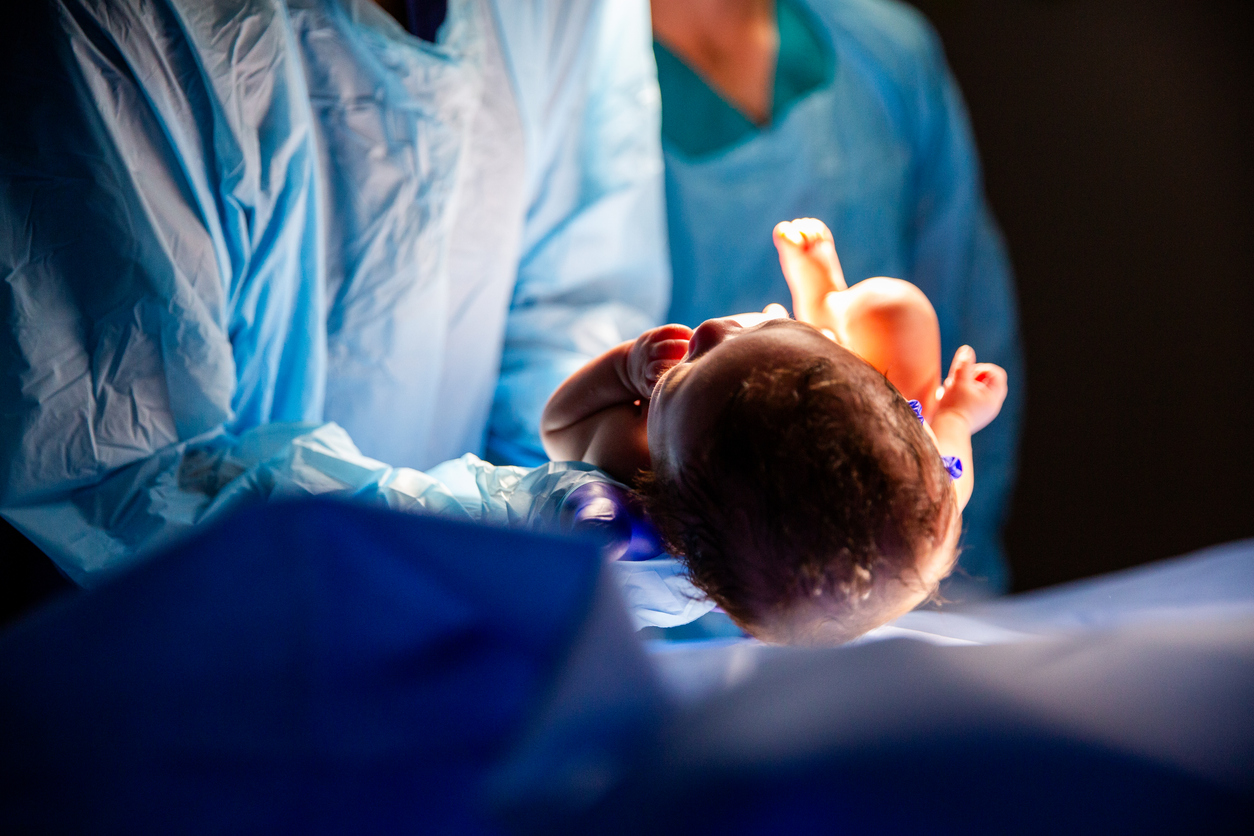
Representational image. Credit: iStock

Synopsis: India’s private hospitals perform C-sections at far higher rates than public facilities, particularly across South India. Against this backdrop, a Bengaluru hospital claims a 70% natural delivery rate through salaried doctors, fixed pricing and labour support. The story examines whether financial incentives influence childbirth decisions and rising surgical birth rates.
Across India’s private maternity wards, surgery has become the norm rather than the exception.
The National Family Health Survey-6, released in May 2026, recorded a national C-section rate of 27.2 percent, up from 21.5 percent in the previous survey cycle. In private hospitals, the figure climbed to 54.1 percent. In public hospitals, it held at 16.9 percent.
The gap between those two numbers has sharpened a long-running debate about what drives surgical birth rates in India’s private healthcare sector.
The NFHS-6 data placed South India at the centre of the trend.
Telangana recorded the highest C-section rate among major states at 62.2 percent. In the state’s private hospitals, 83.9 percent of births were surgical. Even government facilities reported a rate of 48.1 percent.
Andhra Pradesh crossed 50 percent. Tamil Nadu recorded 46.9 percent. Karnataka registered the sharpest single-cycle increase in the country, rising 14.2 percentage points to reach 45.7 percent. In Bengaluru’s private facilities specifically, the rate reached 63.8 percent.
WHO has maintained that population-level C-section rates substantially above 10 to 15 percent do not associate with better maternal or neonatal outcomes. South India’s figures sit three to six times above that range.
Also Read: Thyroid disorders, diabetes drive rise in high-risk pregnancies in Chennai’s urban fringes
Public health researchers and clinicians point to a range of factors behind the rise.
On the clinical side, increasing maternal age, the growth of IVF pregnancies, higher rates of obesity, diabetes and hypertension, and the compounding effect of previous C-sections all contribute to a patient population that carries greater obstetric risk than earlier generations.
Fear of litigation weighs on clinical decision-making. So does the structure of private healthcare itself.
Critics of India’s private maternity sector argue that payment structures may favour surgical deliveries because they are easier to schedule and often generate higher revenues.
As Superhealth’s founder Varun Dubey puts it, “unlike natural birth, which can be time-taking and high effort, C-sections are highly predictable. This improves the throughput of the OT, enabling the hospital to do many more deliveries in the same time frame. This dramatically improves their bottom line.”
That dynamic, he argues, explains why private sector rates keep climbing even as public hospital rates hold at 15 to 20 percent.
Also Read: Ground report: How teen pregnancies still slip through the cracks in Karnataka
Superhealth, a private hospital that opened in Bengaluru’s Koramangala area nine months ago, says its maternity programme has achieved a 70 percent natural delivery rate since launch.
The hospital says its programme, called Superbirth, is built around removing procedure-linked financial incentives from clinical decision-making.
Every obstetrician, gynaecologist, neonatologist and paediatrician within the programme works on a full-time salaried basis. The hospital charges a fixed, all-inclusive fee that covers the full pregnancy, delivery and the child’s first year, including vaccinations. That fee does not change based on whether the birth is vaginal or surgical.
Dubey is clear about what the model is designed to address.
“The core reason why India’s C-section rates have been climbing has been largely financial structures and legacy healthcare’s business models where often they get paid for surgical deliveries over natural deliveries,” he said.
On where the hospital draws the line, he added: “It is not that we are against C-sections, but we are absolutely against C-sections being done for any reason beyond women’s choice and clinical safety of mother and child.”
The hospital says it designed the programme to offer what Dubey describes as real choice.
“We have designed Superbirth to provide choice, real choice, to women. Unlike hospitals driven by throughput and commissions, Superbirth is designed to improve your chances of natural delivery if you choose it,” he said.
Also Read: Heat during pregnancy may influence if baby is boy or girl: Study
Beyond the salary and pricing structure, the hospital says the Superbirth programme extends care across 21 months, from early pregnancy through the child’s first year.
During pregnancy, the hospital says couples work with birth coaches, obstetricians, fitness specialists and nutrition counsellors. The care team operates around the clock by phone and messaging, with ambulance and emergency access included in the programme fee.
After birth, the mother receives a year of gynaecological follow-up. The child receives paediatric consultations and vaccination support.
The hospital argues that continuous preparation through pregnancy changes the conditions under which a woman enters labour, and therefore changes the likelihood of a vaginal birth.
On the scope of the commitment, the hospital describes a care model it says treats childbirth not as a single hospital event but as a broader transition into parenthood, with structured birth preparation, labour coaching and family education sessions running through the pregnancy.
Also Read: Why South India has fewer maternal deaths despite higher pregnancy risks
One example cited by the hospital involved a 30-year-old first-time mother who arrived at 37 weeks and two days, induced following a pregnancy complicated by anaemia, GERD, vasomotor rhinitis and intrahepatic cholestasis of pregnancy.
According to the hospital, as labour progressed the woman became exhausted and she and her family requested a caesarean section. The clinical team, led by Dr Usha, assessed both mother and baby as stable and continued labour support rather than proceeding to surgery. The hospital says birth coaches provided continuous one-to-one support through breathing techniques, movement and positioning throughout.
According to the hospital’s account, the woman subsequently delivered vaginally.
The hospital presents the case not as an argument against caesarean sections but as an illustration of what becomes possible, it says, when clinicians carry no financial reason to favour surgery.
“C-sections remain a critical, life-saving intervention when medically necessary,” the hospital said. “The objective is simply to ensure that as long as mother and baby remain safe, clinical decisions are guided by medical necessity rather than exhaustion, anxiety, scheduling pressures, or non-clinical incentives.”
The hospital describes what it believes such cases demonstrate at a structural level.
“When families receive continuous support, doctors are free from procedure-linked incentives, and the delivery room is protected from commercial bias, parents are often able to make more informed decisions during one of the most important moments of their lives,” it said.



