

Published Sep 15, 2026 | 12:45 PM ⚊ Updated Sep 15, 2026 | 12:45 PM

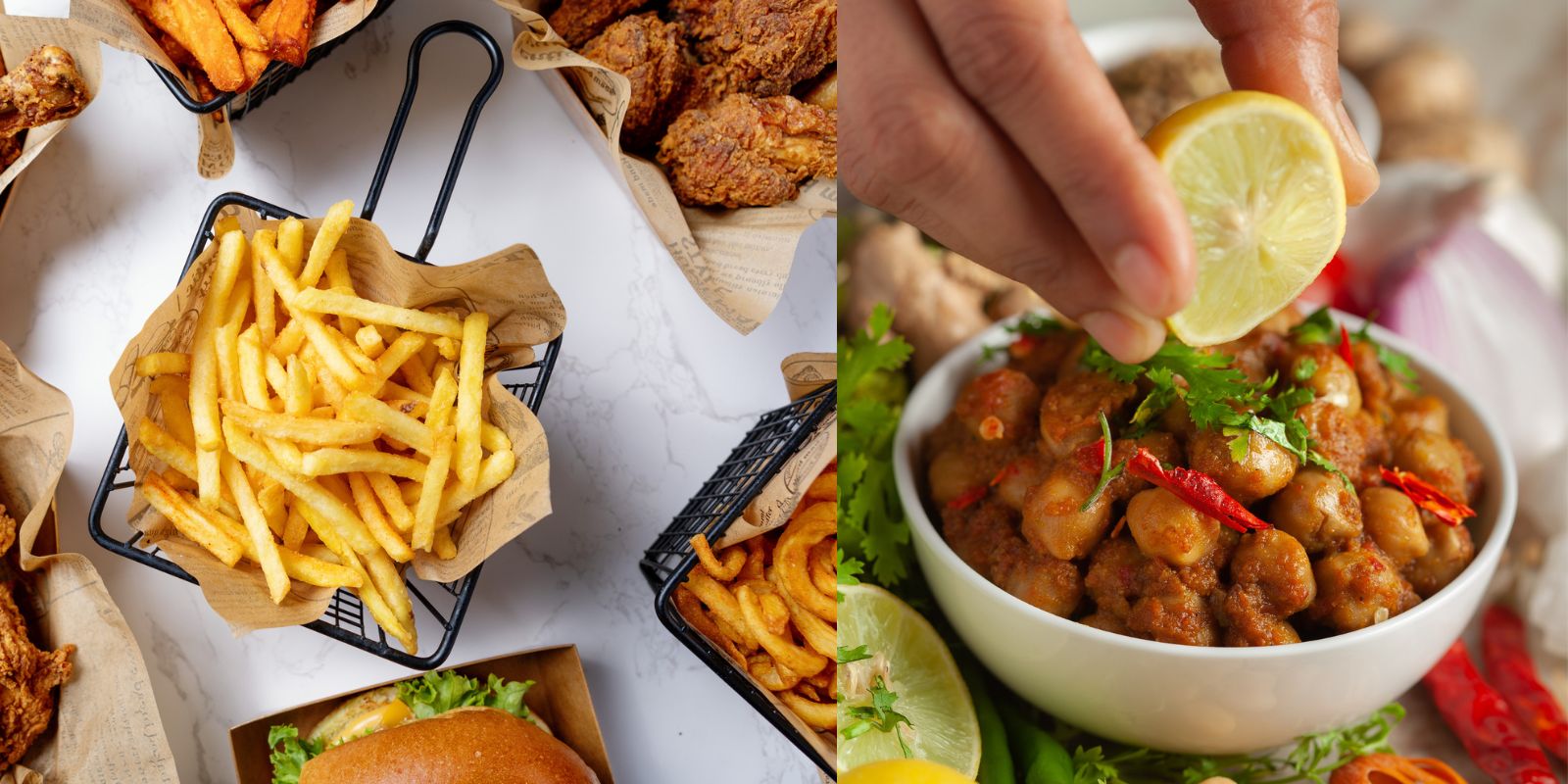
'Foodporn' that sells junk to sell healthy food? (iStock)

Synopsis: ICMR-NIN researchers tested whether “foodporn” visuals, typically used to make junk food irresistible, could make healthy foods more appealing to adolescents. Involving 203 teenagers across India, the study found visually enhanced healthy foods increased willingness to consume some options, while images mattered more than nutrition information.
Scroll through Instagram and food finds you first. Pizza drips cheese. Ice cream glistens under studio light. Millet porridge does not usually get this treatment.
Researchers at the Indian Council of Medical Research-National Institute of Nutrition (ICMR-NIN), Hyderabad, asked what happens if it does. They took the visual tricks that sell burgers and fries, pointed them at chana salad and curd, and tracked how adolescents responded. The study appears in BMC Public Health.
“Social media use has increased among adolescents, who are also more susceptible to the obesogenic digital food environment,” the authors write, adding, “One important nudge is ‘foodporn’, sharing of alluring food images, a concept often associated with creating demand for unhealthy foods. However, this study assessed the usage of foodporn images on social media as a possible visual stimulant to prime choices of healthy foods among adolescents.”
Also Read: Vitamin D2 and D3 have the same impact on bones – but not on muscle and heart, Hyderabad study finds
Researchers recruited 203 adolescents aged 13 to 19 from across India. They screened out anyone who already followed food influencers or food pages, to avoid skewing the sample toward people who crave food content anyway.
Participants split into two groups. Both received a stream of 15 images over 15 days, posted to a private Instagram account the researchers ran themselves. The researchers even set up four extra Instagram accounts just to like the posts, so they would not look staged.
The images fell into three buckets: unhealthy foods shot in glamorous style, healthy foods shot in that same glamorous style, and healthy foods shot in plain, ordinary style. One group’s posts carried captions naming the food and giving brief nutrition facts. The other group got the food name only.
Every day, participants filled in a short questionnaire rating each image on appeal, willingness to eat the food, price they would pay for it, where they would eat it, and who they would eat it with.
“Foods on social media are represented in a visually vibrant, exaggeratedly glamourised and superlatively magnified manner, also called ‘foodporn’,” the authors note, pointing to hashtag counts to make the scale clear: as of April 2025, Instagram carried 541 million posts tagged #food and 312 million tagged #foodporn.
The link between appeal and appetite was held across the board. “Visual appeal of images was found to be significantly associated with willingness to consume the foods,” the authors report. “Colour, visual effects, ingredients, and presentation were the factors determining the appeal and impact of food images on diet.”
Two food categories produced particularly striking results. Millet porridge presented in the foodporn category drew roughly 50 percent more positive responses on willingness to eat than plain millet cereal in the regular category. Boiled chana salad drew about 10 percent more positive responses than plain dal. The differences between the foodporn and regular presentations were statistically significant in the millet and pulse categories.
“A significant difference was seen in the millet (millet porridge versus plain millet) and pulse (boiled chana salad versus plain dal) sub-categories,” the study states.
Not every food followed the pattern. Plain nuts and plain curd, shot without any styling, beat their glammed-up versions by around 18 percent and 14 percent. Fruit drew similar responses no matter how it was shot. The researchers do not smooth over this. Appeal helps, but it does not override every food equally.
Styling changed more than appetite. It changed where teens pictured themselves eating the food, and with whom. “A higher inclination was observed to consume the former in a restaurant, and eating at home for the latter,” the authors write, comparing foodporn-style healthy images against plain ones. Friends entered the picture too: “Participants exhibited a higher inclination towards consuming the former in social settings, especially with friends, than their regular counterparts.”
That result matters because those associations, eating out, eating with friends, usually attach to junk food. “Norms commonly associated with unhealthy foods, such as higher purchase intentions and eating out with friends, were more strongly associated with foodporn images of healthy foods than with regular images.”
After the intervention, the team checked what shifted. Consumption of mixed fruit salad and plain curd rose in one group, a change that met statistical significance. Intentions to eat millet porridge and chana salad rose too, though not enough to clear the statistical bar.
“The number of participants who increased their consumption post-intervention was statistically significant for mix fruit salad and plain curd,” the authors write. “A consistent trend was observed: more participants increased their consumption of foods in the foodporn category than their core regular counterparts.”
Intentions around junk food moved in the opposite direction. Participants generally said they planned to reduce their consumption of non-core foods, with ice cream in one group the exception.
One of the sharper findings sits in what did not work. Half the participants received nutrition facts in their captions. Half did not. It made no measurable difference.
“There were no significant differences in participants’ responses to food images and nudges between the two groups,” the authors report, “i.e., those who received nutritional descriptions in the posts versus those who did not.”
The picture won the competition for attention. Interviews found that participants focused primarily on the images rather than the written content. The researchers point toward “embedding nutritional information cues directly within the food imagery itself” as a stronger route than captions or standard labels.
Alongside the numbers, researchers ran 19 telephone interviews, stopping once new material stopped surfacing. Participants named the elements that pulled them in: “colour, angle, shape, glossiness, texture, and principles of classical aesthetics like balance, symmetry, order.”
Curiosity came up again and again. Several teens described trying foods they had previously avoided, simply because a picture made the food look worth trying. Some talked about experimenting with plating their own meals. Others called the images “worth posting” and said they would join an online community built around healthy food content if one existed.
One theme emerged that the researchers had not planned for: participants started reflecting on their own existing eating habits mid-conversation, prompting the team to add a category, “discovering existing eating habits”, that had not featured in their original interview guide.
The authors do not oversell this. They flag a short run time, a sample skewed toward girls (66% of participants), a small set of test foods, and reliance on what teens reported about themselves rather than any independent tracking.
“As this was not a controlled experimental study, causality cannot be inferred, and the associations observed should be interpreted with caution,” they write.
Still, they see an opening. “This strategy can be upscaled by fostering online communities that promote visually appealing, healthy food content.” They point toward school canteens, restaurants, and cafes as places to test the same visual approach, alongside partnerships with platforms and influencers already fluent in making food look irresistible.
“Foodporn imagery of healthy foods can be a visual food stimulant to drive healthier food consumption among adolescents on social media platforms,” the authors conclude. “Given that the current digital food environment is largely dominated by visually appealing images of unhealthy foods, presenting healthy food images using similar techniques employed by unhealthy food marketers can be an effective countermeasure.”
(Edited by Sumavarsha)



