

Published Aug 16, 2026 | 2:56 PM ⚊ Updated Aug 16, 2026 | 2:56 PM

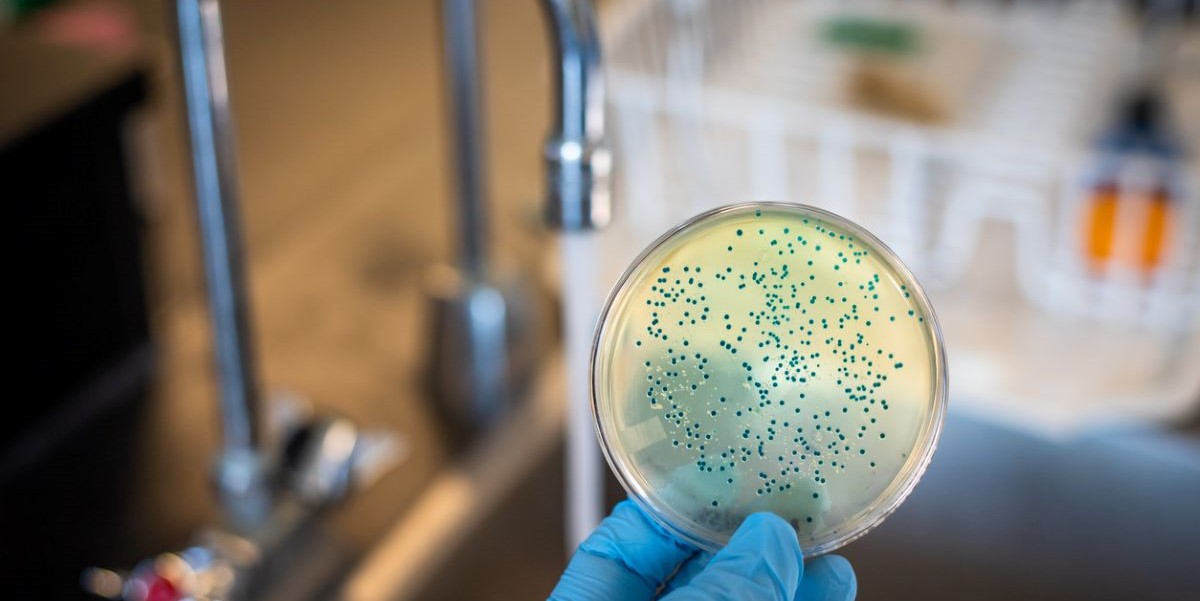
Coliform in drinking water. (iStock)

Synopsis: Water coolers at Hyderabad, Coimbatore and Palakkad Junction railway stations have tested positive for E. coli, a CAG audit has found. The report flagged gaps in bacteriological and chemical testing, abnormal chlorine levels, inadequate water-tank maintenance and failures to follow prescribed drinking-water quality protocols.
Water coolers at Hyderabad, Coimbatore and Palakkad Junction railway stations tested positive for E. coli, a Comptroller and Auditor General (CAG) audit has found. The audit covered 512 railway stations and flagged gaps in the testing and monitoring of drinking water supplied to passengers.
The findings appear in the CAG Report, which examined passenger amenities and sanitation at railway stations. Auditors found that inspections did not happen at the prescribed frequency, and that testing for residual chlorine, bacteriological contamination and chemical parameters remained incomplete.
The report links these gaps to abnormal chlorine levels and the presence of coliform bacteria. It states that these factors “indicated unsatisfactory quality of drinking water at stations.”
Also Read: How does migration change the way we age? AKKARE looks for answers among Kerala Americans
Railway laboratory test reports examined by the CAG show water-cooler samples testing positive for E. coli at eight stations. These span Coimbatore and Palakkad Junction in Southern Railway, Hyderabad in South Central Railway, Chhatrapati Shivaji Maharaj Terminus, Bhiwandi Road, Kalyan and Lonavala in Central Railway, and Madhupur in Eastern Railway.
The report states: “Water sample from water cooler was positive for E-coli at two stations (Coimbatore and Palakkad Junctions) in SR, one station (Hyderabad) in SCR, four stations (Chhatrapati Shivaji Maharaj Terminus, Bhiwandi Road, Kalyan and Lonavala) in CR and one station (Madhupur) in ER.”
Contamination extended beyond water coolers. Platform taps at 49 stations across eight zones showed coliform bacteria, including E. coli, in 2022-23. The number rose to 56 stations across nine zones in 2023-24.
Auditors also flagged bacteriological tests beyond total coliform screening as unsatisfactory at eight stations across four zones in 2022-23, and at 11 stations across five zones the following year.
The audit found that Railways skipped bacteriological analysis of drinking water altogether at 59 stations across six zones.
Railway Board rules require Health and Malaria Inspectors to check water supply systems twice a year using bacteriological test vials. A positive result should trigger detailed laboratory examination and corrective steps.
Auditors found that stations did not follow this process consistently.
Chemical analysis of drinking water did not take place at 179 stations across 11 zones, the audit found. At another 77 stations across six zones, Railways conducted the testing but missed the twice-yearly schedule.
Auditors also recorded deficiencies in chemical analysis results at 28 stations across seven zones in 2022-23, rising to 34 stations across nine zones in 2023-24.
The report concludes that Railways fell short in testing drinking water for residual chlorine, bacteriological and chemical parameters.
The audit measured compliance against the Uniform Drinking Water Quality Protocol, which the Ministry of Drinking Water and Sanitation issued in 2013 and Railways later adopted.
The protocol lists parameters including pH, total dissolved solids, turbidity, chloride, total alkalinity, total hardness, sulphate, iron, arsenic, fluoride, nitrate, total coliforms and thermotolerant coliform or E. coli. Railway Board reiterated compliance requirements in May 2023.
Auditors found that none of the 512 stations underwent testing for all 23 parameters under Annexure II, or all 80 parameters under Annexure IV, of the protocol. Railways also skipped mandatory testing of 13 basic parameters during both pre-monsoon and post-monsoon periods in 2023-24 at 479 stations across all zones.
The Ministry of Railways told auditors that it had initiated action following the observations. The CAG countered that repeated unsatisfactory results across locations point to the need for a stronger mechanism to ensure “safe drinking water to passengers.”
Also Read: Weight loss drugs: Telangana raids 43 medical shops over prescription violations
Residual chlorine, which indicates disinfection effectiveness, features among the concerns the audit raises. The prescribed range runs from 0.2 ppm to 0.5 ppm, but at 63 stations across 11 zones, more than half the tests fell outside this range.
Testing itself did not happen at 78 stations across 13 zones. Railway rules require daily testing at stations with a posted Health and Malaria Inspector, and monthly testing elsewhere under that inspector’s jurisdiction.
The audit therefore identifies two separate failures: water quality breaching the chlorine range at some stations, and testing simply not occurring at others.
Auditors also examined how Railways stored water before it reached passengers. Records of tank cleaning were unavailable at 122 stations across 15 zones, leaving auditors unable to confirm whether cleaning happened as prescribed.
At 39 stations across seven zones, tanks lacked protection from birds, animals or algae growth. The report includes a photograph of an uncovered tank at Palakkad, with trees housing bats and birds standing next to it.
Palakkad Junction also featured among the stations where a water-cooler sample tested positive for E. coli.
The Hyderabad finding carries a qualification. South Central Railway recorded the lowest overall drinking-water deficiency score among the zones the CAG assessed, at 17.53. North Central Railway followed at 27.78, while Southern Railway recorded 76.90 and South East Central Railway recorded 93.35, the highest among the zones.
The report does not establish that South Central Railway performed worst overall on drinking-water quality. The Hyderabad E. coli finding stands as a station-level result within a zone that otherwise scored comparatively better.
The audit also examined the availability of drinking-water infrastructure. Among the 512 stations inspected, 138 had deficiencies in drinking-water taps. Four stations had no taps at all, and 134 had fewer taps than the prescribed number.
Auditors found adequate taps missing at 188 stations, despite an earlier assurance from the Ministry of Railways that it had provided adequate taps.
The report states: “Despite incurring significant expenditure for station cleaning activities, there were deficiencies in sanitation at stations.”
The CAG ties these findings together, attributing them to inadequate inspections, shortfalls in testing and abnormal test results. It states that these factors combined “indicated unsatisfactory quality of drinking water at stations.”
It recommends that Indian Railways ensure strict compliance with prescribed water-supply inspection protocols, and conduct testing that covers all parameters under the Uniform Drinking Water Quality Protocol.
(Edited by Fayisa CA)



