

Published Nov 16, 2026 | 8:00 AM ⚊ Updated Nov 16, 2026 | 8:00 AM

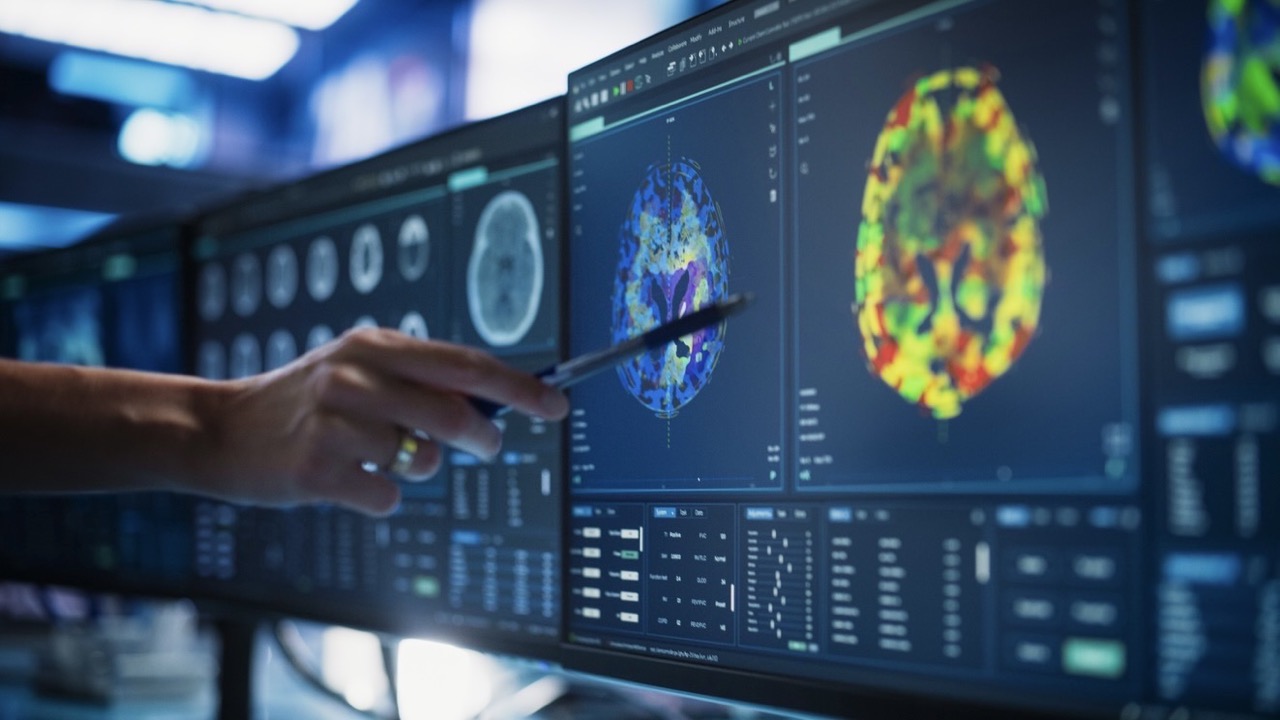
The researchers said AI could also make primary care more attractive by reducing administrative workloads.

Synopsis: A study published in NEJM AI finds that dermatology and orthopaedic surgery are least vulnerable to AI substitution because of hands-on procedures, while pathology and diagnostic radiology face the greatest exposure, with 99 percent and 96 percent of services potentially substitutable by software-based AI.
Artificial intelligence (AI) may be able to interpret medical images, analyse tissue samples and assist with diagnoses, but its ability to replace doctors varies considerably across medical specialities. A new study has found that dermatology and orthopaedic surgery are among the least vulnerable to direct AI substitution because much of their work involves physical procedures, while pathology and diagnostic radiology face the greatest exposure.
Researchers analysed nearly US$45 billion in Medicare Part B payments made in 2023 to 589,648 physicians across 56 medical specialities in the United States. They classified medical services according to whether they required physical interaction between a doctor and a patient, examining how much of each speciality’s work could potentially be performed by software-based AI.
The findings, published in an NEJM AI Perspective, suggest that the physical nature of medical work places an important limit on AI’s ability to replace physicians.
“AI can already interpret medical images, draft diagnostic assessments, and converse with patients fluently — feats that have fuelled predictions that AI will replace physicians. But so far AI cannot lay hands on a patient: It cannot examine, biopsy, or operate,” the researchers wrote.
Among the 15 highest-volume specialities analysed, dermatology had the largest share of payments associated with physical services, at 68 percent. Orthopaedic surgery followed at 53 percent, while ophthalmology recorded 45 percent. Only 7 percent of dermatology services and 10 percent of orthopaedic surgery services fell into the category of non-physical work potentially substitutable by AI.
Also Read: Diabetes is a lifelong condition. Can Indian families afford a lifetime of treatment?
In dermatology, procedures such as biopsies, excisions and cryotherapy require direct physical intervention, even though AI systems may increasingly assist with identifying skin conditions and analysing images.
The researchers pointed out that AI could automate diagnostic reasoning in dermatology, with image classifiers already recognising skin cancer at specialist level. However, they noted that diagnosis accounts for only a small proportion of the speciality’s revenue, while hands-on procedures make up a much larger share.
At the other end of the spectrum, pathology and diagnostic radiology were among the most exposed specialities. The researchers estimated that 99 percent of pathology services and 96 percent of diagnostic radiology services could potentially be substituted by software-based AI.
Both specialities rely heavily on interpreting medical information rather than performing physical procedures. Pathologists examine tissue samples and slides to identify diseases, while radiologists interpret X-rays, CT scans, MRI scans and other medical images.
The researchers said that “outright replacement of physicians by AI is plausible mainly in radiology and pathology because almost all of their work is done by interpretation and not by touch”.
Radiation oncology also had a relatively high share of potentially substitutable services, at 62 percent, followed by cardiology at 39 percent and interventional cardiology at 32 percent.
However, the researchers cautioned that the figures should not be interpreted as evidence that AI will necessarily replace doctors. The analysis classified services based on their potential exposure to software substitution, not whether existing AI systems can independently perform those tasks or whether physicians will lose their jobs.
The study also examined evaluation and management (E&M) services, which include patient consultations, clinical assessments, taking medical histories and managing treatment. These were analysed separately because they combine physical and cognitive work.
E&M services accounted for 55 percent of all Medicare Part B payments in the study. Among family physicians and internal medicine specialists, they accounted for 87 percent and 90 percent of payments, respectively.
The researchers said the impact of AI on these specialities remains uncertain. Although AI could automate documentation, summarise patient histories and manage routine follow-ups, consultations often involve complex decisions, multiple interacting conditions and physical examinations.
“The fields most accessible as career paths and most needed to relieve primary care shortages thus face the greatest uncertainty, because AI could impact their work as either a substitute or a complement — an outcome shaped as much by how AI is designed, deployed, and reimbursed as by the technology itself,” said Maria Polyakova, an associate professor of health policy at Stanford University and the study’s senior author.
The researchers said AI could also make primary care more attractive by reducing administrative workloads, improving physician productivity and helping doctors manage larger patient populations. However, if AI replaces tasks currently performed by physicians and reimbursement no longer flows to individual providers, it could affect their incomes and influence the speciality choices of medical graduates.
The study also found that specialities with a greater proportion of hands-on procedures generally required longer postgraduate clinical training, suggesting that the physical nature of work and training duration are associated with greater protection from software-based substitution.
The researchers cautioned that these physical barriers may not remain permanent. “Physical limits to AI implementation are not permanent: Robotic and hardware-integrated systems may, over time, weaken the barrier in procedural fields, and AI may end up augmenting rather than replacing physicians in every speciality,” they wrote.
However, they added that hardware technology advances more slowly than software, meaning differences in AI exposure across specialities are likely to persist for at least several years.
The study has limitations. It relies on US Medicare billing data and may not fully capture the physical components of office-based consultations because physical examinations are bundled into E&M payments. It also reflects existing medical practices and cannot predict how healthcare delivery will change.
The researchers argued that policymakers, medical educators and healthcare institutions should account for differences in AI exposure when planning medical training, workforce requirements and residency positions, particularly in primary care specialities already facing physician shortages.
(Edited by Dese Gowda)



