

Published Aug 13, 2026 | 3:28 PM ⚊ Updated Aug 13, 2026 | 3:28 PM

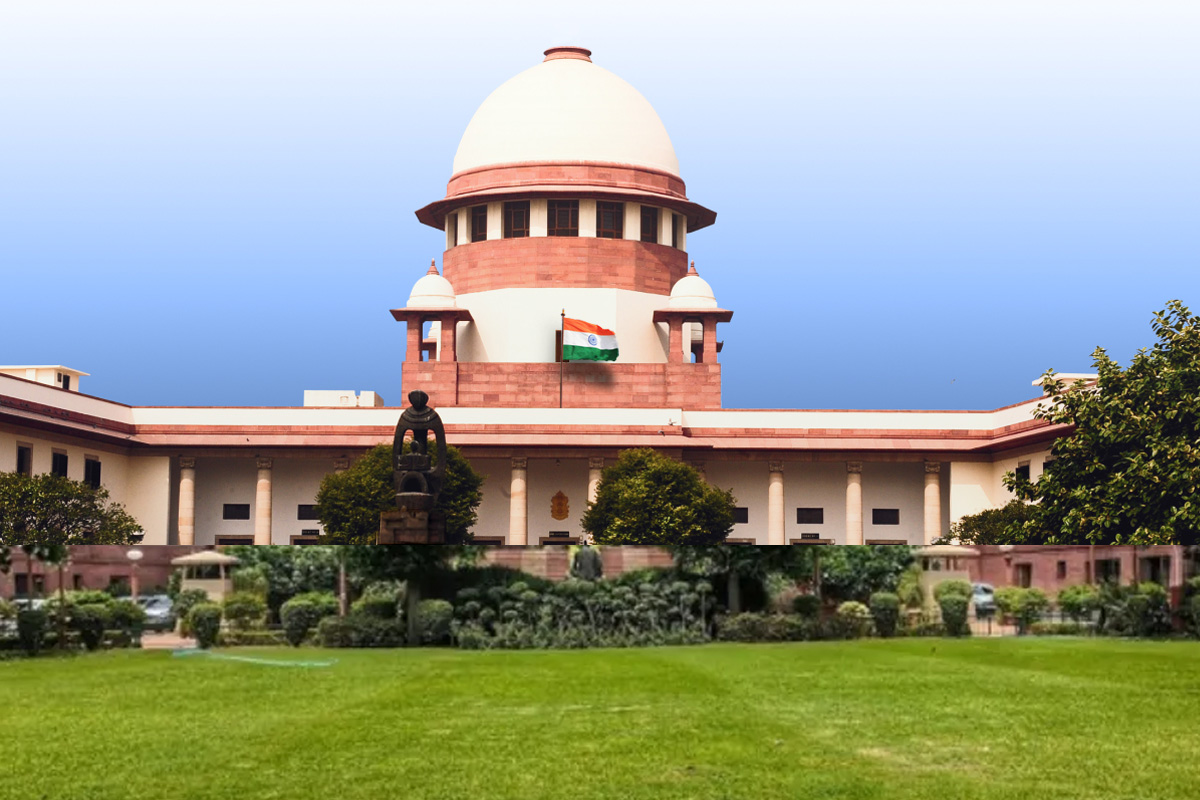
The Bench directed that Metro and rail facilities should function normally unless restrictions were required.

Synopsis: “We do not approve the stance of the Union when it says that it’s not possible to match the international standards, more particularly developed countries,” the court said. “Should India remain as an undeveloped country? That’s the question we are putting forward for the Union to consider.”
The Supreme Court on Thursday, 13 August, came down strongly on the Food Safety and Standards Authority of India (FSSAI) and the Union government over their reluctance to introduce front-of-pack warning labels on packaged food products containing high levels of sugar, salt and saturated fat.
A Bench of Justices JB Pardiwala and K Vinod Chandran questioned why the Union was not acting on the court’s earlier suggestion, stressing that the issue concerned the health of citizens, particularly children.
“Will you do it on your own or should we pass an order?” the Bench asked Additional Solicitor General Brijender Chahar, who was appearing for the Union.
When Chahar sought to explain the government’s position, the court said, “You have to do what the court asks you to do. Understood? If you can’t do it, we will pass the order.”
The Bench also expressed concern about the influence of food manufacturers on regulatory decisions.
“There is immense pressure at the end, of all these corporate houses on you. And you are succumbing to that pressure,” the court said. “We are doing this in public interest. Keep it in mind. We are not doing it for ourselves.”
The court was hearing a matter in which it had earlier asked FSSAI to consider introducing front-of-pack warning labels for packaged foods high in sugar, salt and saturated fat.
Also Read: What is ICMR-NIN’s ‘dual-axis’ food classification, and what could it mean for India’s food labels?
Chahar told the Bench that applying such warning labels based on international standards could result in several traditional Indian foods carrying a red warning symbol.
“The difficulty is each of our traditional foods will have the red symbol on it,” he said, citing namkeen and other foods. He argued that the permissible limit for fat under the proposed approach could mean that even eggs would attract a warning label.
“Even two eggs have 11 grams of fat,” Chahar submitted, arguing that standards developed for countries where diets are traditionally lower in sugar and fat may not be directly applicable to India.
The Bench, however, questioned the argument.
“Why? You don’t want people of this country to remain healthy? More particularly growing children?” the court asked.
The court said consumers already know that food contains sugar, fat and carbohydrates, but clear warnings would improve public awareness and allow people to make informed choices.
“Manufacturers may not like this because it may affect their business,” the Bench observed. “Even after these warnings, it’s the discretion of the person who purchases it. He may still purchase it or he may not purchase.”
The court also questioned why FSSAI was reluctant to introduce such warnings when the objective was to inform consumers.
Chahar subsequently argued that traditional foods contribute significantly to the MSME sector, saying that around one-third of MSME revenue comes from traditional foods.
Senior Advocate Maninder Singh, appearing for a manufacturer, also sought to make submissions. The Bench, however, sharply reminded him that the matter was ultimately about public health.
“You have no say in this, Mr Singh. You are a manufacturer,” the court said. “There’s something to do with the health of citizens. Why are you so desperate? We know the seriousness of the issue.”
Senior Advocate Devadutt Kamat sought to make submissions on the categorisation of food products, pointing out that products with very different nutritional profiles could end up receiving similar classifications.
“A salted cashew and chips, both will be branded under the same…” Kamat began.
The court interrupted, asking him to consider the affordability and consumption patterns of different foods.
“In this country, how many people can afford dry fruits? And how many children buy Kurkure? That makes all the difference,” the Bench said.
The court clarified that it was not targeting any particular food product.
“We are not against any particular product. We only want the person purchasing it to know what he is consuming,” the Bench said.
Kamat said nutritional content should also be displayed and that he would submit suggestions on the categorisation and labelling framework.
Also Read: India’s anti-junk food push rests on one missing piece: A legal definition of HFSS foods
In its order, the Bench referred to its earlier order of February 10, 2026, and said the petitioner had drawn its attention to the minutes of an FSSAI meeting held on March 7.
The court recorded that the Additional Solicitor General had submitted that it was not possible to adopt the suggestion made by the court because of difficulties in matching international packaging standards.
The Bench rejected that position.
“We do not approve the stance of the Union when it says that it’s not possible to match the international standards, more particularly developed countries,” the court said. “Should India remain as an undeveloped country? That’s the question we are putting forward for the Union to consider.”
The court said the Union should demonstrate that India was concerned about the health of its citizens, particularly children.
“The world should know that India is concerned about the health of its citizens and more particularly children,” the Bench said.
The court granted the Union two weeks to place its final decision on record.
It made clear that if the government does not act on its own, the court may issue further directions.
“We have made ourselves abundantly clear today in the course of hearing that we are concerned with the health of the citizens of this country. More particularly growing children,” the Bench said.
“We still impress upon the Union to seriously consider our suggestions and take an appropriate decision at the earliest. If the Union does it on its own, well and good, otherwise we will proceed to pass further directions.”
The Bench ended with a strong warning to the Union.
“This is your last chance. Next time we will dictate the judgement,” the court said.
(Edited by Sumavarsha, with inputs from Sumit Jha)



