

Published Aug 29, 2026 | 7:00 AM ⚊ Updated Aug 29, 2026 | 7:00 AM

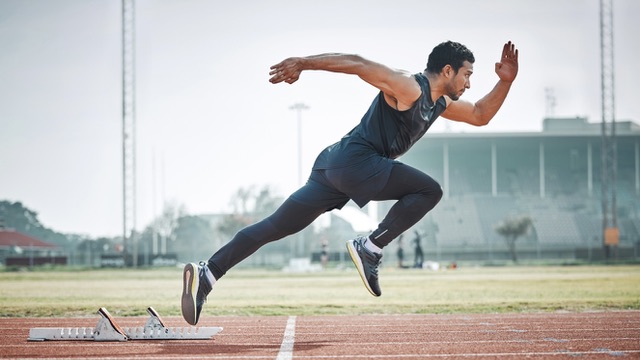
South Asian populations can differ from Western populations in lean mass, bone density and adiposity even when BMI is similar.

Synopsis: A new ICMR-NIN study challenges the assumption that Western athletic profiles apply equally to Indians. Studying 80 men, researchers found distinct differences between Indian endurance and strength athletes in body composition, metabolism, diet, bone health and gut bacteria, while noting that Indian athletes had lower lean mass and bone indices than Western cohorts.
For decades, much of the science of elite athletic performance has been built on data from Western populations. But Indian athletes may not fit those physiological profiles neatly.
A new study by researchers at the ICMR-National Institute of Nutrition (ICMR-NIN), Hyderabad, offers a detailed look at how elite Indian endurance and strength athletes differ in body composition, metabolism, diet and gut bacteria.
Published in Frontiers in Nutrition on 13 July, the study examined 80 healthy men aged 18 to 35 years. The group included 27 endurance athletes, 29 strength athletes and 24 sedentary controls. The athletes had at least five years of structured, sport-specific training: trained at least eight hours a week and competed at the state or national level.
“South Asian populations, particularly Indians, have lower lean body mass, reduced bone mineral density, and greater adiposity than Western cohorts at comparable BMI,” said the authors. “Consequently, insights derived from Western athlete cohorts may not be directly transferable to Indian athletes.”
Sports science does not rely on a single universal measure of an “ideal” athlete. Parameters such as body composition, lean mass, fat mass, bone mineral density and resting metabolic rate are assessed using reference data developed from particular populations and sporting disciplines. Much of the published evidence on elite athletes, however, comes from Western and other non-Indian cohorts, raising questions about how directly those values apply to Indian athletes.
The issue is particularly relevant because body composition varies across populations. The ICMR-NIN researchers note that South Asian populations tend to have lower lean body mass and bone mineral density, and greater adiposity than Western populations at comparable BMI.
More importantly, the Indian athletes in the study had lower absolute lean mass and bone indices than values commonly reported in non-Indian elite athletic cohorts, even as they showed clear differences associated with their respective training disciplines.
Also Read: Do menu labels make diners choose fewer calories? ICMR trial in Chennai says yes, by 12%
The differences between endurance and strength athletes were evident in their body composition.
Strength athletes had significantly greater body weight, lean body mass, fat-free mass and skeletal muscle mass than endurance athletes and sedentary controls. They also recorded the highest overall bone mineral density.
Endurance athletes, meanwhile, had the lowest body-fat percentage of the three groups. Their average body-fat percentage was 19.7 percent, compared with 21.32 percent among strength athletes and 24.28 percent among sedentary controls.
Strength athletes had an average lean body mass of 56.8 kg, compared with 48.17 kg among endurance athletes and 46.46 kg among controls.
“The sport-specific differences observed in our cohort largely mirror established trends in endurance and strength athletes. Endurance athletes had lower adiposity, while strength athletes had greater lean mass, appendicular skeletal muscle mass and bone density,” said the authors.
The distinction was not simply between athletes and non-athletes. It also showed how the demands of endurance and strength sports produced different physical adaptations within the Indian athletic cohort.
The researchers measured resting metabolic rate using indirect calorimetry. Strength athletes recorded the highest absolute resting metabolic rate at 2,215 kcal a day, followed by endurance athletes at 1,987 kcal and sedentary controls at 1,624 kcal.
But the higher number among strength athletes did not necessarily mean that they had a fundamentally faster metabolism. Once resting metabolic rate was adjusted for lean body mass, the difference between the groups was no longer statistically significant.
“The higher absolute resting metabolic rate observed in strength athletes closely paralleled differences in fat-free mass. RMR normalized to lean body mass did not differ significantly between groups,” said the authors.
The researchers found another metabolic difference when participants were fasting. Endurance athletes had the lowest respiratory quotient, followed by strength athletes, while sedentary controls had the highest. A lower respiratory quotient indicates greater use of fat as an energy source.
The findings therefore suggest that both groups of athletes relied more heavily on fat oxidation during fasting than sedentary participants, with endurance athletes showing the strongest difference.
Also Read: Sunflower oil costs 63% to 74% more than it did in 2024; Price of rice, milk, sugar hits new highs
The athletes’ diets were as different as their bodies.
Endurance athletes reported the highest average daily energy intake at 4,074 kcal, followed by strength athletes at 3,406 kcal and sedentary controls at 2,035 kcal.
Endurance athletes also consumed the most carbohydrates, at an average of 576 grams a day. Strength athletes consumed 449 grams. Protein intake was 150 grams among endurance athletes and 146 grams among strength athletes, compared with 67 grams among controls.
Dietary fibre showed a similar pattern. Endurance athletes consumed about 79 grams a day, strength athletes 65 grams and sedentary controls 36 grams. Strength athletes, however, obtained a greater proportion of their total energy from protein than the other two groups.
“The dietary intake patterns differed substantially between athletes and sedentary controls and were generally consistent with the metabolic demands of their respective training regimens. Dietary quality also differed between groups, highlighting the importance of looking beyond total energy and macronutrient intake,” said the authors.
Strength athletes stood apart in one particular respect: a larger share of their total energy came from protein than either of the other two groups, in keeping with the muscle-building demands of their sport.
The study also looked beyond muscle, bone and metabolism to the bacteria living in the athletes’ guts.
Both endurance and strength athletes had higher relative abundances of Bacteroides, Prevotella copri, Desulphovibrio and Streptococcus compared with sedentary controls. Endurance athletes had higher levels of Methanobrevibacter smithii, while Desulphovibrio was particularly elevated among strength athletes.
Lactobacillus, commonly associated with gut health, was most abundant among sedentary controls. There were no significant differences between the groups in Bifidobacterium, Akkermansia muciniphila or Enterobacteriaceae.
“Elite Indian endurance and strength athletes present distinctive, sport-specific physiological and gut microbial signatures. This integrative approach uncovers novel associations and underscores the complex interplay between training modality, nutrition, and the host–microbiome axis,” said the authors.
But the researchers were careful about what the bacterial findings can and cannot tell us. The study used targeted quantitative PCR to measure selected bacterial groups rather than comprehensive microbiome sequencing.
That means the study can identify differences in the abundance of particular bacteria, but cannot establish what those bacteria were functionally doing or whether they directly affected athletic performance.
Also Read: South India has no single dengue season, it differs across states
There is an important complication in interpreting the microbiome results: the athletes were eating very differently from the sedentary controls.
The researchers found associations between dietary fibre intake and some bacterial populations. Higher fibre intake was associated with greater relative abundance of Prevotella copri and Methanobrevibacter smithii, while fibre was negatively associated with Lactobacillus and Enterobacteriaceae.
“The pronounced differences in dietary intake between groups, particularly in total energy, protein, fiber, and fatty acids, likely may have contributed to the observed microbial differences. Consequently, the independent effects of training modality and dietary intake cannot be disentangled within the confines of this cross-sectional design,” said the authors.
This is important because it means the study cannot conclude that training alone produced the differences in gut bacteria. The athletes’ diets may have played a substantial role.
The differences extended to the skeleton.
Strength athletes had the highest total bone mineral density, followed by endurance athletes and sedentary controls. Total bone mineral density was 1.25 g/cm² among strength athletes, 1.21 g/cm² among endurance athletes and 1.12 g/cm² among controls.
Strength athletes also showed higher bone mineral density and bone mineral content than both endurance athletes and controls across most skeletal sites, including the lumbar spine, ribs and pelvis. Endurance athletes had significantly greater leg bone mineral density than sedentary controls.
“Strength athletes consistently showed higher BMD and BMC than both endurance athletes and controls across most skeletal sites. Endurance athletes had significantly greater leg BMD than controls,” said the study.
Also Read: Patients are bringing AI diagnoses to fertility clinics. Doctors say AI can explain, but not decide
South Asian populations can differ from Western populations in lean mass, bone density and adiposity even when BMI is similar. The researchers argue that these population-specific characteristics can influence physiological adaptation and athletic performance.
The study found that the Indian athletes’ absolute lean mass and bone indices were generally lower than those reported in Western athletic cohorts, even though the expected differences between endurance and strength athletes were present within the Indian group.
“Ethnic variability in adiposity, lean mass, and skeletal characteristics poses significant challenges for direct comparisons across athletic populations. These findings underscore the influence of population-specific factors on body composition,” said the authors.
That does not mean Western athletic research is irrelevant to Indian athletes. Rather, the findings suggest that numbers developed from one population should not automatically be treated as universal physiological benchmarks.
“The findings enhance our understanding of sport modality-specific physiological and microbial adaptations in elite Indian athletes and provide a foundation for future research and the development of tailored nutrition and training strategies. Expanding future studies to include athletes from additional categories will further elucidate the spectrum of gut microbial and physiological diversity across athletic populations,” said the authors.
The researchers stop short of claiming that training caused all the differences observed.
The study was cross-sectional, meaning participants were assessed during a particular period rather than followed over time. It therefore cannot establish whether training, diet or another factor caused the differences in body composition, metabolism or gut bacteria.
The study also involved only male athletes. Some measurements had smaller samples, particularly DEXA assessments among strength athletes. Dietary intake was partly based on self-reported recalls, while the gut analysis examined selected bacterial groups rather than the entire microbiome.
“The cross-sectional design of this study precludes definitive conclusions regarding temporal relationships or causality among training modality, dietary intake, physiological characteristics, and gut microbial composition. Finally, as the cohort consisted solely of male athletes, the generalizability of these findings to female athletic populations is inherently limited,” said the authors.



