


Published Aug 31, 2026 | 1:17 PM ⚊ Updated Aug 31, 2026 | 1:17 PM

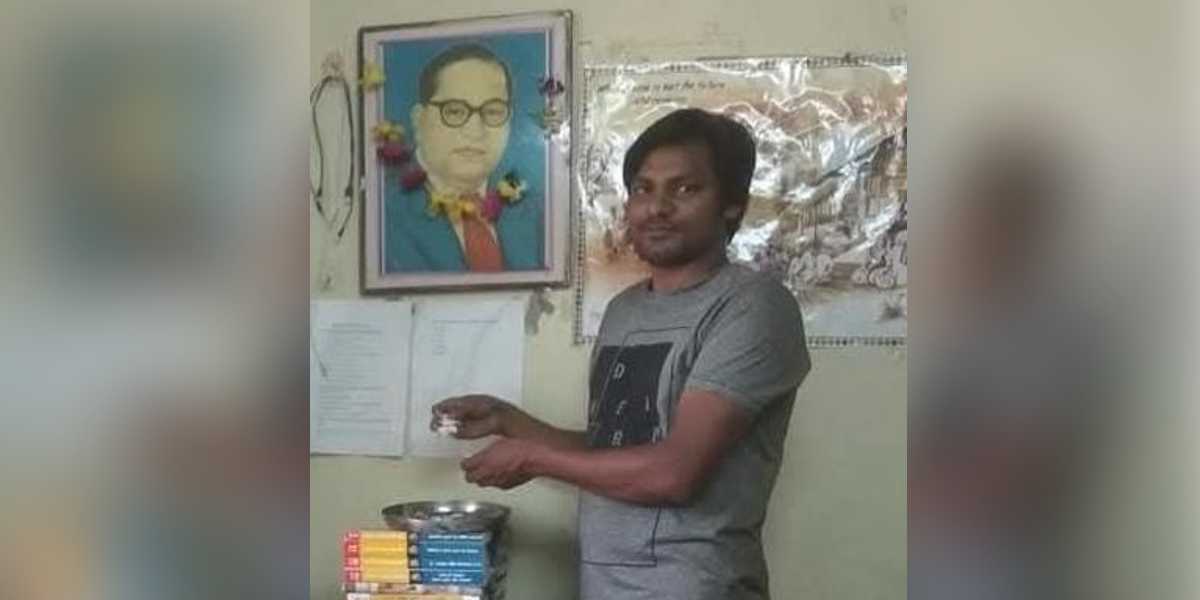
Surya Pratap Bharathi’s parents, Ramavadh and Bindu, are daily-wage labourers from Mau district in Uttar Pradesh.

Synopsis: Six years after University of Hyderabad PhD scholar Surya Pratap Bharathi died following a massive stroke in August 2020, a Hyderabad consumer commission has held Citizens Speciality Hospital and neurologist Dr Aparna Vijay Kumar negligent and ordered them to pay his parents ₹1 crore. The commission found that mechanical thrombectomy, a time-sensitive stroke treatment, was delayed while the hospital sought consent and waited for Surya’s COVID-19 RT-PCR result, despite emergency-care guidelines requiring treatment without waiting for a test.
On the afternoon of 17 August 2020, in the midst of the Covid-19 pandemic, Surya Pratap Bharathi, a 30-year-old PhD scholar at the University of Hyderabad, was found unconscious in the corridors of his hostel. He had suffered a massive stroke.
He was taken to the University Health Centre and, following a referral from there, admitted to Citizens Speciality Hospital at around 4 pm.
An MRI performed the same day showed a “massive hyperacute infarct in the right MCA territory with complete occlusion” of the right middle cerebral artery and its branches.
His friends pleaded with the doctors to begin treatment immediately and told them they would arrange the expenses through his student insurance or crowdfunding.
The hospital, however, delayed treatment according to Surya’s parents, including mechanical thrombectomy, while seeking consent and later while waiting for the RT-PCR result.
Subsequently, the hospital transferred Surya to a COVID-designated hospital after the positive report came back. Four days later, he was dead.
Six years after his death, a consumer commission has held Citizens Speciality Hospital, Nallagandla, and consultant neurologist Dr Aparna Vijay Kumar responsible for failing to provide necessary emergency treatment, directing them to pay ₹1 crore to his parents.
The District Consumer Disputes Redressal Commission, Hyderabad, in its order dated 25 August, held the hospital and Dr Aparna “negligent and deficient in providing necessary treatment” to Surya.
It directed them to jointly and severally pay ₹1 crore towards loss of dependency, income and future prospects, filial consortium and mental agony, besides ₹50,000 towards legal expenses.
Citizens Hospital and Dr Aparna, in their written defence, said Surya had been brought to the hospital after the therapeutic window for thrombolysis had passed.
They stated that “the patient was brought beyond therapeutic window period, making thrombolysis contraindicated” and that mechanical thrombectomy “could not be performed due to lack of timely consent and unclear onset time.”
They also maintained that “all protocols were followed as per standard medical practice.”
The hospital further told the Commission that, after reviewing the MRI, the treating neurophysician and interventional neurologist had suggested mechanical thrombectomy on 17 August itself.
But, according to their defence, “the attendants/friends of the patient wanted to discuss with the patient’s family for the purpose of obtaining consent”.
The hospital said the friends accompanying Surya were not authorised to take the decision and that conservative treatment was provided while the neurological condition was monitored.
The Commission, examining the hospital’s records, noted that the hospital’s discharge summary stated that “the need for mechanical thrombolysis [was] explained to the attendants who were only friends and could not take decision.”
At the same time, the Commission noted that the hospital itself maintained that mechanical thrombectomy could be performed within 6 to 24 hours of the onset of stroke symptoms.
The Commission then asked the central question in the case: “why did the treating doctors of the patient at O.P.No.1{Citizen Hospitals] including O.P.No.2[Dr. Aparna] delay by waiting for consent of the patient’s family who are physically absent and unreachable, especially, when the time-window-dependent intervention (like thrombectomy) are urgent to prevent permanent, severe neurological deficits.”
The Commission said the emergency circumstances were important.
It observed that under the emergency exception doctrine, when a patient is incapacitated, immediate intervention is necessary and the family or authorised surrogate is unavailable, doctors can proceed without waiting for explicit consent.
“Informed consent is an imperative rule,” the Commission said, “it is also true that there are some exceptions to the rule” including emergency situations where a patient is unconscious or incapacitated and immediate intervention is required.
It went further, holding that the doctors “ought to have proceeded with the treatment under implied/presumed emergency consent, to prevent catastrophic neurological impairment and irreversible harm to the patient.”
Surya’s Rapid Antigen Test was negative on 17 August, while his HRCT chest screening was reported as normal. His subsequent RT-PCR test, however, returned positive on 19 August.
According to the hospital’s records, the positive result meant Surya had to be shifted to a COVID-designated hospital.
The hospital defended this decision by citing the COVID protocols that applied at the time. It told the Commission that Citizens was a non-COVID hospital and that government instructions required COVID-positive patients to be referred to designated facilities.
The hospital maintained that it had not simply abandoned treatment. According to its defence, Surya was continuously monitored and treated, and after the RT-PCR report came back positive, arrangements were made to transfer him with medical support.
The Commission, however, found that the COVID protocol could not justify delaying necessary emergency stroke treatment.
It said that official advisories from the Ministry of Health and Family Welfare and ICMR required hospitals to provide emergency care without waiting for a COVID test result.
The Commission held that “O.P.No.1 & 2 delayed the necessary treatment and discharged the patient in a haemodynamically unstable condition on 19/8/2020”.
It also held that Citizens “ought to have conducted Thrombectomy to the patient while awaiting RT-PCR report, to prevent further deterioration and to stabilize the patient before discharging the patient”.
The Commission concluded that the hospital’s argument that the procedure could not be performed because it was not a COVID-designated facility was “not only unjustified but considered as deficiency of service and negligence”.
By the time the transfer was arranged on 19 August, Surya’s condition had deteriorated.
The hospital’s defence states that while discharge formalities were underway, he developed seizures and his Glasgow Coma Scale dropped. The medical team then intubated him and connected him to a mechanical ventilator because of the risk of aspiration and further deterioration.
He was subsequently shifted to Continental Hospital.
Continental’s records, reproduced in the Commission’s order, described a far more severe neurological condition by then. A CT scan showed “a large subacute infarct involving the entire right MCA territory” with significant mass effect, brain herniation and brainstem compression.
Continental Hospital and Dr Kailas Mirche, who treated Surya there, denied negligence.
Their defence stated that Surya arrived at the hospital on 19 August between 7 pm and 8 pm “in a highly critical condition with dilated non-reactive pupils” and was immediately shifted to the ICU after consultation with a neurosurgeon.
According to Continental’s records, Surya developed cardiac arrest during the late afternoon of 21 August. CPR was initiated, spontaneous circulation returned, and he was supported with inotropes and vasopressors.
But at around 4 pm, both pupils were dilated and fixed, with no response to stimuli. Despite the treatment, he died at approximately 4.11 pm on 21 August 2020.
Also Read: How India’s changing climate may push your body towards diabetes through metabolic disruption
The case initially named five opposite parties: Citizens Speciality Hospital, Dr Aparna Vijay Kumar, Medcis Pathlabs India Pvt Ltd, Continental Hospital and Dr Kailas Mirche.
The parents alleged that Medcis had issued a false RT-PCR report because subsequent testing at Continental was negative. Medcis denied the allegation.
The laboratory said it was a NABL-accredited facility and had complied with COVID-19 testing standards. It argued that its role was limited to processing samples collected and sent by the hospital.
It also disputed the reliability of the subsequent negative test relied upon by the complainants, arguing that one of the records showed an implausibly short six-minute interval between sample collection and reporting.
The Commission did not accept the allegation against the laboratory.
It held that “except the bald allegation that the RT-PCR Report dt.19/8/2020 given by O.P.No.3 is a false report, there is no cogent evidence substantiating the same.”
It also noted that Medcis had produced its quality-control report and documentation concerning concordance in the WHO external quality assessment programme, which remained “unchallenged and unrebutted by the complainant.”
The complaint was therefore dismissed against Medcis Pathlabs, Continental Hospital and Dr Kailas Mirche.
Surya’s parents, Ramavadh and Bindu, are daily-wage labourers from Mau district in Uttar Pradesh.
The Commission noted that their son was pursuing a PhD in English and described him as “a young, promising student” with potential employment opportunities that could have supported his family.
The parents sought more than ₹5.6 crore in the original consumer complaint, including compensation for loss of dependency, future income, filial consortium, mental agony and litigation costs.
The case was pursued through Surya’s university friends under a General Power of Attorney. The Commission recorded that his parents lived in interior rural areas of Uttar Pradesh, spoke primarily Bhojpuri and could hardly understand Hindi.
The proceedings stretched across six years and involved multiple applications, medical records, hospital case sheets, affidavits and expert evidence.
The complainants attempted to introduce an expert opinion from Dr Snigdha Komakula of AIIMS, New Delhi. But after the hospital and Dr Aparna sought her cross-examination, the complainants eventually chose not to press the evidence affidavit because they could not obtain her contact details. The Commission therefore did not consider that expert opinion.
The hospital and Dr Aparna, meanwhile, introduced an expert opinion from Dr Subash Kaul in support of their defence.
Also Read: ₹2.5 lakh to ₹8,800: The Kurien order that made patent history
After examining the medical records and arguments from both sides, the Commission returned to the central issue: whether the delay in mechanical thrombectomy contributed to the deterioration.
The Commission noted that the hospital’s own records repeatedly referred to mechanical thrombectomy as a treatment option.
It observed that the hospital’s later contention that Surya was not clinically suitable for mechanical thrombectomy was not reflected in the doctors’ notes or case sheets.
“The statement that the patient’s condition was not clinically suitable for Mechanical Thrombectomy,” the Commission said, “is neither mentioned in the Doctors notes/Case sheets… nor in the written version.”
The Commission said the hospital had itself acknowledged that thrombectomy could be performed within 6 to 24 hours.
“Even assuming for a minute that the attendants/friends of the patient could not tell the exact time of onset of symptoms,” it held, “the 6-24 hours window was available for Thrombectomy.”
It concluded that the medical team had “failed to conduct Thrombectomy within 24 hours of the admission of the patient.”
The Commission ultimately held that Citizens Hospital and Dr Aparna “are found negligent and deficient in providing necessary treatment to the patient/son of the complainants”.
It said the doctors had a “professional obligation to render immediate emergency care without letting procedural, administrative, or consent-related hurdles delay life-saving treatment.”
In deciding the compensation, the Commission placed considerable emphasis on Surya’s age, education and his family’s circumstances.
It held that his death had deprived his parents of “their primary source of future financial dependency, security, and care in the evening of their lives.”
It also recognised the emotional loss, saying that “the catastrophic loss of a young child due negligence and deficiency of service… has inflicted profound emotional trauma, grief, and severe mental agony upon the parents.”
The Commission therefore awarded ₹1 crore towards loss of dependency, future prospects, filial consortium and mental agony.
It additionally ordered Citizens Speciality Hospital and Dr Aparna to pay ₹50,000 towards legal expenses.
The amount has to be paid within 45 days of receipt of the order. If they fail to comply, the ₹1 crore compensation will carry interest at 9 percent per annum from the date of receipt of the order until payment.
Advocate Rajasri Manche, founder of RJM Law Office, took up the case pro bono after Surya’s university friends approached her.
“Surya was not just a promising young scholar; he was the sole beacon of hope for a family that spent their lives in daily-wage labour to build his future,” Manche said.
“Taking up this case pro bono was vital because justice shouldn’t be a privilege reserved for those who can afford it. This verdict reinforces patient safety, accountability, and the non-negotiable duty of care owed by healthcare institutions.”
Surya’s university friends said the legal battle was fought “purely on our individual capacity without the official involvement or backing of any political organization.”



