

Published Sep 05, 2026 | 9:15 AM ⚊ Updated Sep 05, 2026 | 6:01 PM

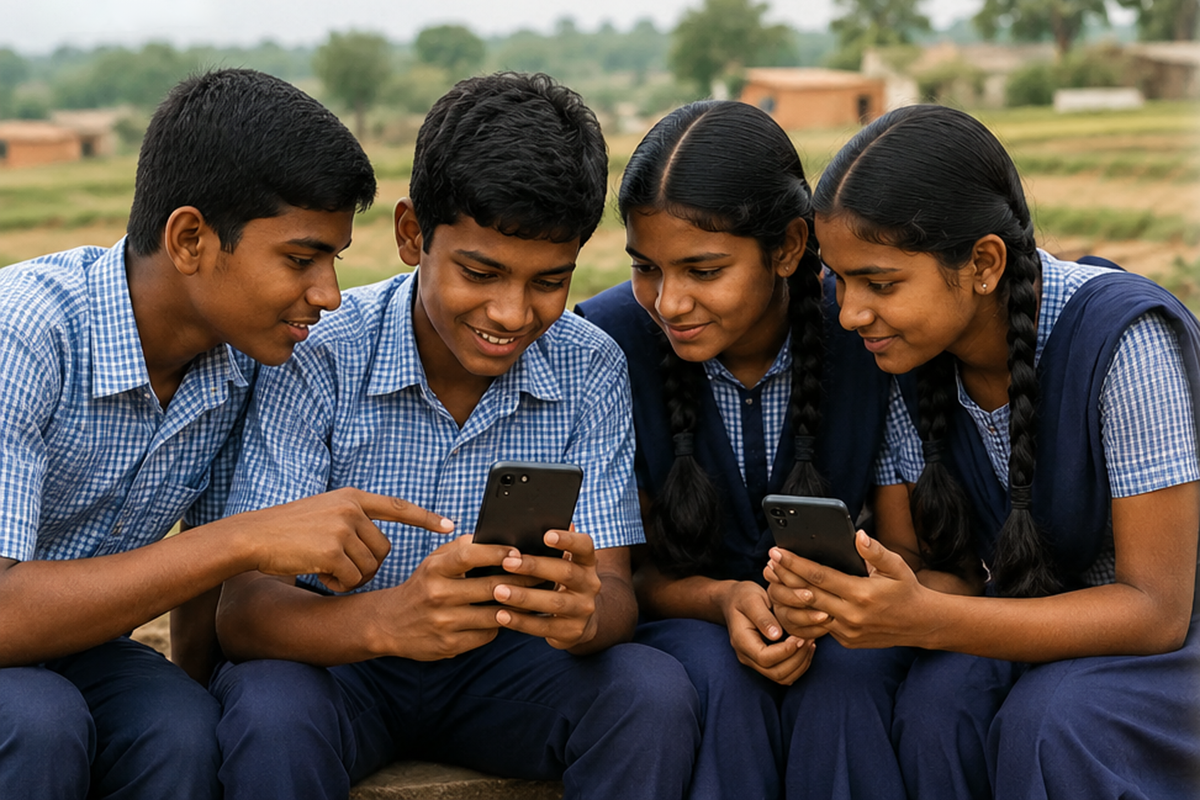
Image used for representational purpose. (AI generated)

Synopsis: An AIIMS Bibinagar study found that nearly one in three rural Telangana students using smartphones met criteria for smartphone addiction. While addiction was not linked to poorer academic performance, it was strongly associated with poor sleep. Boys, personal smartphone owners and those who started using phones before COVID-19 faced higher odds.
Smartphones have become an integral part of daily life for adolescents in rural Telangana, but a new study suggests that while excessive phone use is common, its biggest concern may not be declining academic performance.
Researchers from the All India Institute of Medical Sciences (AIIMS), Bibinagar, found that nearly one in three rural school students who use smartphones met the criteria for smartphone addiction.
However, the study found no significant association between smartphone addiction and students’ academic performance. Instead, smartphone addiction was strongly associated with poor sleep quality, being male, owning a personal smartphone, and beginning smartphone use before the COVID-19 pandemic.
The findings, published in the journal Cureus, are based on a survey of 423 students aged 10 to 19 years studying in three government schools in Bommalaramaram mandal, the rural field practice area of AIIMS Bibinagar. Researchers collected information on smartphone use, sleep quality and sociodemographic factors, while academic performance was assessed using school records from the previous three semester examinations.
Of the 423 students surveyed, 363 (85.8 percent) reported using smartphones. Among these users, 117 students (32.2 percent) were classified as having smartphone addiction using the Smartphone Addiction Scale-Short Version (SAS-SV), a validated screening tool.
Also Read: Iconic Hyderabad eatery Shadab Hotel’s FSSAI licence suspended over food safety violations
The analysis showed no significant correlation between smartphone addiction scores and students’ academic performance. Even after adjusting for demographic and behavioural factors, academic performance did not emerge as an independent predictor of smartphone addiction.
Explaining the finding, the researchers noted that academic performance depends on far more than screen time.
“Academic achievement is a multifactorial outcome influenced by factors such as individual learning ability, school attendance, quality of teaching, parental support, socioeconomic circumstances, and study habits, which may have a greater influence on academic performance than smartphone use alone.”
They also acknowledged that their findings differ from several earlier studies.
“However, other studies have shown that smartphone use negatively impacts academic outcomes.”
The authors suggest that differences between rural and urban settings, including patterns of smartphone ownership, educational resources and parental supervision, may partly explain why their findings differ from previous research.
Also Read: Keralam drops ‘Mental Health’ tag, renames centres ‘Happiness and Wellness Centres’ to shed stigma
The study offers a snapshot of how rural adolescents are using smartphones.
Among smartphone users, 66.4 percent used their phones for social media, making it the most common activity. This was followed by entertainment (59.5 percent), educational purposes (47.1 percent), gaming (46 percent), and calling or chatting (42.7 percent).
Most students reported spending one to two hours on smartphones each day, while 20.7 percent used them for more than two hours daily. Only 2.5 percent reported using smartphones for more than six hours a day.
According to the researchers, this reflects how quickly smartphones have become embedded in rural communities.
“This high prevalence reflects the rapid digital penetration even in rural settings.”
They added that the widespread adoption of smartphones after the COVID-19 pandemic is consistent with previous studies showing increased digital use following the shift to online learning.
Also Read: In Tamil Nadu’s Kothagiri Hills tea estates, gum disease is widespread – toothbrush a rarity
Although academic performance was unaffected, the study found a strong relationship between smartphone addiction and sleep quality.
Among students identified with smartphone addiction, 74.1 percent had poor sleep quality, compared with 29.2 percent among those who were not classified as addicted. Students with good sleep quality had significantly lower odds of smartphone addiction in the adjusted analysis.
Discussing this finding, the researchers wrote: “Good sleep quality was strongly associated with reduced odds of smartphone addiction, suggesting a protective effect.”
They further noted that similar associations have been reported in earlier Indian studies, where adolescents with problematic smartphone use were significantly more likely to experience poor sleep quality and sleep disturbances.
However, the researchers cautioned that because the study was cross-sectional, it cannot establish whether smartphone addiction leads to poor sleep or whether poor sleep contributes to problematic smartphone use.
Also Read: Telangana: 50 fertility centres found violating norms, registrations of 2 cancelled
After accounting for multiple variables, the researchers identified four factors independently associated with smartphone addiction.
Male students had nearly twice the odds of smartphone addiction compared with girls. Students who owned a personal smartphone were also significantly more likely to meet the criteria for addiction than those who did not own a personal device. Beginning smartphone use before the COVID-19 pandemic was another independent predictor, while good sleep quality was associated with substantially lower odds of addiction.
Summarising these findings, the authors wrote: “…personal smartphone ownership, initiation of smartphone use before the COVID-19 pandemic, and poor sleep quality emerged as independent predictors of smartphone addiction.”
They suggested that students who had already begun using smartphones before the pandemic may have further increased their use during the shift to online education, contributing to higher addiction scores.
The researchers say the study adds important evidence from rural India, a population that remains underrepresented in research on smartphone addiction.
“The findings demonstrate that smartphone use is highly prevalent among adolescents, with a considerable proportion having smartphone addiction.”
While the study did not find an association between smartphone addiction and academic performance, the authors recommend school-based awareness programmes involving teachers, parents and school health teams to encourage healthier digital habits and better sleep hygiene among adolescents.
They also call for longitudinal studies to better understand the long-term relationship between smartphone use, sleep and adolescent health.



