

Published Aug 13, 2026 | 7:00 AM ⚊ Updated Aug 13, 2026 | 7:00 AM

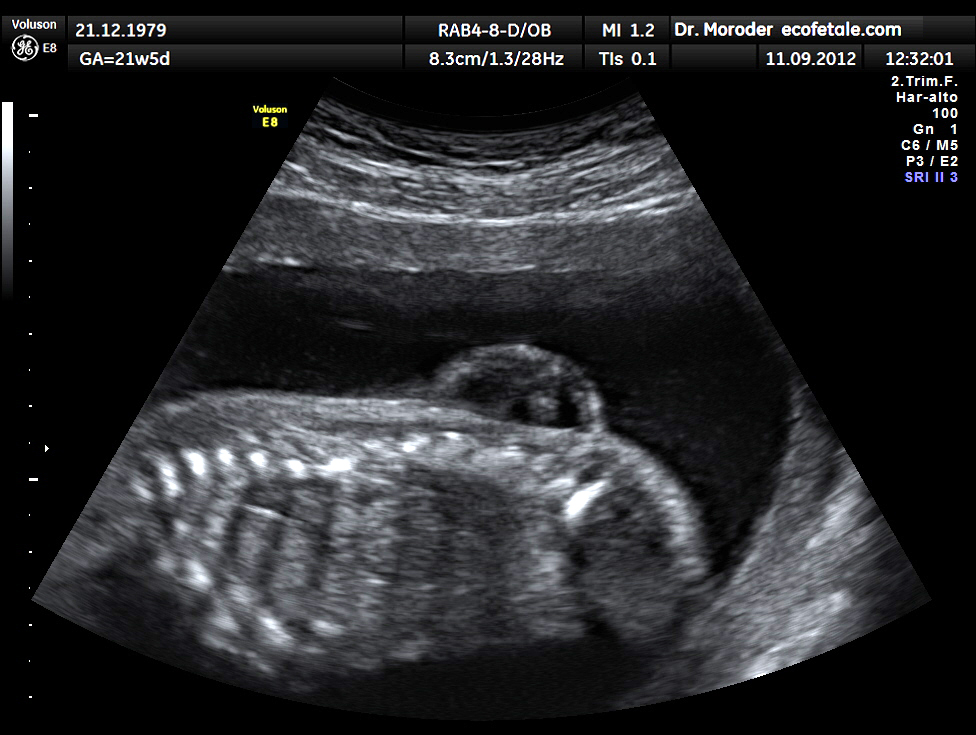
The proposal, however, runs into a decades-old safeguard designed to prevent female foeticide.

Synopsis: India’s growing fatty liver burden has made the Parliamentary Standing Committee on Health push to expand access to ultrasound, including six-month-trained MBBS doctors and FibroScan machines at community health centres. But the proposal clashes with PCPNDT safeguards against foetal sex determination. Radiologists say the panel’s proposed dual-firmware solution is technically impossible.
To address India’s growing burden of fatty liver disease and other conditions requiring ultrasound, the Parliamentary Standing Committee on Health and Family Welfare has recommended installing FibroScan machines at community health centres and allowing MBBS doctors with six months of structured training to perform and interpret general ultrasound scans.
The proposal, however, runs into a decades-old safeguard designed to prevent female foeticide.
While the panel wants wider access to ultrasound, it has also proposed a technological mechanism to prevent the machines from being used for illegal foetal sex determination. Radiologists say the proposed mechanism is not technically feasible, while the legal status of the six-month training route remains contested.
Also Read: Three-star cap on room rent: Parliament panel moots private healthcare price controls
The panel, in its 176th Report, describes point-of-care ultrasound, or POCUS, as “the modern stethoscope”, saying it has become important for triaging trauma, cardiac events and acute abdominal crises.
The committee says India has fewer than 12,000 registered radiologists and notes that a significant number focus on teleradiology, reporting CT and MRI scans remotely. It says a standard ultrasound requires around 20 minutes of direct physical engagement, limiting the number of scans that can be performed.
The panel links the shortage of local diagnostic access to India’s wider surgical gap. It cites around 25 million surgeries being performed annually against an estimated demand of 70 million.
The committee therefore recommends that the government “operationalize the Supreme Court direction given from 14 years ago, which permitted MBBS doctors with a six-month structured training certification to perform and interpret general ultrasound scans.” It also recommends “introduction of a six month course for MBBS doctors in radiology so that they can interpret scans at the CHC level.”
Separately, the committee recommends that “Fibroscan machines can be installed at CHC level wherein the medical professional can be trained to interpret the findings.” It says screening should be taken up “on a mission mode to diagnose early liver diseases”, citing what it describes as an “epidemic of fatty liver disease.”
The clinical case for expanding access to liver imaging is significant because fatty liver can exist even when routine liver-function tests are normal. Apollo Hospitals’ Health of the Nation Report 2026 found that among 49,032 people with ultrasound-confirmed fatty liver in its 2025 ProHealth cohort, 74 percent had normal liver enzymes, while nearly six in 10 people with advanced fatty liver also had normal enzyme levels.
The same cohort recorded obesity in 87 percent of cases, abnormal cholesterol in 66 percent and diabetes in 27 percent. Apollo’s report also cites published studies showing that liver enzymes have poor sensitivity for detecting fatty liver disease and can miss 50-80 percent of cases.
Hepatologist Dr N Murugan of Apollo Hospitals told South First that ultrasound and blood tests play different but complementary roles. “The test we recommend for screening is ultrasound of the abdomen to see any fatty liver. And second is liver function test,” he said.
He said patients relying only on blood tests could miss the condition. “The LFT may be normal, but they can still have fatty liver. So they need both ultrasound and liver function test,” Murugan said.
He also cited a survey conducted by his team, which found that only 30-40 percent of patients undergo anything beyond blood tests, with commercial health-check packages often collecting blood samples at home without imaging. “They think the blood test will tell you everything. But fatty liver won’t be picked up by a blood test. Only by ultrasound you can pick it up,” he said.
The committee, however, is making a distinction between the two liver-imaging approaches in its recommendations. It proposes FibroScan machines at CHCs for liver screening, while the six-month training proposal concerns general ultrasound.
Also Read: Why does Parliament want Indians to start kidney tests at 20, and repeat them every six months?
The committee presents the six-month training route as something the government should operationalise, but Dr Sandeep Kavthale, President of the Indian Radiological and Imaging Association (IRIA), said the legal position remains unresolved.
“Even right now, under the PCPNDT law, MBBS cannot be allowed to do the ultrasound. This is a basic law right now,” Kavthale told South First.
He said radiologists are eligible to perform all types of scans, while gynaecologists are eligible for fetal scans and cardiologists for fetal echocardiography. He said the government subsequently issued a regulation allowing MBBS doctors with six months of training to perform ultrasound, but that regulation is now before the Supreme Court.
“But this matter is in the court, in Supreme Court,” he said. Kavthale said multiple cases from different High Courts were eventually combined by the Supreme Court and that the matter remains pending.
“There are so many states, there are so many cases in many High Courts, but Supreme Court suo motu combine all the cases. And the case is pending in the Supreme Court right now,” he said.
Kavthale also suggested that the government is pursuing a regulatory route because changing the law itself would be more difficult. “To change the law is a very difficult process. So that’s why they are doing it this way,” he said.
The committee recognises that widening access to ultrasound must not weaken safeguards against prenatal sex determination. It therefore recommends that “the Indian government, via the Indian Council of Medical Research (ICMR), should collaborate with medical imaging manufacturers to mandate a dual-firmware market split” as a technological safeguard.
The proposed system is intended to allow legitimate medical imaging while preventing the use of ultrasound for illegal fetal sex determination. But Kavthale said the idea of selectively restricting what the ultrasound can visualise does not work technically.
“It is absolutely not possible to test a particular area of the body in the way it has been recommended in the report,” he said.
He explained that an ultrasound probe visualises all structures beneath it rather than selectively choosing one organ. “The basic technology of ultrasound is to visualise the internal organs. When we put a probe on the body, all the organs and all the structures under that probe are visualised,” he said.
The problem becomes even more complicated because the fetus moves during an examination. “There is nothing like masking. And anyway, the fetus is a moving part. The fetus is moving, so it is not technically, even theoretically, possible,” Kavthale said.
He said he was drawing on 25 years of experience in radiology. “I am practising for 25 years. I know all the ins and outs,” he said.
Explaining the basic principle, he said: “When you put the probe, whatever is in the abdomen, you can see. Whether that is a penis, hand, eye, nose, liver, kidney, everything.”
He rejected the idea that changing the focus of the scan could solve the problem. “Basically, all the theoretical thing, even theoretically also, logically, it’s not possible,” he said.
Also Read: After Andhra, Tamil Nadu may consider incentives to boost fertility as TFR falls below 1.4
Kavthale also cautioned against treating routine ultrasound and newer liver-imaging technologies as the same thing. He pointed to shear-wave technology and FibroScan as higher-end technologies used for liver assessment.
“There are two very higher-end ultrasounds. One is known as shear wave technology, and the other is FibroScan. These are not routine ultrasound,” he said.
He said there had been significant technological advances in the last three to four years. “Earliest fatty liver detection is more than ultrasound. The companies have brought that software, and it is more than ultrasound. That is known as shear wave elastography, and the other is FibroScan,” he said.
This creates an important distinction within the committee’s own recommendations. It wants six-month-trained MBBS doctors to perform and interpret general ultrasound, while separately recommending FibroScan machines at CHCs for liver disease screening.
Murugan said identifying fatty liver is only the beginning of the clinical assessment. Doctors need additional tests to determine how much liver damage has occurred, whether treatment is required and whether associated conditions such as diabetes or heart disease are present.
Kavthale does not dispute the purpose of the PCPNDT law. “The law is basically meant for a good purpose, no doubt,” he said.
His concern is how the law operates in practice, particularly the paperwork and administrative requirements. He pointed to the F Form, which doctors have to complete and sign along with the patient’s countersignature.
Kavthale said even clerical mistakes can have serious consequences. “One silly mistake in that form, the punishment is the same for sex determination, and the punishment is also the same whenever there is clerical mistake in the form,” he said.
The Indian Radiological and Imaging Association has raised the issue with the government, he said. “We are basically also giving representations to the government regarding this loophole in the law, so that the bureaucrats don’t take advantage of these things,” Kavthale said.
He cited missing mobile numbers and incomplete addresses as examples of errors that can create problems. He wants a graded system of punishment for such mistakes.
“For clerical errors, there will be graded punishment. Suppose some clerical error is there in the F Form, then first a warning, then some fines. Or if repeated things are happening, then seal the machine,” he said.
Also Read: 8 in 10 medicines sold in India are outside government price control, Parliament seeks policy review
Kavthale said doctors are not in a position to independently verify every piece of information patients provide for the F Form. “We are not a confirming authority. We are a doctor,” he said.
“When a patient comes to us, we ask their name, mobile number, address, and this. What they are telling is supposed to be right, that only. We don’t know whether they are telling the truth or not,” he said.
Doctors sometimes ask for an Aadhaar card when they have doubts, he said, but this is not always possible, particularly in emergencies. “The patient from a rural area, and like that, when the patient is in an emergency, we have to do it without an Aadhaar card also,” he said.
He also flagged the permission process for staffing changes. If a radiologist leaves a centre temporarily, he said, the PCPNDT authority has to be informed in advance.
“Suppose I am going for three days outstation and I replace some radiologist at my centre during that time. That is also not possible. We have to inform the PCPNDT appropriate authority at least 15 days before, like that,” he said.
“There are so many issues in that law,” he added.
The medical-device industry also argues that the regulatory framework has not kept pace with how ultrasound is now used.
Vishwaprasad Alva, Managing Director of Skanray Technologies and former Chairperson of the Medical Devices Committee at FICCI, told South First that the PCPNDT Act is outdated in the context of modern ultrasound applications.
“This 30-year-old law is now irrelevant. Modern technology can prevent female foeticide while allowing the use of ultrasound in all the new diagnostic and treatment domains. Ultrasound is no longer just for maternal care; it has expanded into various areas of medicine. But in India, we can’t use it freely because of this outdated law,” Alva said.
He said the industry has repeatedly made representations to the government but has not seen substantive change. “Nothing meaningful has come out of it, just policy statements and agreements,” he said.



