

Published Nov 25, 2026 | 4:25 PM ⚊ Updated Nov 25, 2026 | 4:25 PM

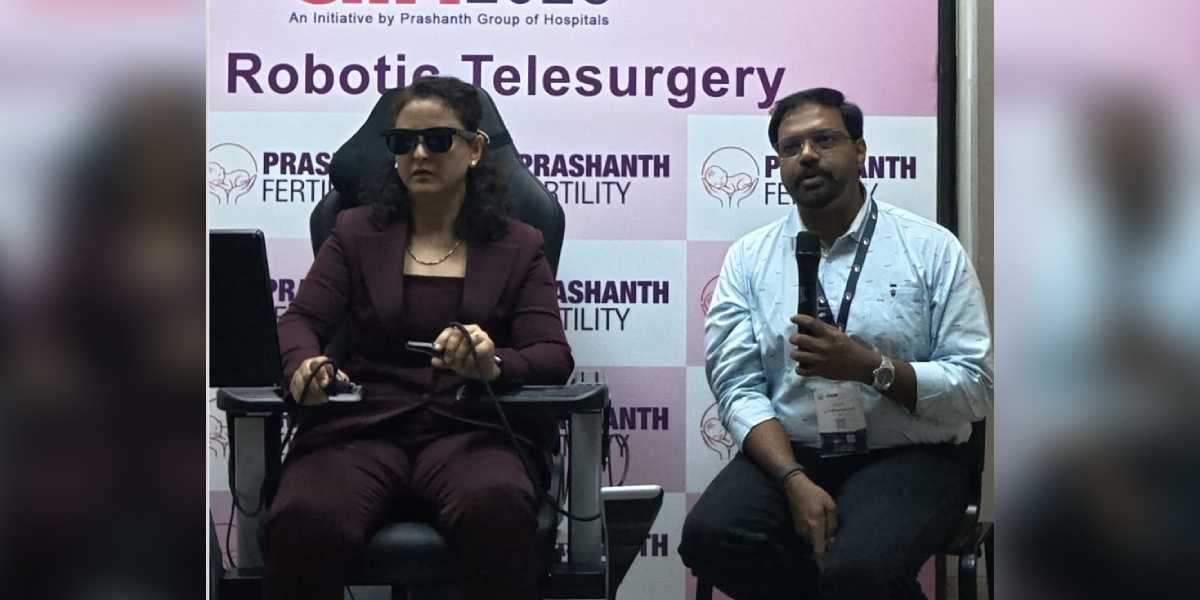
Dr Mehrotra operated the SSI Mantra robotic system from Chennai.

Synopsis: A surgeon in Chennai performed a 45-minute robotic telesurgery on a patient 2,321 km away in Moradabad, removing uterine fibroids while preserving the uterus. Prashanth Fertility described it as South India’s first live robotic telesurgery for myomectomy, highlighting how robotic technology could bridge geographical barriers to specialised surgical care.
A surgeon in Chennai has operated on a patient more than 2,300 km away in Moradabad, Uttar Pradesh, remotely removing uterine fibroids through a robotic surgical system in a procedure that took approximately 45 minutes.
The surgery, performed on 25 November, connected Prashanth Hospitals in Chennai, Tamil Nadu, with Apex Hospital in Moradabad, Uttar Pradesh, using the SSI Mantra surgical robotic system. Prashanth Fertility has described the procedure as South India’s first live robotic telesurgery for myomectomy.
Dr Leena Mehrotra, senior consultant gynaecologist, obstetrician, IVF specialist and robotic/laparoscopic surgeon at Apex Hospital, operated the robotic system from Chennai while the patient remained at Apex Hospital in Moradabad.
The procedure was conducted as part of the ninth Annual Conference on Controversies in Infertility Management (CIIM 2026). Fertility specialists attending the conference at The Leela Palace in Chennai watched the surgery through a live demonstration.
The patient had been diagnosed with uterine fibroids affecting her fertility. Doctors recommended myomectomy, a surgical procedure to remove fibroids while preserving the uterus, considering her reproductive requirements.
According to the hospital, the surgery was completed successfully in approximately 45 minutes. The patient was placed under post-operative observation and was recovering well, with discharge expected within the next couple of days, subject to medical assessment.
Unlike conventional robotic-assisted surgery, where the surgeon operates the robotic console within the same hospital as the patient, robotic telesurgery allows the surgeon to control surgical instruments remotely from another location.
In this procedure, Dr Mehrotra operated the SSI Mantra robotic system from Chennai, enabling her to control the robotic instruments at the patient’s location in Moradabad.
An on-site medical team in Moradabad supported the procedure, coordinating with the operating surgeon and technical personnel throughout the operation.
Speaking about the procedure, Dr Mehrotra said, “Robotic telesurgery represents an important advancement in surgical care, enabling specialists to perform procedures on patients located in geographically distant locations without compromising on surgical precision and control.
“In this case, the technology enabled us to perform a myomectomy remotely for a patient whose uterine fibroids were affecting her fertility, while retaining the uterus through a fertility-preserving approach. The successful completion of this procedure demonstrates how advancements in robotic technology can help bridge geographical barriers and expand access to specialised surgical expertise.
“It was also a testament to the seamless coordination between the operating surgeon, the on-site medical team and technical personnel, whose collective efforts were essential to the procedure.”
The hospital said the successful completion demonstrated the role of robotic technology, reliable connectivity and coordinated medical teams in enabling specialised surgical procedures across geographical boundaries.
However, the hospital’s announcement did not disclose the network infrastructure used, the connectivity latency recorded during surgery, or the contingency arrangements in place in case of a technical failure. These details are important in evaluating the safety and wider clinical applicability of remote surgical procedures.
Uterine fibroids are non-cancerous growths that develop in or around the uterus. Depending on their size and location, they can cause heavy menstrual bleeding, pelvic discomfort and reproductive complications.
Myomectomy involves surgically removing fibroids while retaining the uterus, making it an important treatment option for women who wish to preserve their reproductive potential.
In this case, the hospital said the patient required surgical intervention for fibroids affecting her fertility, with preservation of the uterus forming a key consideration in the treatment approach.
Dr Samhitha Moturi, director of Prashanth Group of Hospitals, said, “The successful completion of this robotic telesurgery marks an important step forward in the integration of advanced technology into fertility care. Dr Leena Mehrotra and the entire team have demonstrated how innovation, clinical expertise and coordinated efforts can come together to make specialised surgical interventions more accessible.
“At Prashanth, we remain committed to exploring and adopting advancements that can expand treatment possibilities and bring meaningful benefits to patients, particularly in the field of reproductive healthcare.”
Dr C Geetha Haripriya, chairperson of Prashanth Group of Hospitals, said, “This achievement reflects the dedication and collaborative efforts of the entire team at Prashanth. As fertility care continues to evolve with advancements in robotics and medical technology, the possibilities for patient care are expanding.
“Conferences such as CIIM provide an important platform to showcase these developments, encourage knowledge exchange and bring emerging treatment approaches to the attention of the medical fraternity.”
For patients living in locations where certain surgical specialists may not be readily available, remote surgical systems could potentially offer access to expertise from larger medical centres without requiring the surgeon to travel to the patient’s location.
Telesurgery requires reliable high-speed connectivity, trained on-site medical personnel, appropriate surgical infrastructure and clearly defined emergency backup arrangements are essential to conducting remote procedures safely.
(Edited by Dese Gowda)



